
 Victoria
BuyerRank is reader-supported. We may earn a commission when you buy through links on this page, at no extra cost to you. As an Amazon Associate, we earn from qualifying purchases. Prices and availability are accurate as of the date of publication and can change at any time — please check the retailer for the current price. Learn more. Written by Victoria — how we choose what to recommend.
Our quick picks
Ranked by what each one is best at, not by a score we made up. Ratings are what the product showed on Amazon when we last checked — how we rank.
- A dual boiler and a 31-setting grinder – the most capable machine Gevi makes.
- Combined with an integrated grinder offering 31 grind settings, this is a machine you can actually dial in rather than one you work around.
- High pressure and a milk frother, at the entry price.
- This is the straightforward entry machine: pressurised extraction and a built-in frother, without grinder or temperature control complications.
- Twenty bars and a frother, with nothing else to think about.
- The mid-range Gevi: 20-bar pump pressure and a built-in frother in a compact body.
- A 58mm portafilter and OPV pressure control – specifications that matter.
- These two features are the ones experienced users look for.
- A real steam wand rather than an automatic frother, at a modest price.
- The distinction matters: an automatic frother makes foam, a steam wand lets you texture milk.
- Grinder, pump and frother in one small body.
- An all-in-one at this size means fresh grounds without a second appliance on the counter, which for most kitchens is the real constraint.
- The machine most people should buy, and the reason it keeps being recommended.
- The Barista Express solved the problem that stops most people improving: the gap between machine and grinder.
- Fifteen bars, a frother, and a low price.
- Fifteen bar pump pressure is closer to what espresso machines actually use than the 20-bar figures elsewhere, and paired with a built-in frother this covers espresso and milk drinks simply.
- Professional-grade materials from a manufacturer with real service support.
- De’Longhi’s advantage is not a specification – it is that the machines are built to be repaired and the parts exist.
- An LCD that shows what the machine is doing, in a small footprint.
- Most entry machines give you a light and leave you guessing.
What follows is the reasoning, the specifications that change the decision, and the drawbacks.
If you searched specifically for a Gevi espresso machine, there are three in this guide and we have covered what separates them. We have also included the machines they compete with directly, because at this price point the differences between brands matter more than the differences within one.
The thing that decides espresso quality is not pump pressure, whatever the box says. Espresso extracts at around nine bars; the 15 and 20 bar figures on every listing describe the pump’s maximum, not the brewing pressure. What actually matters is the grinder, the portafilter size, and whether you can control temperature and pressure at all.
A note on method: we have not pulled shots on these machines ourselves. Our picks are based on manufacturer specifications, boiler and portafilter design, and patterns across owner reports.
Our shortlisting process
We ignored pump pressure figures and sorted on what changes what is in the cup:
- Grinder, or no grinder. Fresh, correctly sized grounds matter more than anything else. A machine without a grinder needs one bought alongside it.
- Portafilter size and type. 58mm is the commercial standard with the widest accessory range. Pressurised baskets forgive bad grind but cap quality.
- Single or dual boiler. Dual boilers remove the wait between brewing and steaming.
- Steam wand or automatic frother. A wand textures milk; a frother makes foam. They are not the same thing.
Each machine gets a role rather than a rank, because an entry combo and a dual-boiler machine with a grinder serve different people.
The short list
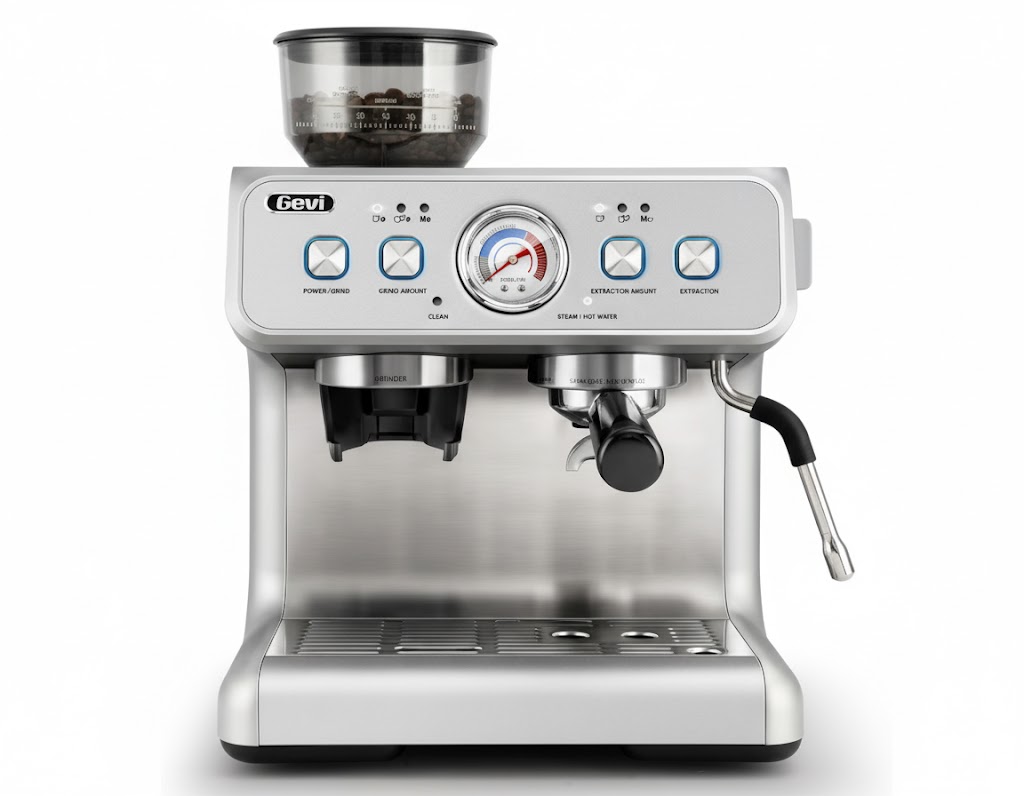
Gevi Dual-Boiler Espresso Machine with Built-In Grinder
Precise espresso extraction thanks to the dual-boiler system, paired with an integrated grinder offering 31 adjustable settings, all wrapped in a durable, sleek stainless-steel design

Atatix Professional Silver Espresso Machine
High pressure delivers rich, full-bodied espresso, while the built-in milk frother creates creamy lattes—all in a compact design that fits perfectly in small kitchen spaces
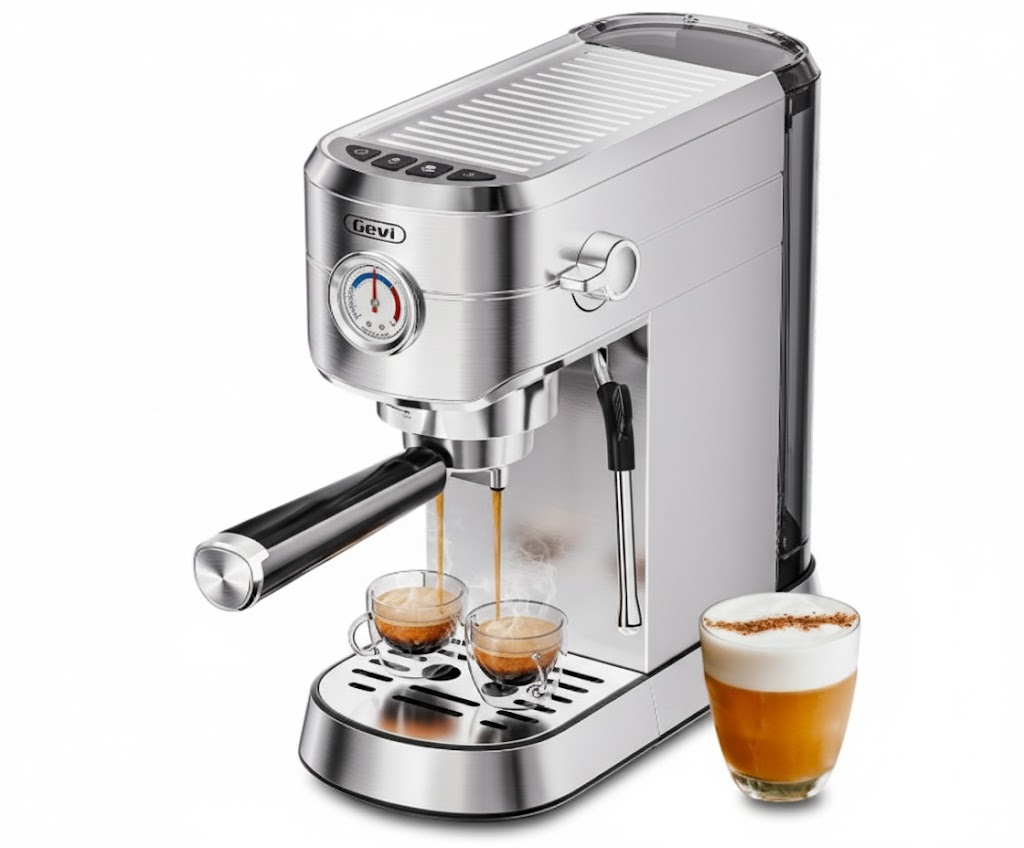
Gevi 20-Bar Espresso Maker with Milk Frother
Powerful 20-bar pressure delivers rich espresso, paired with a built-in milk frother for creamy cappuccinos—all in a compact design that fits comfortably in your kitchen

Gevi 20-Bar Espresso Machine with Integrated Steam Wand
Precise pressure control with an OPV feature, enhanced flavor from the 58mm portafilter, and a dual display that makes operation effortless—all working together seamlessly
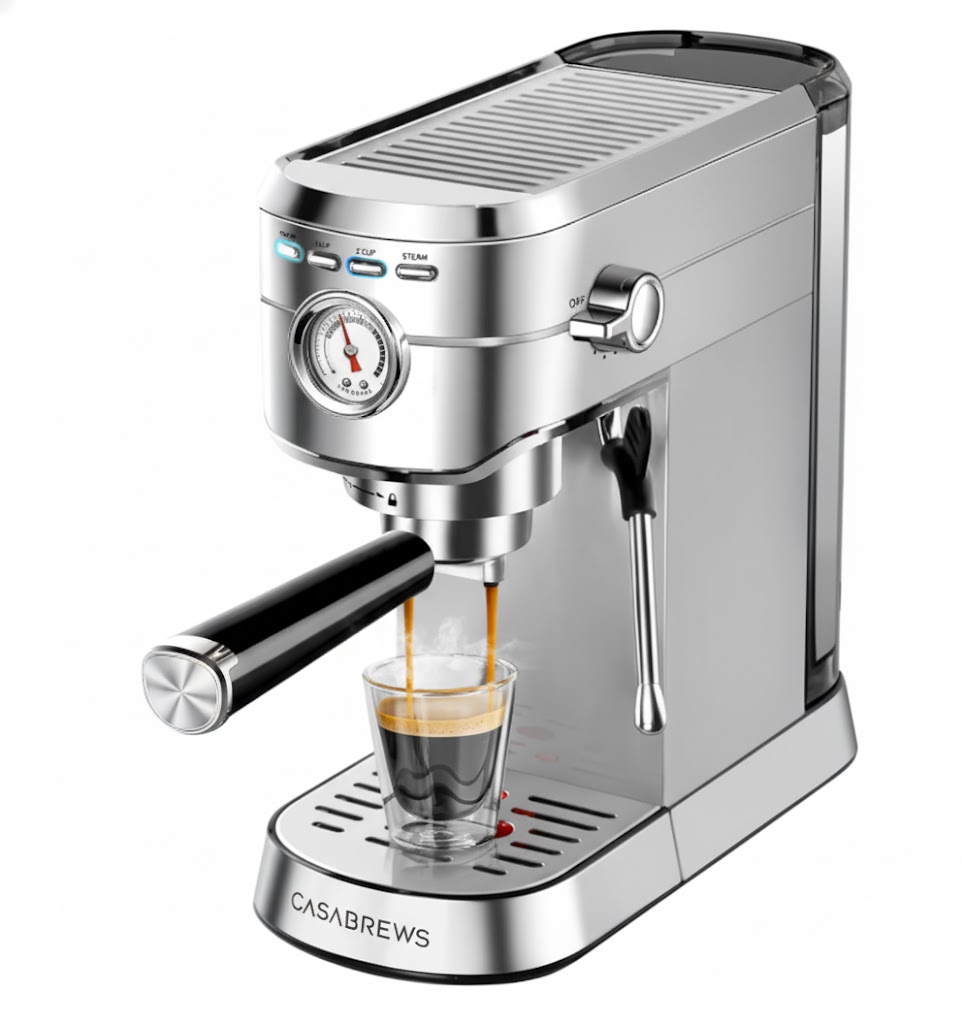
CASABREWS 20-Bar Silver Espresso Machine
High 20-bar pressure delivers rich espresso shots, complemented by a steam wand for perfect milk frothing—all in a compact design that fits easily on any countertop
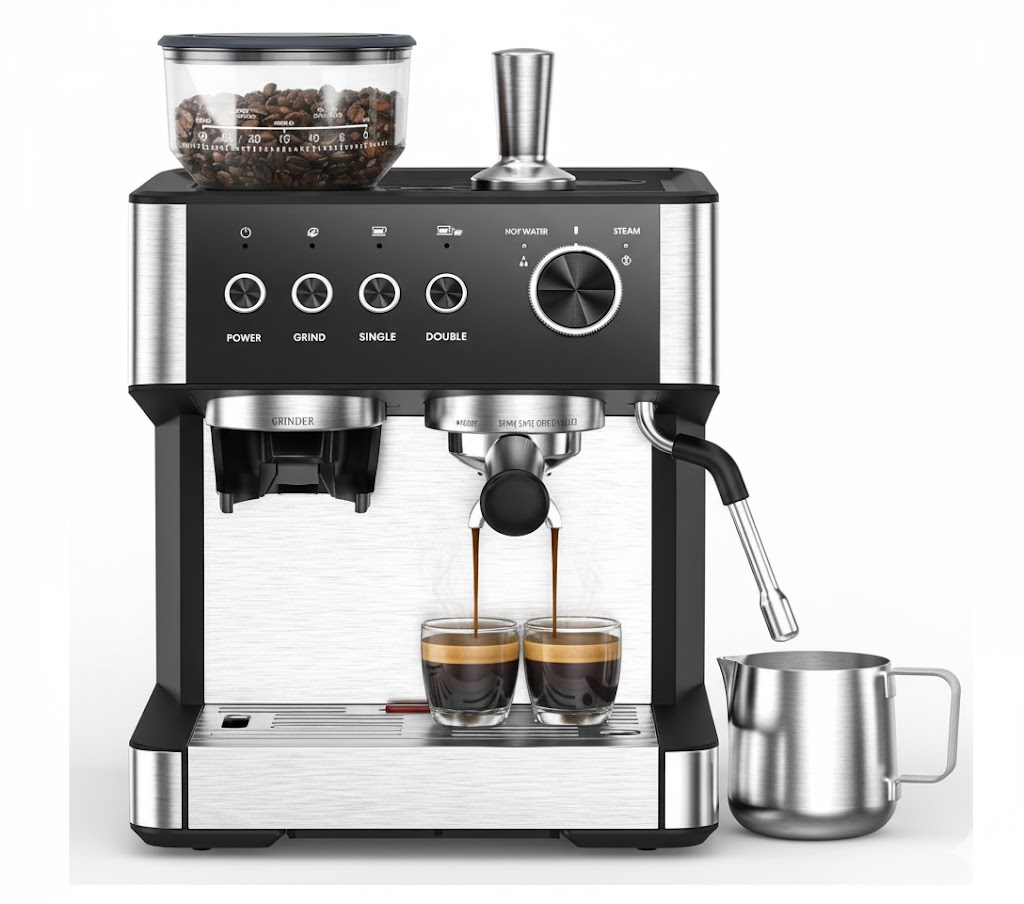
Espresso Machine with Built-In Grinder and Milk Frother
A built-in grinder provides fresh coffee grounds, the 20-bar pressure delivers rich flavor, and the removable water tank makes refills quick and convenient
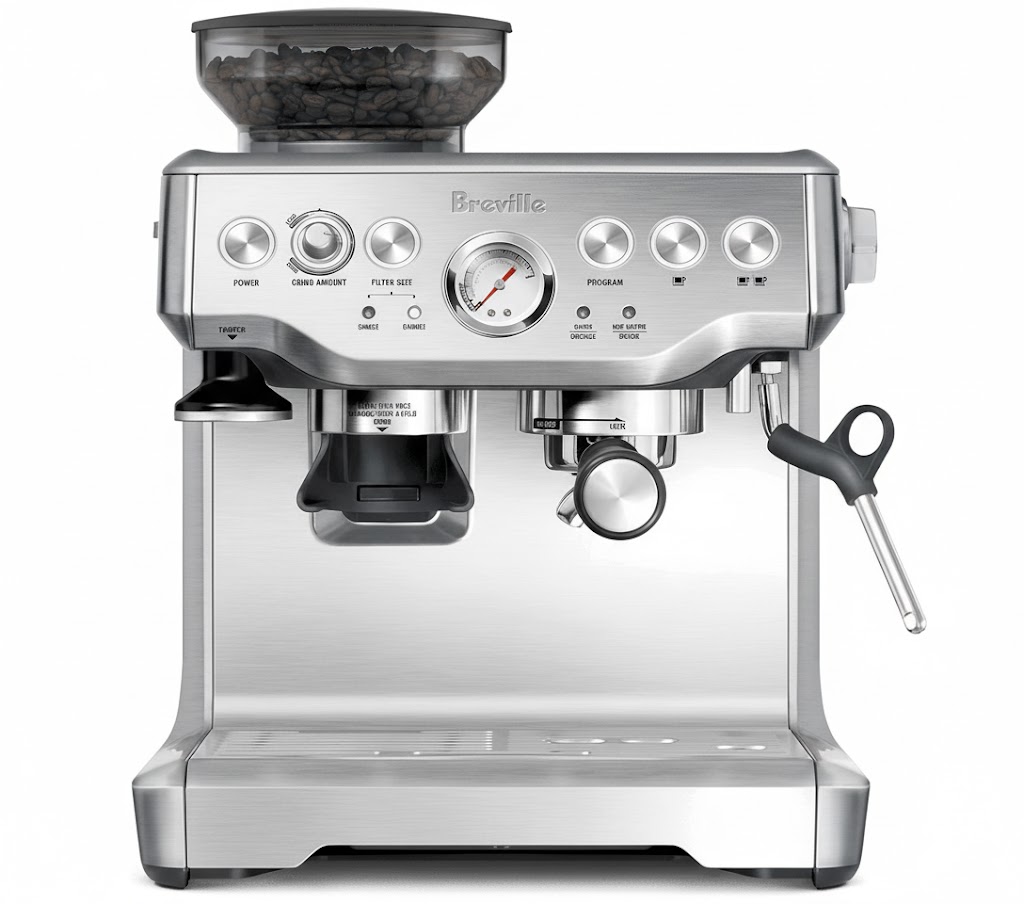
Breville Barista Express BES870XL Espresso Machine
A built-in grinder delivers fresh, on-demand coffee, with adjustable grind sizes for personalized espresso, plus an integrated steam wand that creates rich, creamy froth
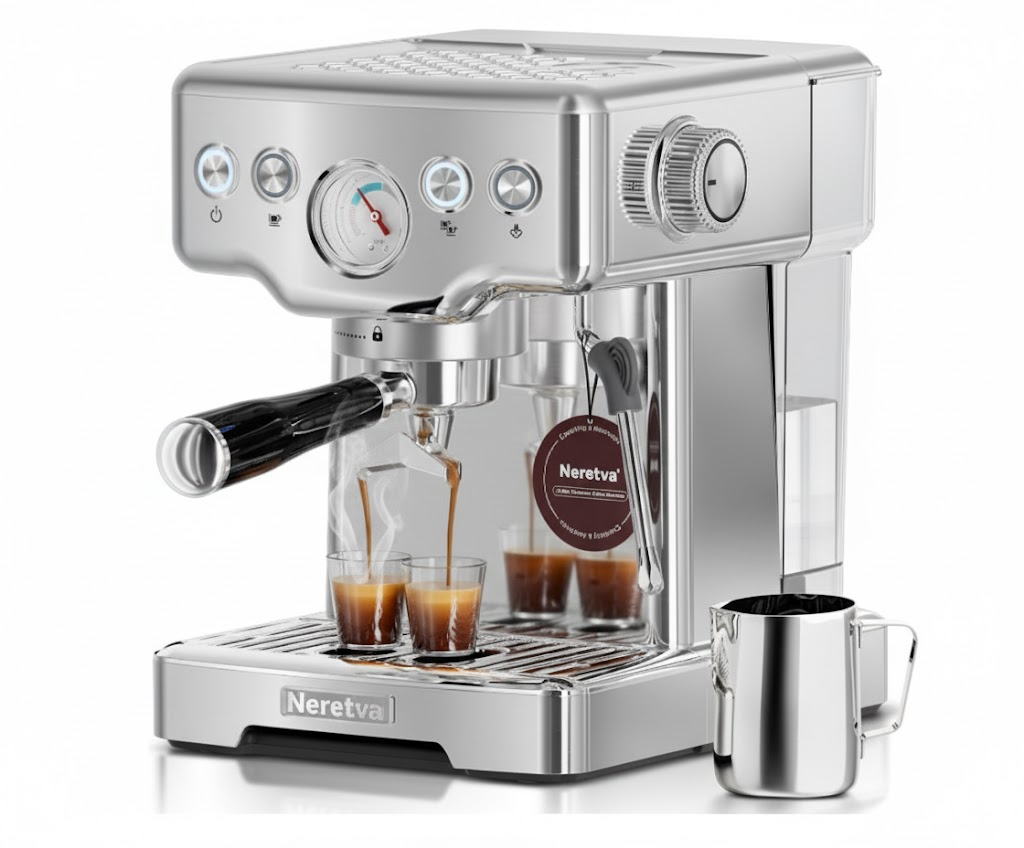
Neretva Espresso Machine with Milk Frother Combo
A high-pressure 15-bar pump delivers rich espresso flavor, supported by a built-in milk frother for creamy cappuccinos, plus a visible pressure gauge for precise brewing control
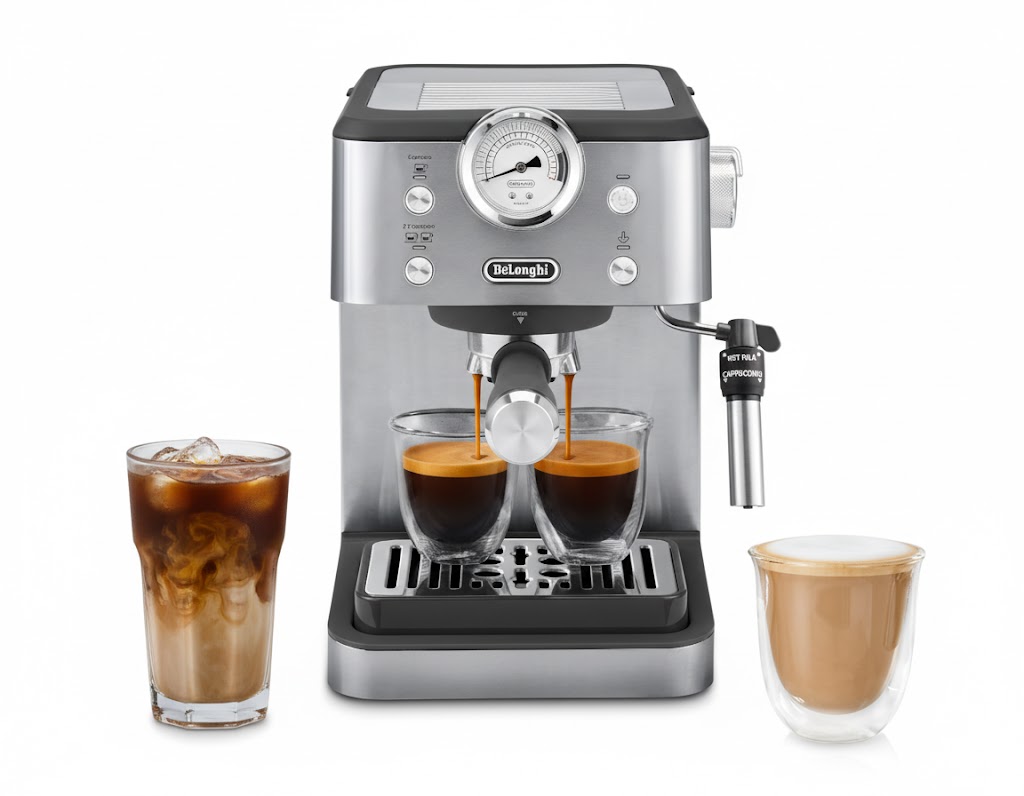
De’Longhi Linea Classic Espresso Machine
Consistent high-quality espresso extraction, a durable build made from professional-grade materials, and user-friendly controls that make every operation simple and smooth—all working together seamlessly

CASABREWS Espresso Machine with LCD Screen
An intuitive LCD display simplifies the brewing process, a compact design fits easily into small spaces, and quick heating delivers fresh espresso in just minutes
The 10 Best Espresso Machines, Reviewed
1. Gevi Dual-Boiler Espresso Machine with Built-In Grinder — Best Gevi Overall
A dual boiler and a 31-setting grinder — the most capable machine Gevi makes.
Dual boilers are the feature that separates a serious espresso machine from a convenient one: one boiler holds brew temperature while the other makes steam, so you are not waiting between pulling a shot and texturing milk. Combined with an integrated grinder offering 31 grind settings, this is a machine you can actually dial in rather than one you work around.
What we like
- Dual boiler means no waiting between espresso and steaming
- 31 grind settings gives real control over extraction
- Integrated grinder removes the need for a separate purchase
- Most capable machine in the Gevi range
The drawbacks
- Dual boilers take longer to heat up from cold
- Larger footprint than single-boiler machines
- Built-in grinders are harder to clean than standalone ones
- More expensive than the single-boiler Gevi machines
Right for: people who make milk drinks and want to learn extraction. Skip it if: you pull one shot a day.
Check the current price on Amazon →
2. Atatix Professional Espresso Machine — Best Budget All-in-One
High pressure and a milk frother, at the entry price.
This is the straightforward entry machine: pressurised extraction and a built-in frother, without grinder or temperature control complications. For someone moving from instant coffee or a pod machine, it covers espresso and milk drinks without a learning curve.
What we like
- Simple to operate straight out of the box
- Built-in milk frother for lattes and cappuccinos
- Low entry price
- Compact for a machine with a frother
The catch
- No grinder — you need pre-ground coffee or a separate grinder
- Pressurised baskets forgive bad grind but limit quality
- Little control over extraction variables
- Build quality reflects the price
Right for: a first espresso machine on a budget. Skip it if: you want to improve your espresso over time.
Check the current price on Amazon →
3. Gevi 20-Bar Espresso Maker with Milk Frother — Best Simple Gevi
Twenty bars and a frother, with nothing else to think about.
The mid-range Gevi: 20-bar pump pressure and a built-in frother in a compact body. Twenty bars is more pressure than espresso actually needs — nine is the traditional figure — but the pump rating is how this category is marketed, and in practice it means consistent extraction through a pressurised basket.
What we like
- Compact and simple to use
- Built-in frother for milk drinks
- Lower cost than the dual-boiler Gevi
- Quick to heat compared with dual-boiler machines
Where it falls short
- No grinder included
- 20 bar is a marketing figure — espresso extracts at around 9 bar
- Single boiler means waiting between shot and steam
- Limited control over brew temperature
Right for: everyday espresso without fuss. Skip it if: you want to control extraction.
Check the current price on Amazon →
4. Gevi 20-Bar Espresso Machine with Integrated Steam — Best Gevi for Enthusiasts
A 58mm portafilter and OPV pressure control — specifications that matter.
These two features are the ones experienced users look for. A 58mm portafilter is the commercial standard, which means better puck distribution and access to a huge range of accessories and baskets. An OPV (over-pressure valve) lets you control the actual brew pressure rather than accepting whatever the pump produces — which is how you get from acceptable espresso to good espresso.
What we like
- 58mm commercial-standard portafilter opens up accessories and baskets
- OPV allows real brew pressure adjustment
- Dual display for monitoring the shot
- Integrated steam for milk texturing
What owners complain about
- No grinder — and a 58mm basket needs a good one to work
- More to learn than a simple pressurised machine
- Single boiler, so steam and brew are sequential
- Larger than the entry Gevi machines
Right for: people who want to learn espresso properly. Skip it if: you want to press a button.
Check the current price on Amazon →
5. CASABREWS 20-Bar Espresso Machine — Best Value Steam Wand
A real steam wand rather than an automatic frother, at a modest price.
The distinction matters: an automatic frother makes foam, a steam wand lets you texture milk. If you want microfoam for a flat white rather than stiff bubbles on a cappuccino, you need a wand and the practice to use it. Getting one at this price point is the reason this machine is here.
What we like
- Steam wand rather than an automatic frother — real milk texturing
- 20-bar pump with consistent extraction
- Stainless finish that suits a kitchen counter
- Good value for the specification
The downside
- Steam wands require practice — the first attempts will be poor
- No grinder included
- Single boiler, so steaming follows brewing
- Limited brew temperature control
Right for: learning to texture milk properly. Skip it if: you want foam at the push of a button.
Check the current price on Amazon →
6. Espresso Machine with Built-In Grinder and Milk Frother — Best Compact All-in-One
Grinder, pump and frother in one small body.
An all-in-one at this size means fresh grounds without a second appliance on the counter, which for most kitchens is the real constraint. The removable parts make cleaning practical, which matters more with a built-in grinder than without one — stale grounds in a hopper ruin more shots than any other single factor.
What we like
- Grinder, brewing and frothing in one compact unit
- Fresh grinding without a separate appliance
- Removable components for cleaning
- Saves considerable counter space
What you give up
- All-in-one machines are a compromise at each function
- Built-in grinders need regular cleaning to avoid stale grounds
- Limited grind adjustment compared with standalone grinders
- A single fault can disable the whole machine
Right for: small kitchens wanting fresh grounds. Skip it if: you want the best grinder and machine separately.
Check the current price on Amazon →
7. Breville Barista Express BES870XL — Best Overall
The machine most people should buy, and the reason it keeps being recommended.
The Barista Express solved the problem that stops most people improving: the gap between machine and grinder. It integrates a conical burr grinder with adjustable grind size, doses directly into the portafilter, and gives enough control over the shot that you can actually learn what changes what — without the cost of separate equipment.
What we like
- Integrated conical burr grinder with meaningful adjustment
- Doses directly into the portafilter — less mess, fresher grounds
- Enough control to learn extraction properly
- Long track record and wide availability of parts and support
The part that annoys people
- The most expensive machine here
- Single boiler, so steaming follows brewing
- Takes counter space and needs regular cleaning
- Steeper learning curve than push-button machines
Right for: anyone serious about making espresso at home. Skip it if: convenience matters more than quality.
Check the current price on Amazon →
8. Neretva Espresso Machine with Milk Frother Combo — Best Entry Combo
Fifteen bars, a frother, and a low price.
Fifteen bar pump pressure is closer to what espresso machines actually use than the 20-bar figures elsewhere, and paired with a built-in frother this covers espresso and milk drinks simply. As a first machine or a second one for an office, it does the job without complexity.
What we like
- 15-bar pump is appropriate for espresso extraction
- Built-in frother for milk drinks
- Low cost
- Simple operation with little to learn
Where it disappoints
- No grinder
- Pressurised baskets limit how good the espresso can get
- Single boiler with wait time between functions
- Entry-level build quality
Right for: first machines and office kitchens. Skip it if: you want to improve your espresso.
Check the current price on Amazon →
9. De’Longhi Linea Classic Espresso Machine — Best Build Quality
Professional-grade materials from a manufacturer with real service support.
De’Longhi’s advantage is not a specification — it is that the machines are built to be repaired and the parts exist. An espresso machine is a device with a pump, a boiler and seals that wear, and a machine you can have serviced lasts years longer than one you cannot.
What we like
- Durable build with professional-grade materials
- Established service network and parts availability
- Consistent extraction quality
- Straightforward controls
The drawbacks
- No grinder
- Fewer features than similarly priced competitors
- Classic design with limited adjustment
- Premium price for build rather than specification
Right for: buyers who want a machine to last and be repairable. Skip it if: you are buying on features.
Check the current price on Amazon →
10. CASABREWS Espresso Machine with LCD Screen — Best Compact Display
An LCD that shows what the machine is doing, in a small footprint.
Most entry machines give you a light and leave you guessing. An LCD showing temperature and shot progress removes that guesswork, which makes consistent results much easier for someone learning. The compact body suits a small kitchen or an office.
What we like
- LCD display makes the process visible rather than guesswork
- Compact enough for small counters
- Quick heat-up time
- Simple to operate day to day
The catch
- No grinder
- Display convenience does not change extraction quality
- Single boiler
- Compact machines have small water tanks needing frequent refills
Right for: small kitchens and people who want feedback from the machine. Skip it if: you want a grinder included.
Check the current price on Amazon →
How to Choose an Espresso Machine
Budget for the grinder as part of the machine
This is the single most important point in the category. A cheap machine with a good grinder makes better espresso than an expensive machine with pre-ground coffee. If the machine has no built-in grinder, add the cost of a burr grinder to its price before comparing — a blade grinder will not do.
Ignore the bar rating
Espresso is brewed at roughly nine bars. The 15 or 20 bar figure on the box is the pump’s maximum output, not the brewing pressure. A 20-bar machine is not better than a 15-bar one; machines with an OPV that lets you set actual brew pressure are a different matter.
Understand pressurised versus non-pressurised baskets
Pressurised baskets create artificial back-pressure so that almost any grind produces something resembling crema. They make bad coffee acceptable and good coffee impossible. Non-pressurised baskets require a proper grinder and technique, and are what serious machines use.
Decide whether you make milk drinks
If you drink espresso, single boiler is fine. If you make lattes and flat whites for more than one person, the wait between brewing and steaming on a single boiler becomes annoying, and a dual boiler or thermoblock arrangement is worth the money.
Plan for cleaning and descaling
Espresso machines need regular backflushing, group head cleaning and descaling, and built-in grinders need emptying and brushing. A machine that is awkward to clean is a machine that gets cleaned less, and stale coffee oils ruin flavor faster than any other factor.
Where people go wrong
- Spending everything on the machine and nothing on the grinder. The most common and most costly error.
- Buying on bar rating. It tells you almost nothing.
- Expecting café results from pre-ground supermarket coffee. Freshness and grind size matter more than the machine.
- Ignoring the portafilter size. 58mm opens up a world of accessories; proprietary sizes do not.
- Skipping descaling. Scale kills machines quietly and permanently.
Frequently Asked Questions
Is 20 bar better than 15 bar?
No. Espresso extracts at around nine bars. Both figures describe the pump’s maximum capability, not brewing pressure, and neither tells you anything useful about the quality of the shot.
Do I need a machine with a built-in grinder?
You need a grinder. Whether it is built in or separate is a question of counter space and budget. Separate grinders are generally better and easier to clean; built-in grinders save space and cost less overall.
What is the difference between a steam wand and a milk frother?
A steam wand injects steam into the milk and lets you texture it into microfoam. An automatic frother aerates milk into foam with no technique required. For flat whites and latte art you need a wand; for a cappuccino topped with foam, a frother is sufficient.
How often should I descale?
It depends on water hardness and use — commonly every one to three months in hard water areas. Using filtered water extends the interval considerably. Follow the manufacturer’s guidance for your specific machine.
Can I use supermarket pre-ground coffee?
You can, but it is the main reason home espresso disappoints. Pre-ground coffee is usually too coarse for espresso and stales within days of opening. Grinding immediately before brewing makes more difference than any machine upgrade.
What is a 58mm portafilter and why does it matter?
It is the commercial standard size. Machines that use it can take a vast range of baskets, tampers and distribution tools, and the larger basket diameter gives more even extraction. Proprietary sizes lock you into whatever the manufacturer supplies.
Short version
Within the Gevi range, the dual-boiler model with the built-in grinder is the one to buy if you make milk drinks, and the 20-bar model with the 58mm portafilter and OPV is the one for anyone who wants to learn to pull a proper shot.
Looking wider, the Breville Barista Express remains the machine most people should buy — the integrated grinder and the level of control it gives you are what allow you to improve rather than plateau. If build quality and repairability matter more, the De’Longhi Linea Classic is the one that will still be serviceable in five years.
On a budget, the Neretva and Atatix combos cover espresso and milk simply — just remember that whatever you spend on the machine, the grinder is what decides how the coffee tastes.
Prices and availability on Amazon change frequently — check the product page for current information before buying.