 Victoria
BuyerRank is reader-supported. We may earn a commission when you buy through links on this page, at no extra cost to you. As an Amazon Associate, we earn from qualifying purchases. Prices and availability are accurate as of the date of publication and can change at any time — please check the retailer for the current price. Learn more. Written by Victoria — how we choose what to recommend.
Our quick picks
Ranked by what each one is best at, not by a score we made up. Ratings are what the product showed on Amazon when we last checked — how we rank.
- The extension panel is the point: more legroom means more months facing the rear.
- Safety guidance in the US has moved steadily towards keeping children rear-facing for longer, and the practical obstacle is legroom – parents turn the seat around because the child’s legs look cramped.
- One seat from rear-facing infant to highback booster.
- The three stages here are genuine: rear-facing for the earliest years, forward-facing with a harness in the middle, and a highback booster afterwards.
- Narrow enough that three seats can share a back row.
- Fitting three car seats across a standard back seat is a specific and common problem, and it is solved by width, not by features.
- The budget route to a seat that covers every stage.
- This is the affordable entry in the all-in-one category, and the slim profile means it is also a candidate for three-across fitting.
- Starts where convertible seats end – harness, then highback, then backless.
- Having all three modes in one seat makes the progression gradual and removes a purchase.
- The one you can actually carry across a parking lot.
- Infant seats get carried – from house to car, car to shop, shop to car – usually with a baby in them and a bag on the other shoulder.
- Infant seat and stroller frame solved in one purchase.
- The modular design lets the stroller seat face you or face forward, and the LiteMax infant car seat clicks straight onto the frame – so a sleeping baby moves from car to stroller without being lifted out.
- Built around making a correct install easier to achieve.
- Incorrect installation is common, and it undoes the engineering entirely.
Keep reading for the reasoning, the specifications that decide it, and the catch on each pick.
Every car seat sold in the United States has to meet the same federal safety standard. That is the thing most buying guides bury, and it changes what you should actually be comparing: not which seat is “safest”, but which seat fits your car, fits your child at this stage, and is easy enough to install that you will fit it correctly every time.
Incorrect installation is the real risk in this category, and it is common. A seat that fits your vehicle badly, or that is fiddly enough that corners get cut, is a worse purchase than a cheaper seat that fits well. We picked eight seats around that idea — extended rear-facing, three-across back seats, older children, and the weight of a carrier you will lift a thousand times.
A note on method: we have not installed these seats in our own vehicles. Our picks are based on manufacturer specifications and design, and on patterns across long-term owner reviews. Always read the seat manual and your vehicle manual together, follow current guidance from your state and from the NHTSA, and if you are unsure about a fit, a certified child passenger safety technician can check it — often free of charge.
What got a product on this list
Every seat here meets the same federal standard, so we sorted on the things that differ:
- Fit in real vehicles. Front-to-back depth decides whether a rear-facing seat forces the front seats forward. Width decides whether three seats fit in a row.
- How hard it is to install correctly. Clear belt paths, a stable base and visible level indicators reduce the chance of an error that matters.
- How long it stays usable. Height and weight limits, and whether a seat covers one stage or three.
- Carrying weight, for infant seats. This is the specification you feel daily.
We then assigned each seat a role rather than ranking them. A narrow seat is not better than a deep one — it solves a different problem.
At a glance

Graco Extend2Fit Convertible Baby Car Seat – Gotham
The Graco Extend2Fit Convertible Car Seat (Gotham) supports rear-facing and forward-facing use for infants and toddlers, offering 6 recline positions, a 5-point adjustable harness with headrest, a 65-lb weight limit, and an extension panel for added legroom
Graco TriRide 3-in-1 Reclining Car Seat – Clybourne
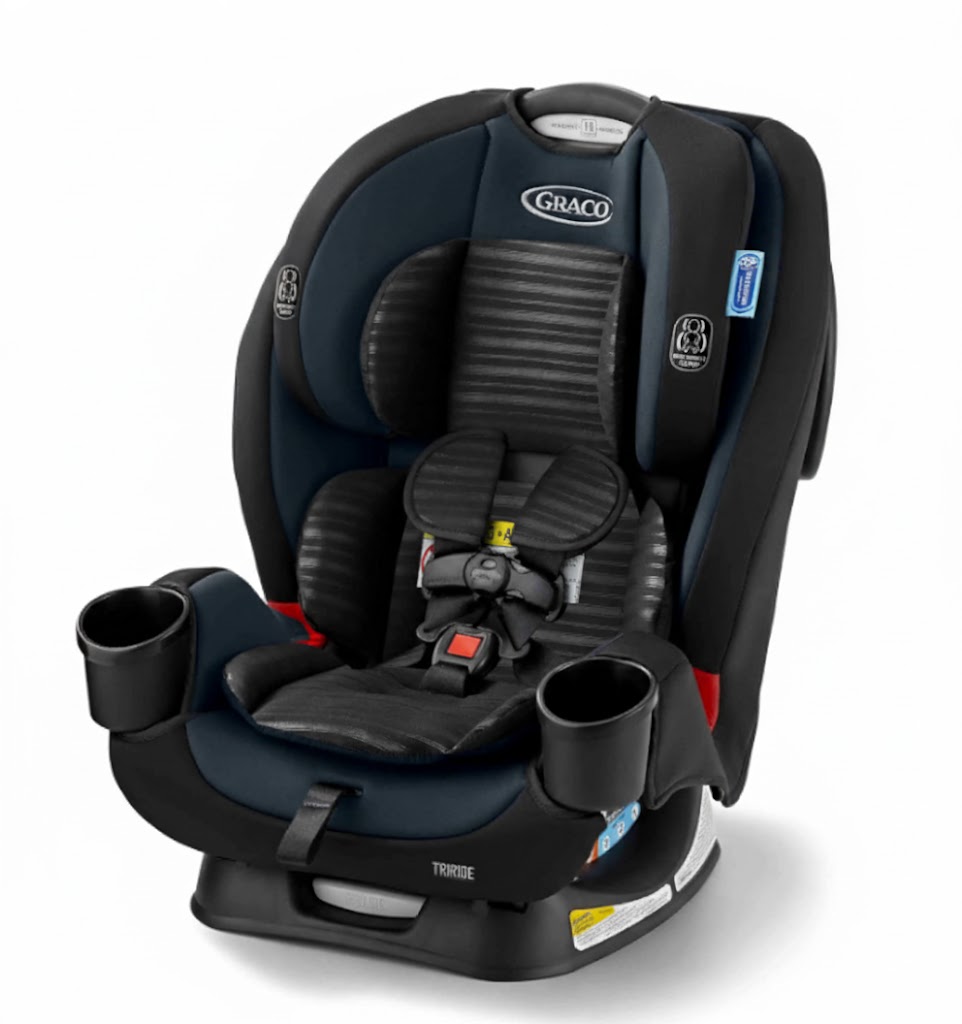
The Graco TriRide 3-in-1 Car Seat (Clybourne) functions as rear-facing, forward-facing, and a highback booster, supporting 5–100 lbs with 6 recline positions and an adjustable 5-point harness
Graco SlimFit 3-in-1 Convertible Car Seat – Jarret
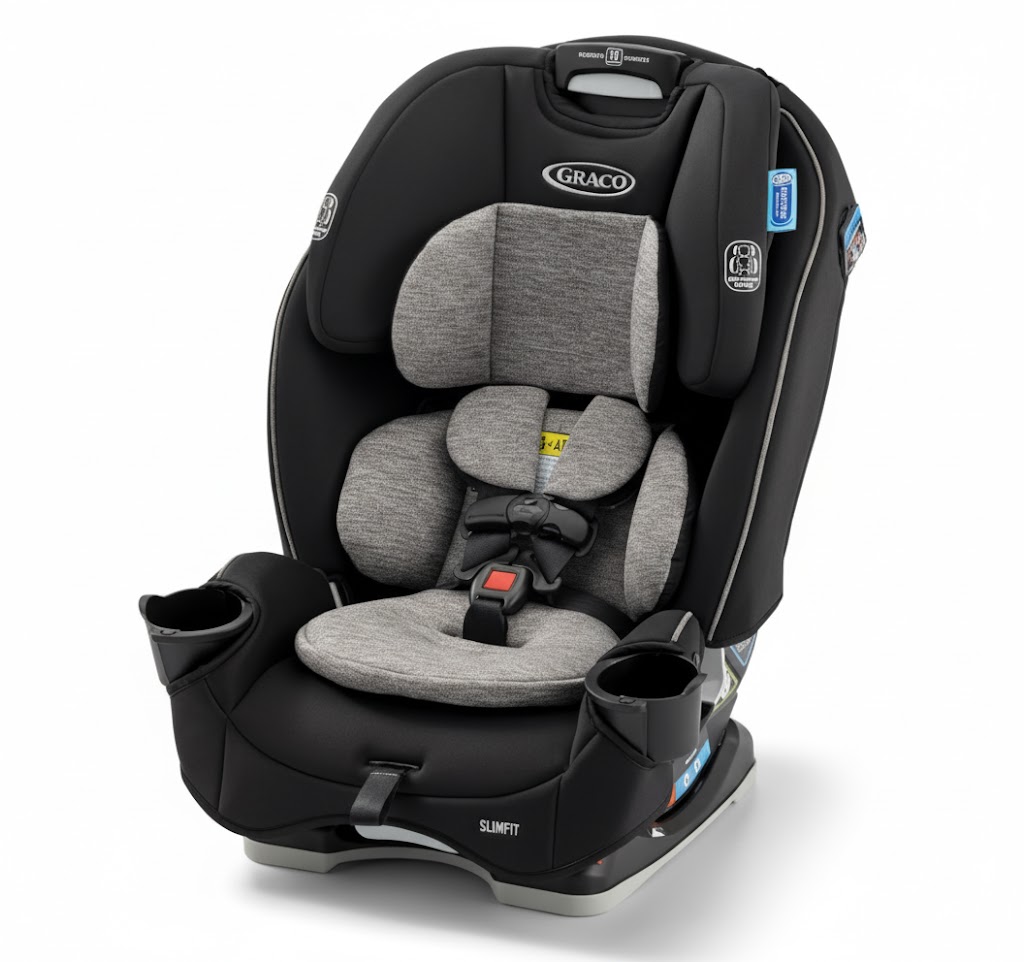
The Graco SlimFit 3-in-1 Car Seat (Jarret) works as rear-facing, forward-facing, and a booster, supporting 5–100 lbs with 4 recline positions and a 10-level adjustable harness in a compact design
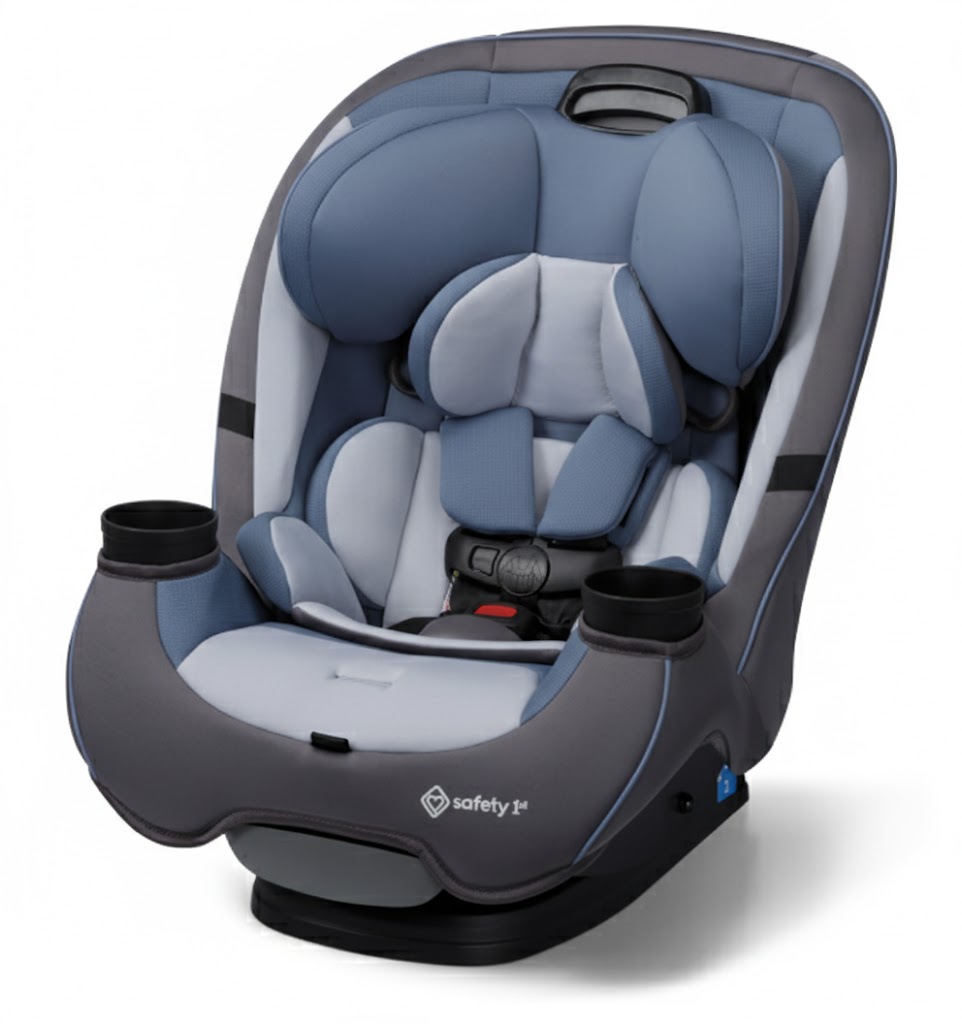
Safety 1st Grow and Go All-in-One Slim Convertible Car Seat
The Safety 1st Grow and Go All-in-One Seat (Alaskan Blue) works as rear-facing, forward-facing, and a booster, with 3 recline positions, an adjustable 5-point harness, and support up to 100 lbs
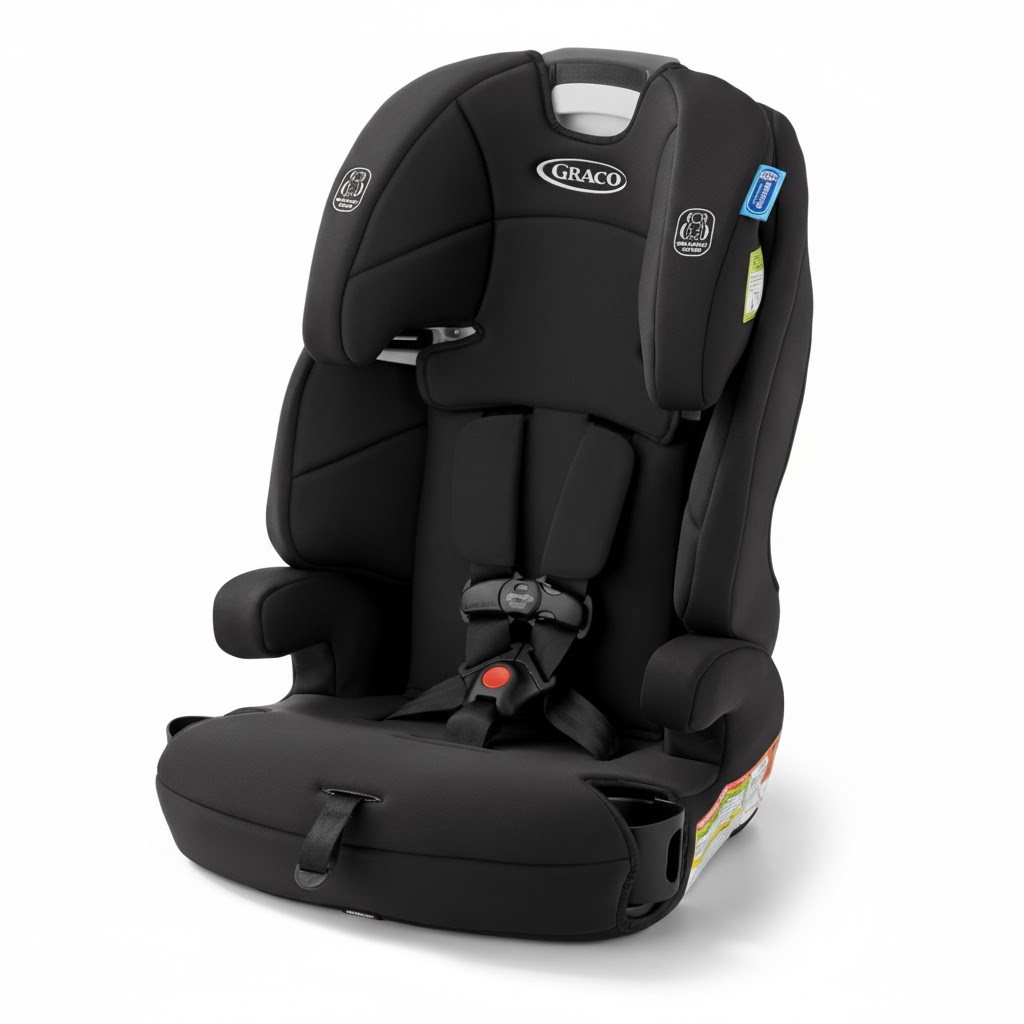
Graco Tranzitions 3-in-1 Harness Booster Car Seat – Proof
The Graco Tranzitions 3-in-1 Seat (Proof) works as a forward-facing harness seat, highback booster, and backless booster, supporting 26.5–100 lbs with an adjustable 5-point harness and headrest
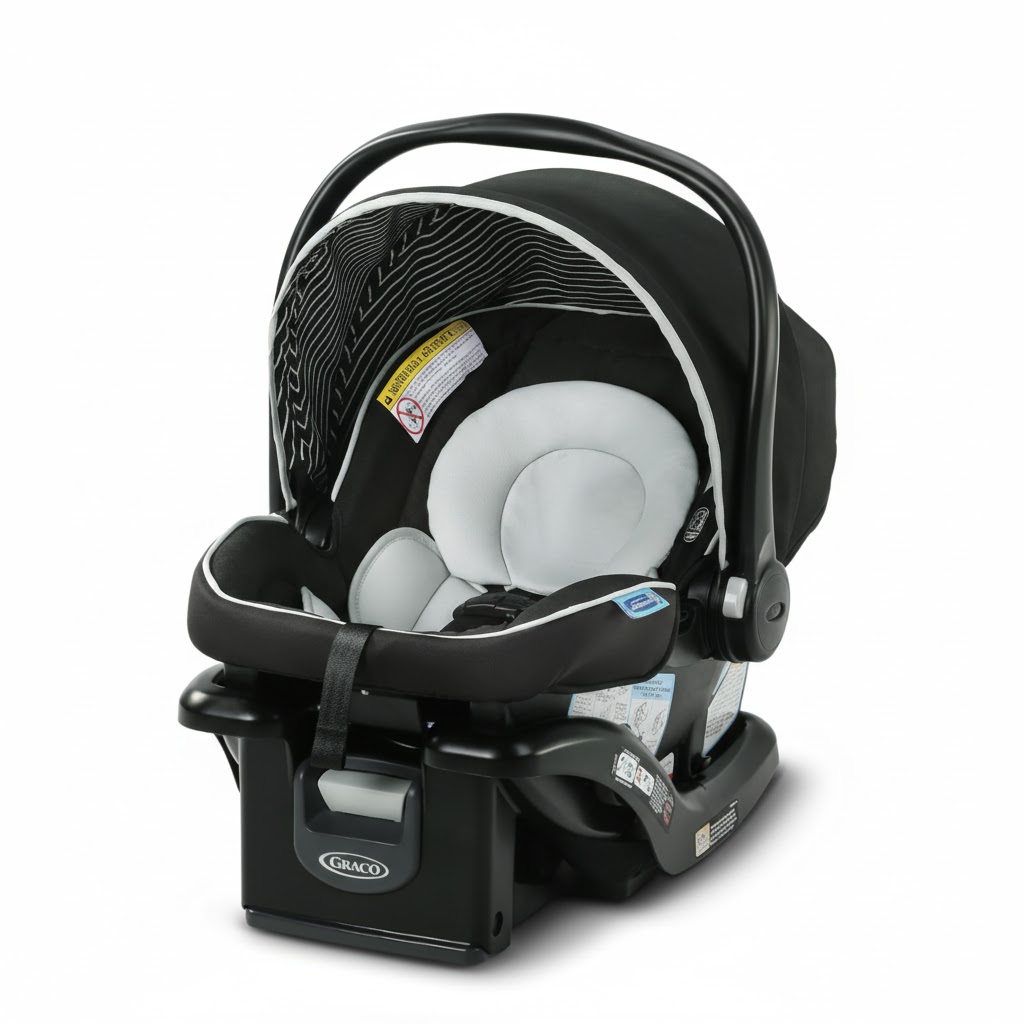
Graco SnugRide Lite LX Infant Car Seat – Studio
The Graco SnugRide Lite LX (Studio) is a lightweight rear-facing infant seat with 4 recline positions, a 3-level adjustable 5-point harness, and support up to 35 lbs for babies up to 32″ tall
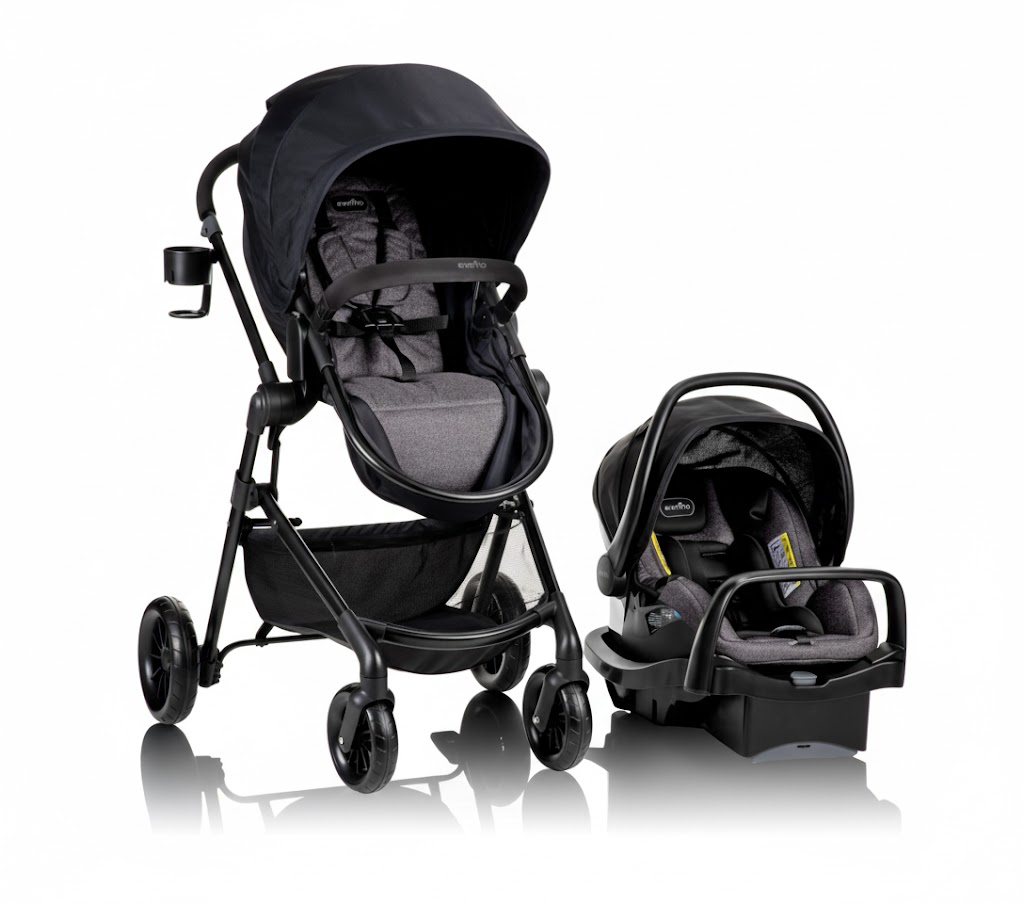
Evenflo Pivot Modular Travel System with LiteMax Infant Car Seat – Casual Gray
The Evenflo Pivot Modular Travel System (Casual Gray) supports forward and rear facing, offers 4 recline positions, an adjustable 5-point harness, and a 50-lb limit for children 15.7″–32″ tall

Graco SnugRide SnugFit Infant Car Seat – Gotham
The Graco SnugRide SnugFit (Gotham) is a rear-facing infant seat with 4 recline positions, an adjustable 5-point harness, and a 35-lb limit for babies up to 32″ tall
The 8 Best Car Seats, Reviewed
1. Graco Extend2Fit Convertible Car Seat — Best for Extended Rear-Facing
The extension panel is the point: more legroom means more months facing the rear.
Safety guidance in the US has moved steadily towards keeping children rear-facing for longer, and the practical obstacle is legroom — parents turn the seat around because the child’s legs look cramped. The Extend2Fit’s four-position extension panel adds several inches of legroom specifically to remove that objection, which is a more meaningful feature than most in this category.
What we like
- Extension panel adds legroom to keep a child rear-facing longer
- Converts to forward-facing when the time comes
- Multiple recline positions to get the angle right in different vehicles
- Well-established model with a long track record
What owners complain about
- Bulky front to back — check clearance against your front seats
- Heavy to move between vehicles
- Takes up more width than slim-profile seats
- Extension panel is useful rear-facing only
Right for: parents committed to extended rear-facing. Skip it if: your car is small front to back or the seat moves between vehicles often.
Check the current price on Amazon →
2. Graco TriRide 3-in-1 Reclining Car Seat — Best Long-Haul 3-in-1
One seat from rear-facing infant to highback booster.
The three stages here are genuine: rear-facing for the earliest years, forward-facing with a harness in the middle, and a highback booster afterwards. Buying one seat that spans all three avoids two replacement purchases, provided the seat fits your vehicle well at every stage — which is the thing to check, because a seat that fits well rear-facing can be awkward as a booster.
What we like
- Covers all three stages, so no mid-way replacement purchase
- Reclining positions help achieve correct installation angles
- Simpler long-term than buying stage-specific seats
- Harness adjusts without re-threading on most configurations
The downside
- All-in-one seats are a compromise at each individual stage
- Large and heavy compared with a dedicated booster
- Booster mode is less comfortable than a purpose-built booster
- Check fit at every stage before committing to one seat
Right for: families wanting one purchase to last. Skip it if: you want the best seat for each stage individually.
Check the current price on Amazon →
3. Graco SlimFit 3-in-1 Convertible Car Seat — Best for Three Across
Narrow enough that three seats can share a back row.
Fitting three car seats across a standard back seat is a specific and common problem, and it is solved by width, not by features. The SlimFit is built narrow for exactly this, while still covering rear-facing, forward-facing and booster use from 5 to 100 lbs. Integrated cup holders that rotate out of the way help further.
What we like
- Narrow profile designed for three-across installations
- Covers 5 to 100 lbs across three configurations
- Cup holders rotate away to save width when needed
- Four recline positions for correct angle in different vehicles
What you give up
- Narrow means less shoulder room as the child grows
- Three-across fit still depends on your specific vehicle — test before buying
- Booster stage is basic compared with dedicated boosters
- Heavy for a seat that may be moved between cars
Right for: three children in one row, or narrow back seats. Skip it if: width is not your constraint.
Check the current price on Amazon →
4. Safety 1st Grow and Go All-in-One Slim — Best Value All-in-One
The budget route to a seat that covers every stage.
This is the affordable entry in the all-in-one category, and the slim profile means it is also a candidate for three-across fitting. It covers rear-facing, forward-facing and booster use. What you give up relative to premium seats is padding quality and some convenience features — not the safety certification, which is a legal minimum every seat sold must meet.
What we like
- Covers all three stages at a budget price
- Slim profile helps in narrow back seats
- Meets the same federal safety standard as premium seats
- Lighter than most all-in-one seats
The part that annoys people
- Padding and fabric feel budget on long journeys
- Harness adjustment is less convenient than on premium models
- Cleaning the cover is more awkward than on higher-priced seats
- Fewer recline options to fine-tune the fit
Right for: budget-conscious families needing one seat for years. Skip it if: you make frequent long journeys.
Check the current price on Amazon →
5. Graco Tranzitions 3-in-1 Harness Booster — Best for Older Children
Starts where convertible seats end — harness, then highback, then backless.
This is not a newborn seat. It begins at the forward-facing harness stage and carries a child through highback booster and finally backless booster, which is the transition most parents handle badly by moving to a seat belt too early. Having all three modes in one seat makes the progression gradual and removes a purchase.
What we like
- Covers the whole forward-facing progression to backless booster
- Lighter than convertible seats, so easier to move between cars
- Encourages a gradual transition rather than an early jump to the seat belt
- Compact for a seat covering three modes
Where it disappoints
- No rear-facing mode — this is a second seat, not a first
- Backless mode is basic compared with dedicated backless boosters
- Less padding than dedicated highback boosters
- Not usable from birth
Right for: children who have outgrown rear-facing. Skip it if: you need a seat from birth.
Check the current price on Amazon →
6. Graco SnugRide Lite LX Infant Car Seat — Best Lightweight Infant Seat
The one you can actually carry across a parking lot.
Infant seats get carried — from house to car, car to shop, shop to car — usually with a baby in them and a bag on the other shoulder. Weight therefore matters more than almost any other feature at this stage, and the SnugRide Lite LX is built to be light. It clicks into a compatible base left installed in the car.
What we like
- Among the lighter infant carriers, which you notice every single trip
- Base stays installed, so the seat clicks in and out quickly
- Rear-facing only, which is correct for this age
- Straightforward to fit correctly
The drawbacks
- 35 lb limit means a relatively short useful life
- Infant seats hold a baby at an angle, not flat — limit continuous time in them
- Extra bases for a second vehicle cost more
- Outgrown faster than a convertible seat
Right for: newborns, and parents who carry the seat often. Skip it if: you would rather buy one convertible seat from the start.
Check the current price on Amazon →
7. Evenflo Pivot Modular Travel System — Best Travel System
Infant seat and stroller frame solved in one purchase.
The modular design lets the stroller seat face you or face forward, and the LiteMax infant car seat clicks straight onto the frame — so a sleeping baby moves from car to stroller without being lifted out. Four recline positions and an adjustable five-point harness cover the fitting basics.
What we like
- Infant seat and stroller bought together, with compatibility guaranteed
- Car seat transfers to the frame without waking the child
- Reversible stroller seat for the toddler stage
- Four recline positions on the car seat
The catch
- Travel systems are bulky — measure your boot first
- Committing to one brand for both seat and stroller
- Heavier than buying a lightweight stroller separately
- Stroller outlasts the infant seat, so the value depends on continued use
Right for: first-time parents buying both at once. Skip it if: you already own a stroller you like.
Check the current price on Amazon →
8. Graco SnugRide SnugFit Infant Car Seat — Best for Simple Installation
Built around making a correct install easier to achieve.
Incorrect installation is common, and it undoes the engineering entirely. The SnugFit is designed with that problem in mind, with an anti-rebound bar and a base intended to make a correct fit easier to confirm. Four recline positions and a 35 lb rear-facing limit put it in line with the rest of the infant category.
What we like
- Design focused on making correct installation easier
- Anti-rebound bar adds stability rear-facing
- Base stays in the car; seat clicks in and out
- Four recline positions to achieve the correct angle
Where it falls short
- Heavier than the Lite LX, which you notice when carrying it
- 35 lb limit, as with all infant seats
- A second base for another vehicle is an extra purchase
- Rear-facing only — a convertible seat follows
Right for: first-time parents worried about getting the fit right. Skip it if: carrying weight is your main concern.
Check the current price on Amazon →
How to Choose a Car Seat
Start with your vehicle, not the seat
Measure the depth available behind your front seats with those seats positioned where the driver and passenger actually sit. Rear-facing convertible seats vary considerably in how much room they need, and a seat that forces the driver’s seat forward is a seat you will turn around too early. If you need three across, width is the only specification that matters first.
Rear-face for as long as the seat allows
Current guidance in the US is to keep children rear-facing until they reach the height or weight limit of their seat, which is often well past the second birthday. Legroom is the usual reason parents turn a seat around early — seats with extension panels exist specifically to remove that objection.
Understand what each stage actually is
- Infant seat: rear-facing only, carrier-style, clicks into a base. Outgrown fastest, easiest to carry.
- Convertible seat: rear-facing then forward-facing. Stays in the car.
- All-in-one / 3-in-1: adds a booster stage. One purchase, compromised slightly at each stage.
- Harness booster: starts at forward-facing, ends at backless booster. A second seat, not a first.
Check the expiry date
Car seats expire — typically six to ten years from manufacture, printed on the shell. This is why a second-hand seat is a bad idea unless you know its full history: you cannot see whether it has been in a collision, and a seat involved in one should be replaced.
Get the installation checked
This is the single most valuable thing you can do after buying. Certified child passenger safety technicians check installations, often at fire stations or hospitals, frequently free. A perfectly chosen seat fitted loosely is not doing its job.
Mistakes that cost money
- Moving to the next stage too early. Every transition — rear to forward, harness to booster, booster to seat belt — reduces protection. Delay each one as long as the seat allows.
- Bulky winter coats under the harness. They compress in a collision and leave the harness loose.
- Buying second-hand. Unknown collision history and possible expiry.
- Aftermarket accessories. Inserts, strap covers and seat protectors not sold by the seat manufacturer are not tested with that seat.
- Assuming a seat fits because it is popular. Fit is specific to your vehicle.
Frequently Asked Questions
Is a more expensive car seat safer?
Every seat sold in the US must meet the same federal safety standard. Higher prices generally buy convenience, materials, easier installation and longer usable life — not a higher safety floor. A correctly installed budget seat outperforms a poorly installed premium one.
How long should a child stay rear-facing?
Until they reach the height or weight limit of their seat, which for many convertible seats is well beyond age two. Legroom is not a reason to turn a seat around; children sit comfortably with bent legs.
Can I use a second-hand car seat?
It is not recommended unless you know its complete history. Seats expire, and a seat involved in a collision should be replaced even if it looks undamaged.
Do I need an infant seat, or can I start with a convertible?
Many convertible seats are rated from birth, and starting with one avoids a second purchase. The trade-off is that a convertible seat stays in the car — you cannot carry the baby in it, and you cannot click it onto a stroller frame.
When can a child move to a booster?
When they have outgrown the harness limits of their forward-facing seat by height or weight, and are mature enough to stay seated correctly for the whole journey. That second condition is often the limiting one.
Where is the safest place to install a car seat?
Guidance generally favours the rear seat, with the center rear position preferred where a secure installation is achievable there. A secure fit in an outboard position is better than a loose fit in the center.
How do I know the installation is tight enough?
A correctly installed seat should move less than an inch side to side or front to back when pulled firmly at the belt path. If it moves more than that, it needs re-fitting.
Where we land
If you are buying one convertible seat and want to keep your child rear-facing as long as possible, the Graco Extend2Fit is built for exactly that. If three seats have to fit across one row, width decides everything and the Graco SlimFit or the Safety 1st Grow and Go Slim are the ones to measure first.
Starting from birth, the SnugRide Lite LX is the lighter carrier and the SnugRide SnugFit is the one built around getting the installation right — choose based on whether carrying weight or fitting confidence worries you more. For a child who has outgrown rear-facing, the Graco Tranzitions covers the rest of the progression in one seat.
Whichever you buy, have the installation checked by a certified technician. It costs nothing in most areas and it is worth more than any feature on this page.
Prices and availability on Amazon change frequently — check the product page for current information before buying.
- NHTSA — Car Seats and Booster Seats: choosing, installing and registering
- U.S. Consumer Product Safety Commission — current recalls and safety warnings
We link to the agency page instead of paraphrasing it, because safety guidance is updated and ours would go stale. If anything here conflicts with the manufacturer manual for your specific model, follow the manual.