Victoria
BuyerRank is reader-supported. We may earn a commission when you buy through links on this page, at no extra cost to you. As an Amazon Associate, we earn from qualifying purchases. Prices and availability are accurate as of the date of publication and can change at any time — please check the retailer for the current price. Learn more. Written by Victoria — how we choose what to recommend.
Our quick picks
| Best at | Our pick | Check it |
|---|---|---|
| Best Automatic Backup | Generac Guardian 7172 10kW Home Standby Generator | View on Amazon → |
| Best Large Battery Backup | Jackery HomePower 3000 Portable Power Station | View on Amazon → |
| Highest Output | Westinghouse 13000-Watt Tri-Fuel Portable Generator | View on Amazon → |
| Best Dual Fuel | Westinghouse 12500W Dual Fuel Generator | View on Amazon → |
| Best Value Dual Fuel | WEN DF1100T Dual Fuel Portable Generator | View on Amazon → |
| Best Compact Power Station | Anker SOLIX C1000 Portable Power Station | View on Amazon → |
| Best UPS Function | Jackery Explorer 2000 V2 Portable Power Station | View on Amazon → |
| Best Mid-Size Gasoline | Generac GP8000E 8000-Watt Portable Generator | View on Amazon → |
| Best Tri-Fuel Value | Champion Power Equipment 12,500-Watt Tri-Fuel Generator | View on Amazon → |
| Best Solar Option | Jackery 1000 Solar Generator with 200W Panel | View on Amazon → |
Everything below is the why: the specifications that settle the choice, and where each pick falls down.
The most important thing on this page is not a product recommendation. Never run a gasoline or propane generator indoors, in a garage, in a basement, in a crawl space, or near an open window — including with the garage door open. Carbon monoxide is odorless and kills quickly, and generator CO poisoning causes deaths after every major storm. Generators go outside, well away from the building, with the exhaust pointed away from doors and windows, and you need working CO alarms indoors.
With that said, this category covers three actually different products. A standby generator installs permanently and starts itself. A portable generator produces a lot of power from fuel you supply, outdoors. A battery power station produces no exhaust at all and can be used indoors, but holds a finite amount of energy. Which one is right depends less on wattage than on where you live and how long your outages last.
A note on method: we have not tested these units ourselves. Our picks are based on manufacturer specifications, fuel type and safety features, and patterns across owner reports. Any household connection must be through a properly installed transfer switch.
How we picked these
We separated by type first, then sorted on what matters within each:
- Safety features. Automatic CO shutdown on gasoline units; no exhaust at all on battery stations.
- Fuel flexibility. Dual and tri-fuel models can run on propane, which stores indefinitely, when gasoline is unavailable.
- Starting method. Electric and remote start matter at 2am in bad weather.
- Transfer switch readiness. The only safe way to power household circuits from a generator.
Each unit gets a role rather than a rank, because a permanently installed standby generator and a solar power station solve different problems entirely.
Our picks, in one table
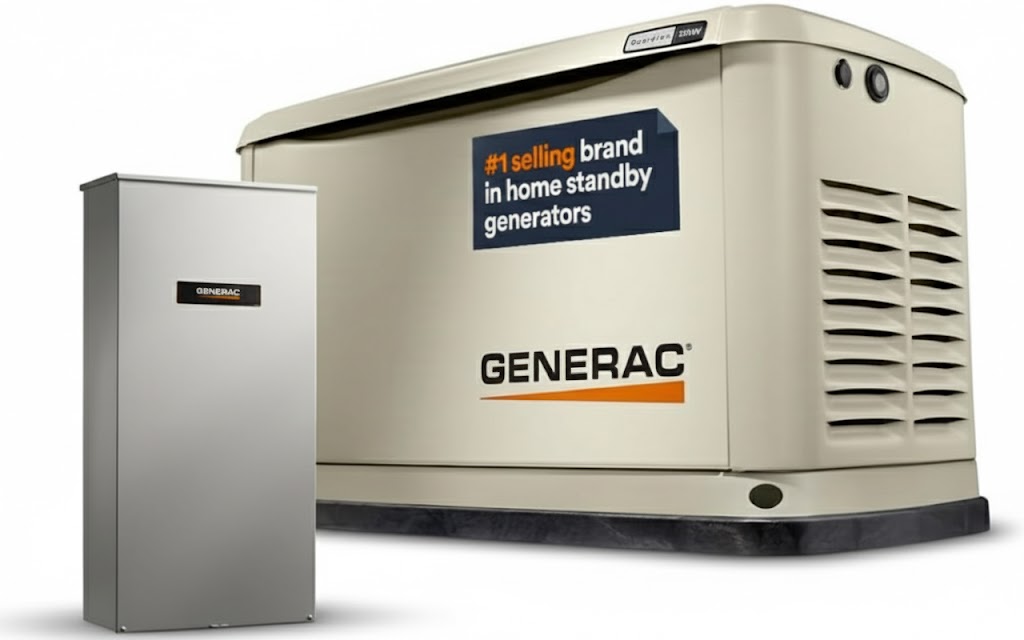
Generac Guardian 7172 10kW Home Standby Generator
Integrated Wi-Fi for instant system updates, smooth automatic power transfer, and reliable 10kW performance for full home protection
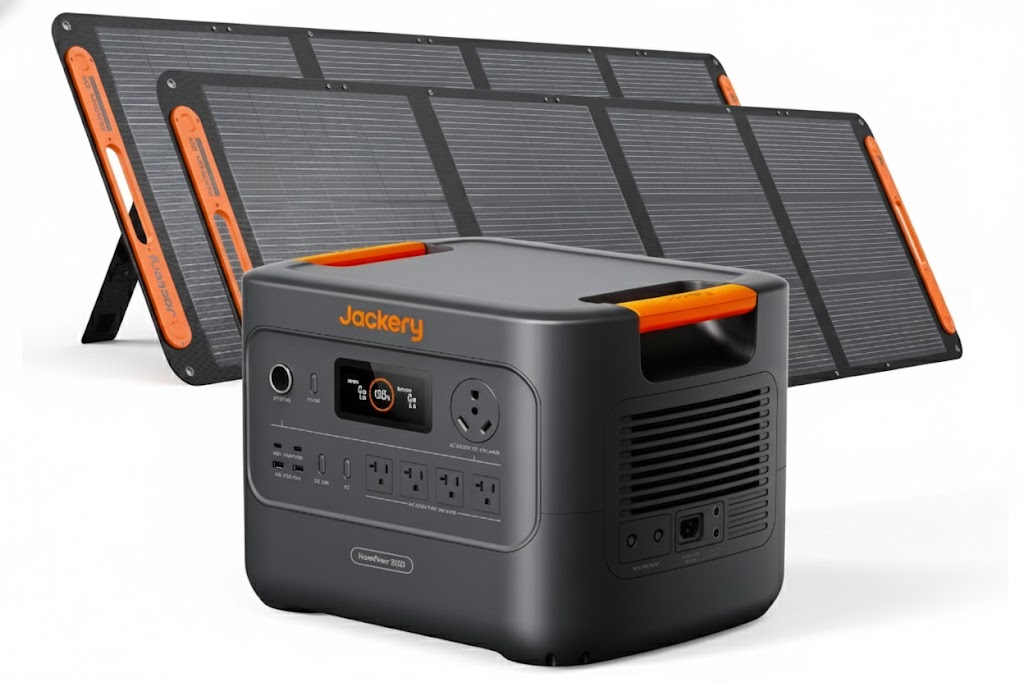
Jackery HomePower 3000 Portable Power Station
High power output for running multiple devices, a long-lasting LFP battery, and a portable design that supports efficient solar charging
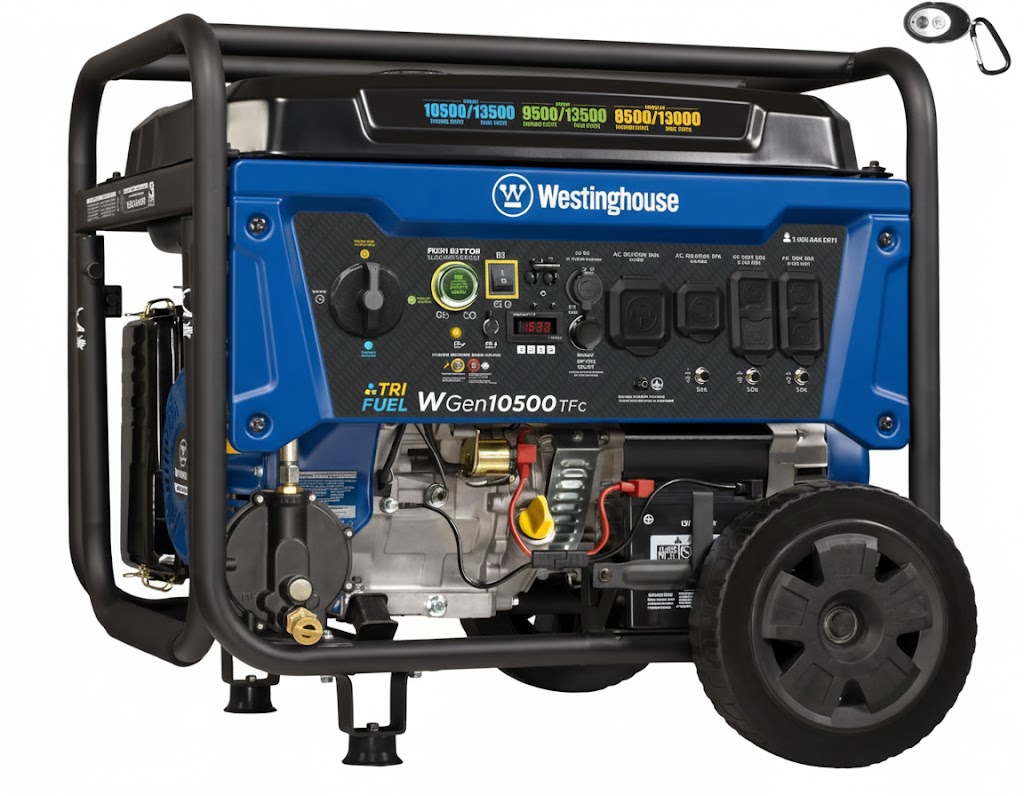
Westinghouse 13000-Watt Tri-Fuel Portable Generator
Tri-fuel design gives flexible power options, remote electric start adds convenience, and transfer-switch readiness ensures smooth home backup
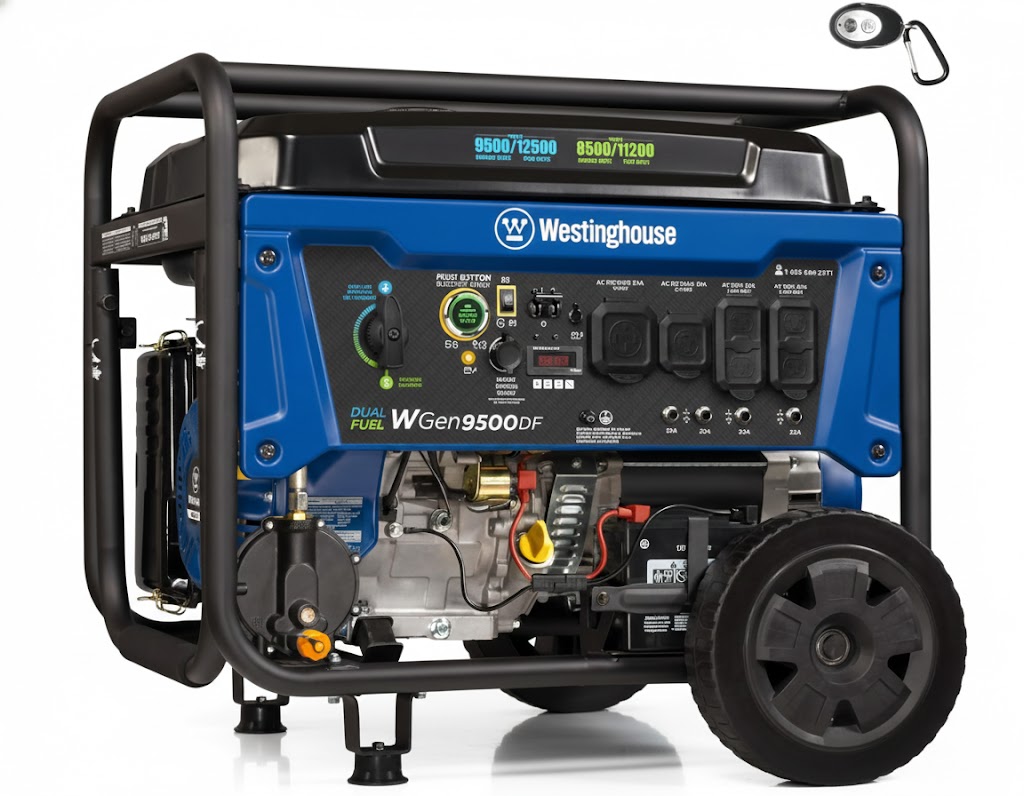
Westinghouse 12500W Dual Fuel Generator
Dual-fuel capability for flexible fuel choices, remote electric start for easy use, and high wattage to power large home appliances with confidence
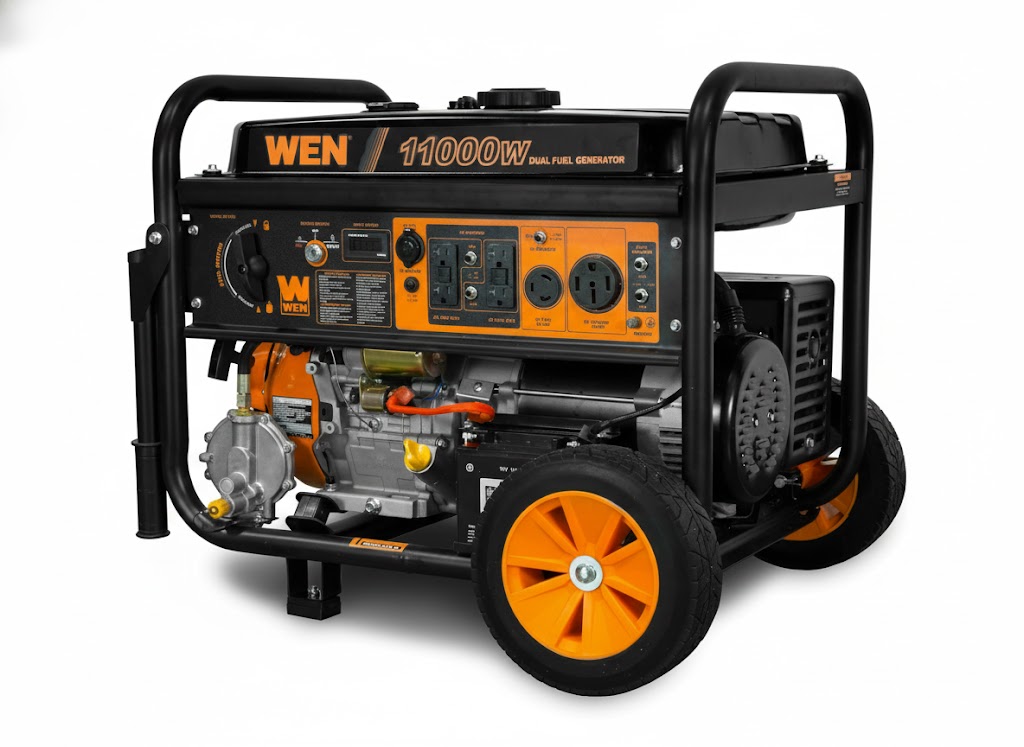
WEN DF1100T Dual Fuel Portable Generator
Dual-fuel flexibility, easy electric start, and CARB-compliant performance for eco-friendly operation
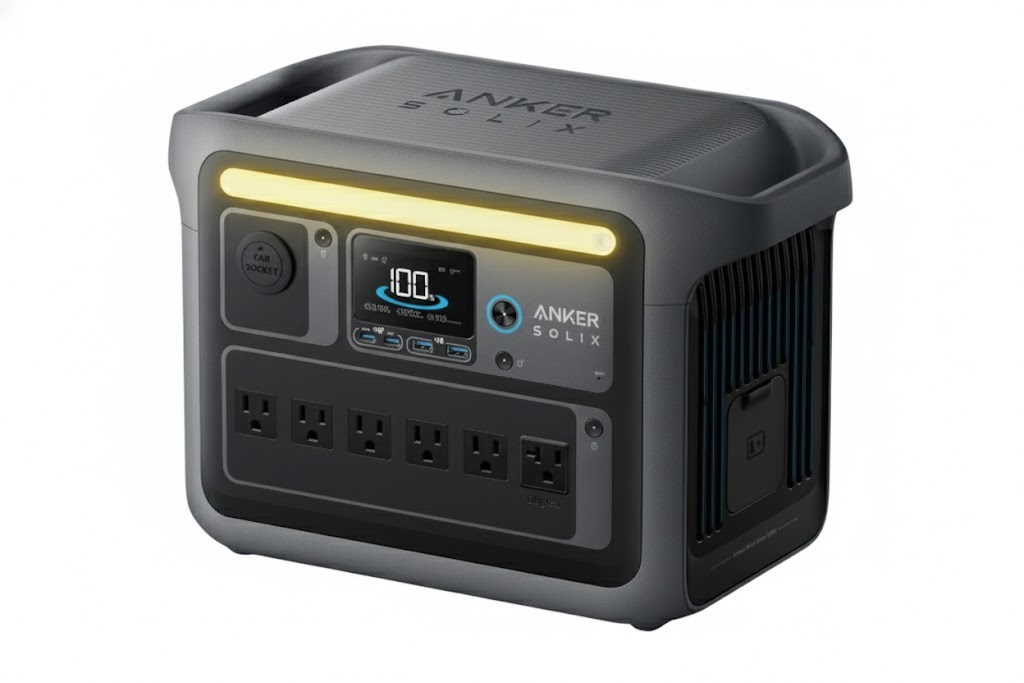
Anker SOLIX C1000 1800W Portable Power Station
Full charge in just 58 minutes, powerful 1800W output with 2400W peak, and a long-lasting 1056Wh LiFePO₄ battery for dependable use
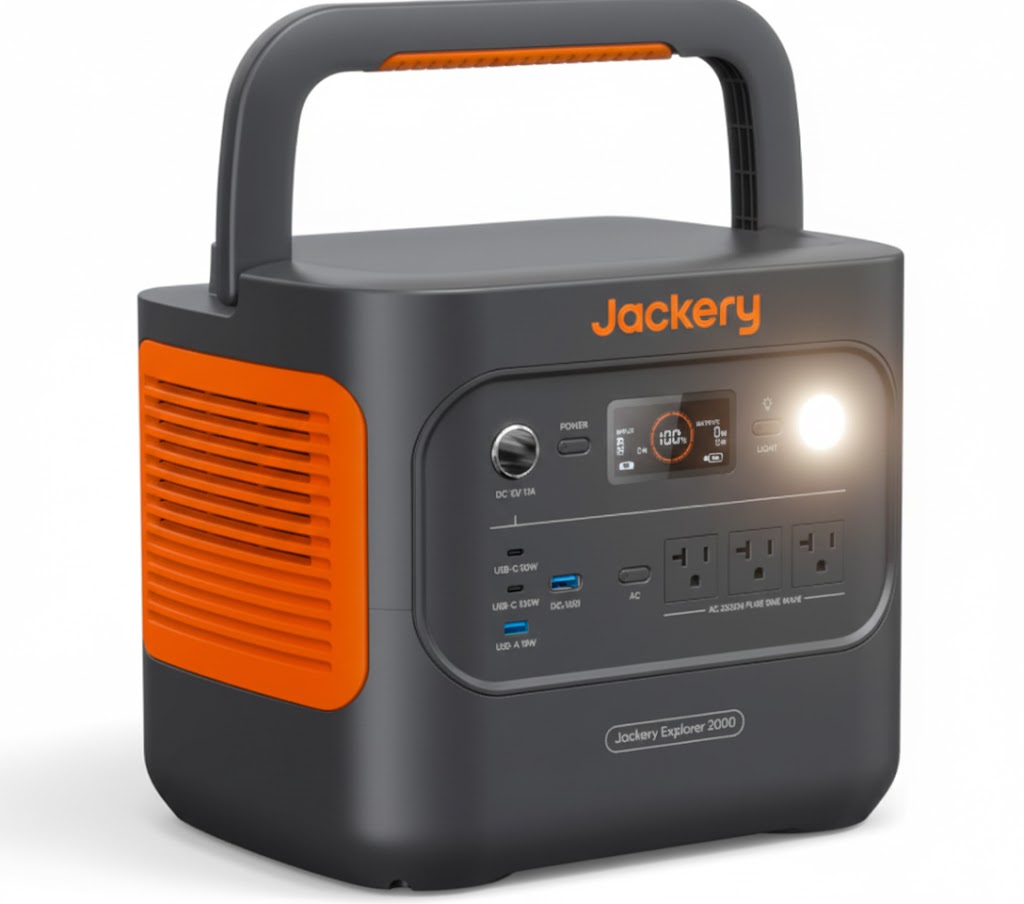
Jackery Explorer 2000 V2 Portable Power Station
100W USB-C PD fast charging, 20ms UPS for uninterrupted backup, and a high-capacity 2042Wh LiFePO₄ battery for long-lasting power
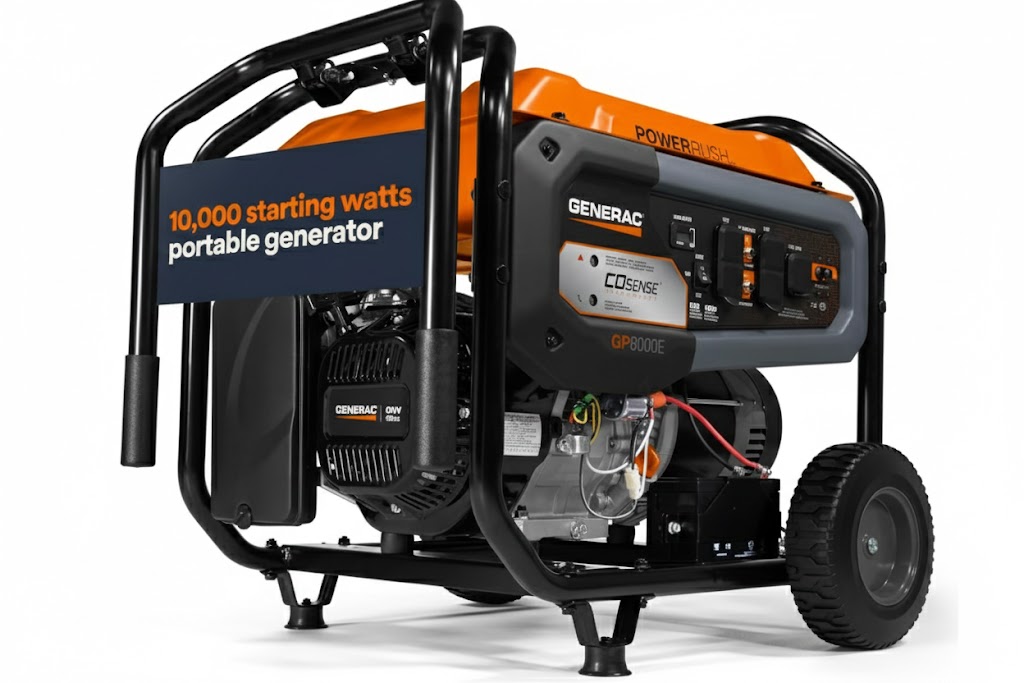
Generac GP8000E 8000-Watt Portable Generator
Electric start for quick operation, COsense technology for carbon-monoxide safety, and Powerrush technology for extra starting power
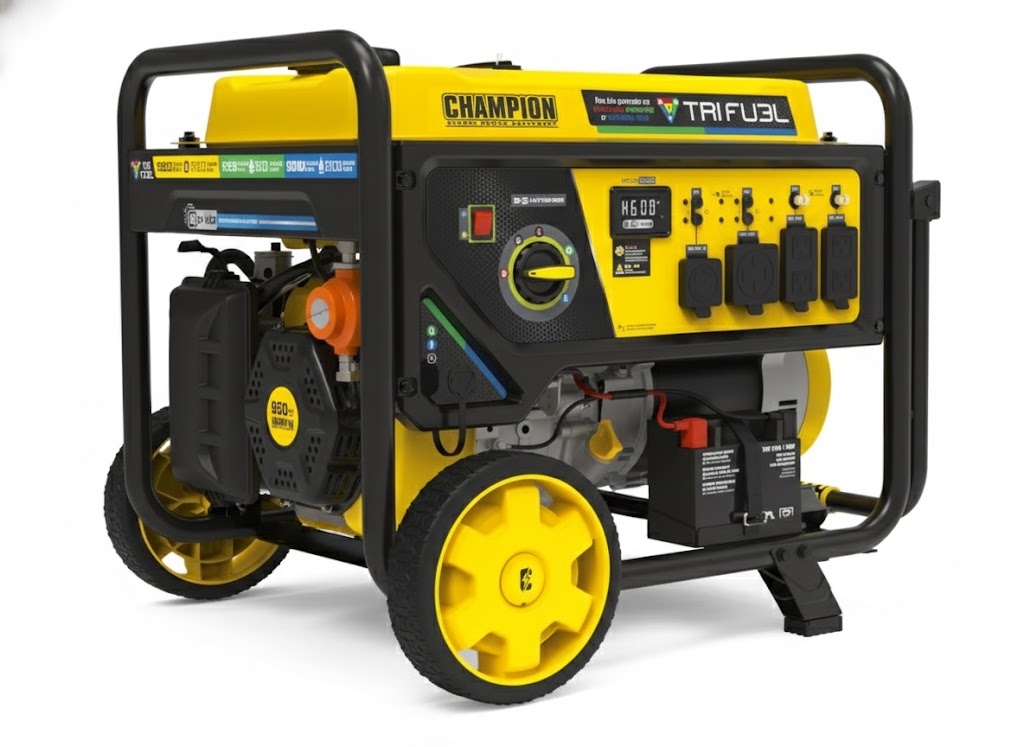
Champion Power Equipment 12,500-Watt Tri-Fuel Generator
Electric start for easy use, tri-fuel capability for flexible fueling, and CO Shield for safer indoor operation

Jackery 1000 Solar Generator with 200W Panel
Fast 1-hour recharge for quick power recovery, a long-lasting LiFePO₄ battery, and a strong 1500W AC output to run a wide range of devices
The 10 Best Generators and Power Stations, Reviewed
1. Generac Guardian 7172 10kW Home Standby Generator — Best Automatic Backup
Permanently installed, starts itself, and needs nobody to be home.
A standby generator is a different product from everything else here. It is wired into your home through an automatic transfer switch, runs on natural gas or propane, and starts within seconds of a power cut whether you are there or not. At 10kW it covers essential circuits — heating, refrigeration, well pump, some lighting — rather than the whole house.
What we like
- Starts automatically, so an outage while you are away is handled
- No fuel to store, carry or refill — it runs on your gas supply
- Permanently installed outdoors, so carbon monoxide risk is designed out
- WiFi monitoring for status and maintenance alerts
What you give up
- Requires professional installation, including electrical and gas work — a significant additional cost
- Permits and inspection are usually required
- 10kW covers essential circuits, not an entire modern home
- Needs annual servicing to remain reliable
Right for: homes with frequent outages and occupants who travel. Skip it if: you want something portable or cannot install permanently.
Check the current price on Amazon →
2. Jackery HomePower 3000 Portable Power Station — Best Large Battery Backup
Three thousand watts with an LFP battery — enough for a lot of a house, silently.
Battery power stations produce no exhaust, no noise and no carbon monoxide, which means they can be used indoors during an outage. That single fact makes them the right answer for apartments and for anyone who cannot run a gasoline generator safely. At 3000W this runs a fridge, lighting, electronics and some appliances simultaneously.
What we like
- Safe to use indoors — no exhaust, no carbon monoxide
- Silent operation, unlike any gasoline generator
- LFP battery chemistry for long cycle life
- High output supports multiple substantial loads
The part that annoys people
- Finite stored energy — when it is empty you need power to recharge it
- Recharging from mains requires the outage to end; solar takes hours
- Expensive per watt compared with gasoline generators
- Heavy despite being called portable
Right for: apartments, indoor use and shorter outages. Skip it if: you need days of power without recharging.
Check the current price on Amazon →
3. Westinghouse 13000-Watt Tri-Fuel Portable Generator — Highest Output
Thirteen thousand watts across three fuels, with a remote start.
This is the largest portable here, and tri-fuel is the practical advantage: gasoline for convenience, propane for storage without going stale, natural gas if you have a supply. In a prolonged outage, being able to switch fuels according to what you can actually get is worth more than a few hundred watts either way.
What we like
- 13,000W covers most household circuits
- Tri-fuel: gasoline, propane and natural gas
- Transfer-switch ready for safe household connection
- Remote electric start
Where it disappoints
- Never run indoors or in a garage — carbon monoxide is fatal and odorless
- Very heavy despite wheels
- Loud enough to be an issue for neighbors
- High fuel consumption at high load
Right for: whole-home backup with a transfer switch. Skip it if: you cannot site it well away from the house.
Check the current price on Amazon →
4. Westinghouse 12500W Dual Fuel Generator — Best Dual Fuel
Twelve and a half thousand watts on gasoline or propane, with remote start.
Dual fuel removes the main problem with gasoline generators: fuel goes stale in storage, and in an emergency the gasoline stations have queues. Propane stores indefinitely, so a couple of tanks in the garage means you are ready regardless. Remote start means you are not wrestling a pull cord in the rain.
What we like
- Dual fuel with propane for indefinite storage
- 12,500W covers heavy household loads
- Remote electric start
- Transfer-switch compatible
The drawbacks
- Outdoor use only — carbon monoxide risk
- Heavy to move despite wheels
- Loud under load
- Regular maintenance needed to stay reliable
Right for: households wanting substantial backup with fuel flexibility. Skip it if: storage space is limited.
Check the current price on Amazon →
5. WEN DF1100T Dual Fuel Portable Generator — Best Value Dual Fuel
Dual fuel, electric start and CARB compliance, at a lower price.
CARB compliance matters if you are in California or a state following its emissions rules — non-compliant generators cannot be sold or, in some cases, legally used there. Getting that alongside dual fuel and electric start at this price is the argument for the WEN over the bigger names.
What we like
- CARB compliant, which matters in California and similar states
- Dual fuel flexibility
- Electric start
- Lower price than comparable Westinghouse and Champion units
The catch
- Outdoor use only
- Less established brand support than Generac or Champion
- Loud under load, as all open-frame generators are
- Heavy unit to move and store
Right for: budget-conscious backup in CARB states. Skip it if: you want the strongest service network.
Check the current price on Amazon →
6. Anker SOLIX C1000 Portable Power Station — Best Compact Power Station
Full charge in 58 minutes, in a station you can carry one-handed.
Recharge speed is the specification that decides how useful a smaller battery is. Fifty-eight minutes to full means you can top it up between outages, from a car, or in a short window of generator running. At 1800W output with 2400W peak, it handles a fridge and electronics without difficulty.
What we like
- 58-minute full recharge is exceptionally fast
- 1800W output with 2400W peak handles surge loads
- LiFePO4 battery for long service life
- Truly portable size and weight
Where it falls short
- 1056Wh is a modest capacity — hours, not days
- Safe indoors but still needs recharging from somewhere
- Will not run large appliances such as electric heating
- Costly per watt-hour compared with gasoline
Right for: short outages, camping and running electronics. Skip it if: you need whole-home backup.
Check the current price on Amazon →
7. Jackery Explorer 2000 V2 Portable Power Station — Best UPS Function
A 20ms switchover, which means your computer never notices the outage.
Twenty milliseconds is fast enough that equipment plugged through it does not reboot when mains power fails. For anyone working from home, running a home server, or with medical equipment that must not interrupt, that function is the reason to choose this over a larger battery without it.
What we like
- 20ms UPS switchover keeps sensitive equipment running
- 2042Wh capacity handles a working day for electronics
- 100W USB-C PD for laptops and devices
- LiFePO4 chemistry for long life
What owners complain about
- UPS mode requires it to be left plugged in and charged
- 2042Wh will not run heating or heavy appliances long
- Expensive for the capacity
- Heavy for regular carrying
Right for: home offices and equipment that must not lose power. Skip it if: you need to run appliances.
Check the current price on Amazon →
8. Generac GP8000E 8000-Watt Portable Generator — Best Mid-Size Gasoline
Eight thousand watts with carbon monoxide detection built in.
COsense is the feature worth singling out: the generator monitors carbon monoxide build-up and shuts itself down if levels rise dangerously. It is not permission to run a generator indoors — nothing is — but it is a genuine safety layer against the most common cause of generator fatalities, which is people running them in garages and near windows.
What we like
- COsense shuts the generator down if CO builds up
- PowerRush handles motor startup surges
- 8000W suits essential circuits without excessive size
- Electric start and Generac’s service network
The downside
- CO detection is a backstop, not permission to run indoors — never do
- Gasoline only, so fuel goes stale in storage
- Loud under load
- Regular maintenance required
Right for: essential-circuit backup with an added safety layer. Skip it if: you want fuel flexibility.
Check the current price on Amazon →
9. Champion Power Equipment 12,500-Watt Tri-Fuel Generator — Best Tri-Fuel Value
Tri-fuel and CO Shield, from a brand with a strong support network.
Champion’s combination here is hard to fault: 12,500W, three fuel options, electric start, and CO Shield automatic shutdown. Champion’s service and parts network in the US is among the better ones, which matters for equipment that sits unused for months and then must work.
What we like
- Tri-fuel flexibility across gasoline, propane and natural gas
- CO Shield automatic shutdown safety system
- 12,500W covers heavy household loads
- Strong US service and parts network
What you give up
- Outdoor use only, always
- Heavy and bulky to store
- Loud under load
- Tri-fuel conversion requires the correct fittings
Right for: whole-home backup with fuel flexibility and good support. Skip it if: you need something portable in practice.
Check the current price on Amazon →
10. Jackery 1000 Solar Generator with 200W Panel — Best Solar Option
A battery station with a panel included — power that renews itself.
The panel is what makes this different from the other power stations. In a multi-day outage, a battery without a recharge source is a one-day solution; with a 200W panel you get a partial recharge each sunny day, which keeps a fridge and phones going indefinitely rather than for one afternoon.
What we like
- Solar panel included — recharges without mains power
- 1500W AC output runs a fridge and essentials
- LiFePO4 battery for long cycle life
- Safe indoors with no exhaust
The part that annoys people
- 200W panel recharges slowly — a full charge takes many hours of good sun
- Cloudy weather substantially reduces solar input
- 1002Wh is modest for whole-home needs
- Panel needs siting and repositioning through the day
Right for: multi-day outages, off-grid use and camping. Skip it if: you need high power immediately.
Check the current price on Amazon →
How to Choose a Generator
Safety first, and it is not negotiable
- Outdoors only, at least 20 feet from the house, with exhaust directed away from doors, windows and vents.
- Never in a garage, even with the door open.
- Working CO alarms indoors, on every level.
- Never backfeed through a wall socket — it can electrocute utility workers and damage your wiring. Household connection goes through a transfer switch installed by an electrician.
- Let it cool before refuelling, and store fuel away from the house.
Work out what you actually need to run
List the circuits that matter: refrigeration, heating or cooling, well pump, medical equipment, lighting, internet. Add their running watts, then add the largest single starting surge — motors draw several times their running wattage for a moment. That total is your requirement, and it is usually lower than people assume.
Choose the type before the size
- Standby: automatic, permanent, no fuel handling, expensive to install. For frequent outages.
- Portable gasoline: most power per pound spent, requires fuel storage and outdoor operation. For occasional long outages.
- Battery station: silent, no exhaust, usable indoors, finite capacity. For apartments, short outages and sensitive equipment.
Consider fuel storage realistically
Gasoline degrades in months and is the first thing to sell out before a storm. Propane stores indefinitely and is safer to keep in quantity. Natural gas needs no storage at all but requires a connection. Dual and tri-fuel generators exist because this problem is real.
Plan the transfer switch
A transfer switch isolates your house from the grid and lets you power circuits safely from a generator. It is an electrician’s job and it needs doing before the outage, not during it. Without one, you are limited to running extension leads to individual appliances.
Common mistakes
- Running a generator in a garage. The most common cause of generator deaths.
- Backfeeding through a socket. Illegal, dangerous and potentially lethal to utility workers.
- Storing stale gasoline. It will not start when you need it.
- Buying on running watts alone. Starting surges are what trip a generator.
- Never testing it. A generator that has not run in two years frequently will not start.
Frequently Asked Questions
Can I run a generator in my garage with the door open?
No. Carbon monoxide accumulates in enclosed and partially enclosed spaces even with doors open, and it is odorless. Generators must be run outdoors, well away from the building, with exhaust directed away from doors, windows and vents.
How many watts do I need?
Add up the running watts of what you must power, then add the largest starting surge among them. Essential circuits — fridge, some lighting, internet, a furnace fan — commonly total under 5,000W. Whole-home needs, including electric heating or air conditioning, are considerably higher.
What is a transfer switch and do I need one?
It safely isolates your house from the grid and connects selected circuits to the generator. You need one to power household circuits safely. Connecting a generator to a wall socket instead — backfeeding — is dangerous and can electrocute utility workers.
Are battery power stations a real alternative to generators?
For shorter outages, apartments and indoor use, yes — they are silent, produce no exhaust, and can run a fridge and electronics. What they cannot do is run for days without recharging, and they cost considerably more per watt.
Is dual fuel worth it?
Usually yes. Propane stores indefinitely without degrading, while gasoline goes stale and sells out before storms. The ability to switch fuels according to availability is worth more than a small difference in output.
How often should I run a generator I am not using?
Most manufacturers recommend running it under load periodically — commonly monthly or quarterly — and changing the oil per the schedule. A generator that has sat untouched for years frequently fails when needed.
So what should you buy?
If outages are frequent and you are sometimes away, the Generac Guardian 10kW standby is the only pick here that handles a power cut without anyone present — at the cost of professional installation.
For portable backup, fuel flexibility matters more than the last thousand watts: the Champion 12,500W tri-fuel combines three fuels with CO Shield and good support, and the Westinghouse 13000W is the higher-output alternative. The WEN DF1100T is the value option, and CARB compliant.
If you are in an apartment, or need power indoors, a gasoline generator is not an option at all. The Jackery HomePower 3000 is the large silent choice, the Jackery Explorer 2000 V2 keeps a home office running through the switchover, and the Jackery 1000 with a solar panel is the one that keeps going across a multi-day outage.
Whatever you buy, install the transfer switch before you need it, and never run an engine indoors.
Prices and availability on Amazon change frequently — check the product page for current information before buying.
We link to the agency page instead of paraphrasing it, because safety guidance is updated and ours would go stale. If anything here conflicts with the manufacturer manual for your specific model, follow the manual.