
 Victoria
BuyerRank is reader-supported. We may earn a commission when you buy through links on this page, at no extra cost to you. As an Amazon Associate, we earn from qualifying purchases. Prices and availability are accurate as of the date of publication and can change at any time — please check the retailer for the current price. Learn more. Written by Victoria — how we choose what to recommend.
Our quick picks
Ranked by what each one is best at, not by a score we made up. Ratings are what the product showed on Amazon when we last checked — how we rank.
- Aluminum construction, so the carrier itself eats less of your tongue weight allowance.
- This is the specification that catches people out: the carrier’s own weight counts against your vehicle’s tongue weight limit, along with the bike.
- Six hundred pounds and a 79-inch rail – the most capable carrier here.
- Six hundred pounds is the highest capacity in this group, and the 79-inch rail with adjustable positioning handles longer wheelbases that shorter carriers cannot.
- A six-foot ramp, which is the difference between loading and struggling.
- Ramp length determines the loading angle, and loading angle determines whether you can push a bike up it.
- Four bicycles, folding, with locking and tilt-away access.
- This is a bicycle rack rather than a motorcycle carrier – a different product for a different job.
- Two hundred pounds with a built-in ramp – specified for e-bike weight.
- E-bikes weigh two to three times what a pedal bike does, which puts them beyond most standard bike racks.
- Tray-style rather than hanging, which is gentler on bike frames.
- Hanging racks suspend bikes by the top tube, which does not work for step-through frames and can mark carbon.
- Five hundred pounds of steel with a grit-coated track.
- The grit coating is the detail worth noting: a smooth metal track becomes dangerous with wet boots and wet tires, and grit coating is what keeps loading controlled in the rain.
- Carbon steel, four tie-down points, and built for off-road bikes.
- Four tie-down points rather than two is the detail that matters on rough roads – a dirt bike on forest tracks and unpaved access roads moves in ways a road bike on tarmac does not.
- Two e-bikes up to 200 lbs total, with a ramp, at a lower price.
- The same category as the CyberRack – e-bike capacity with a loading ramp – at a more accessible price.
- Five-inch tire clearance and 70 lbs per bike.
- Fat-tire e-bikes do not fit standard racks – the trays are too narrow and the wheel straps do not reach.
Everything below is the why: the specifications that settle the choice, and where each pick falls down.
There is one number that decides whether any of this works, and it is not on the carrier’s listing: your vehicle’s tongue weight rating. That is the maximum downward force your hitch receiver can take, and it has to cover the carrier itself plus whatever you put on it. A 60 lb steel carrier with a 400 lb bike is 460 lbs on a receiver that may be rated for 500.
Exceed it and you are not just risking the hitch — you are unloading the front axle, which affects steering and braking. Find the rating in your owner’s manual and on the receiver itself, and use the lower of the two.
This guide covers two different products that get listed together: motorcycle and dirt bike carriers, which are platforms with ramps, and bicycle and e-bike racks, which hold bikes upright. We have labeled which is which, because they are not interchangeable.
A note on method: we have not loaded these carriers ourselves. Our picks are based on manufacturer specifications, construction and patterns across owner reports. Capacity figures are manufacturer ratings — your vehicle’s tongue weight limit is the binding constraint, not the carrier’s.
Our shortlisting process
We sorted on the specifications that decide whether a carrier works with your vehicle and your load:
- Carrier weight, not just capacity. The carrier’s own weight counts against your tongue weight allowance. Aluminum buys you payload.
- Ramp length and mounting. Ramp length sets the loading angle; a ramp that mounts either side matters when loading on a slope or a roadside.
- Tie-down points. Two is a minimum. Four is what keeps a bike still on rough roads.
- Anti-rattle and anti-wobble systems. Play in the receiver becomes movement at the far end of a long carrier.
Each carrier gets a role rather than a rank, because a dirt bike platform and a fat-tire e-bike rack are different products entirely.
Our picks, in one table
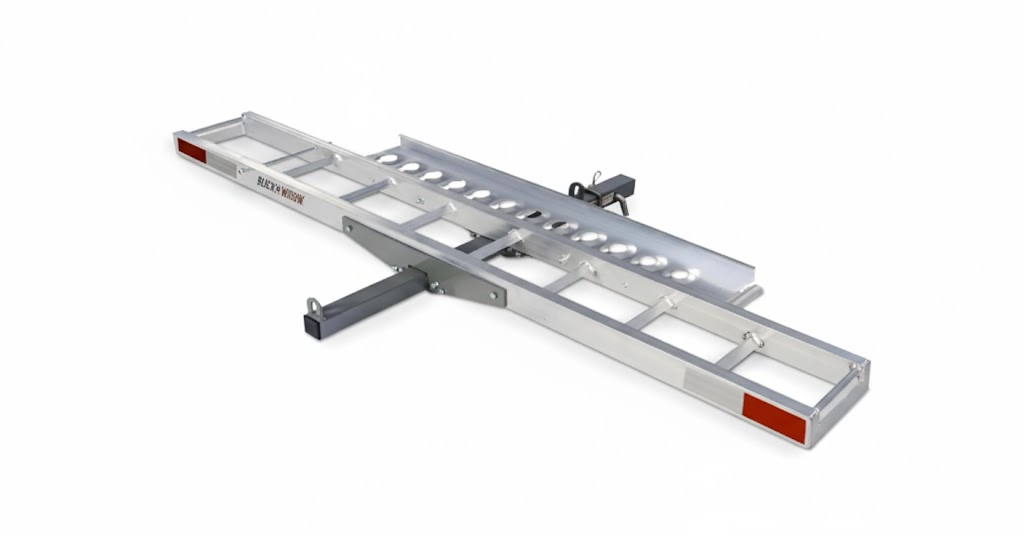
Black Widow Motorcycle Hitch Carrier with Loading Ramp (400 lbs)
Aluminum build, 400 lb capacity, roll-on ramp (mountable both sides), anti-rattle device, fits wheels up to 5.5″, works with Class III/IV 2″ hitches, lightweight and durable
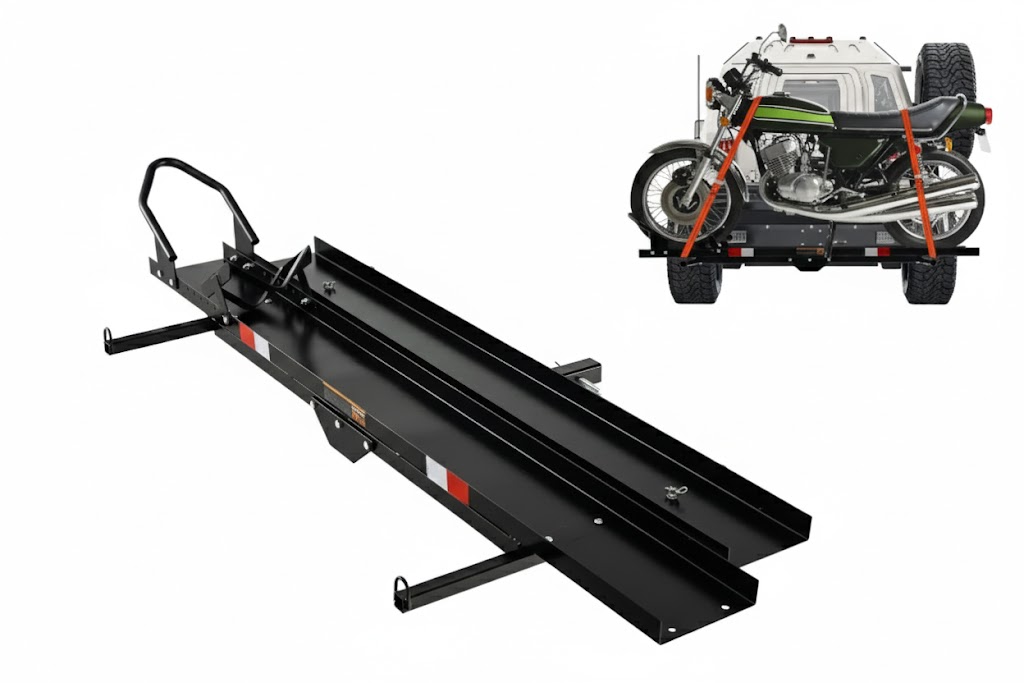
Goplus 600 lbs Motorcycle Hitch Carrier with Ramp
600 lb capacity, heavy-duty steel, fits tires up to 7.5″, works with 2″ receivers, 79″ rail with adjustable wheel stop, anti-movement locks for stable transport
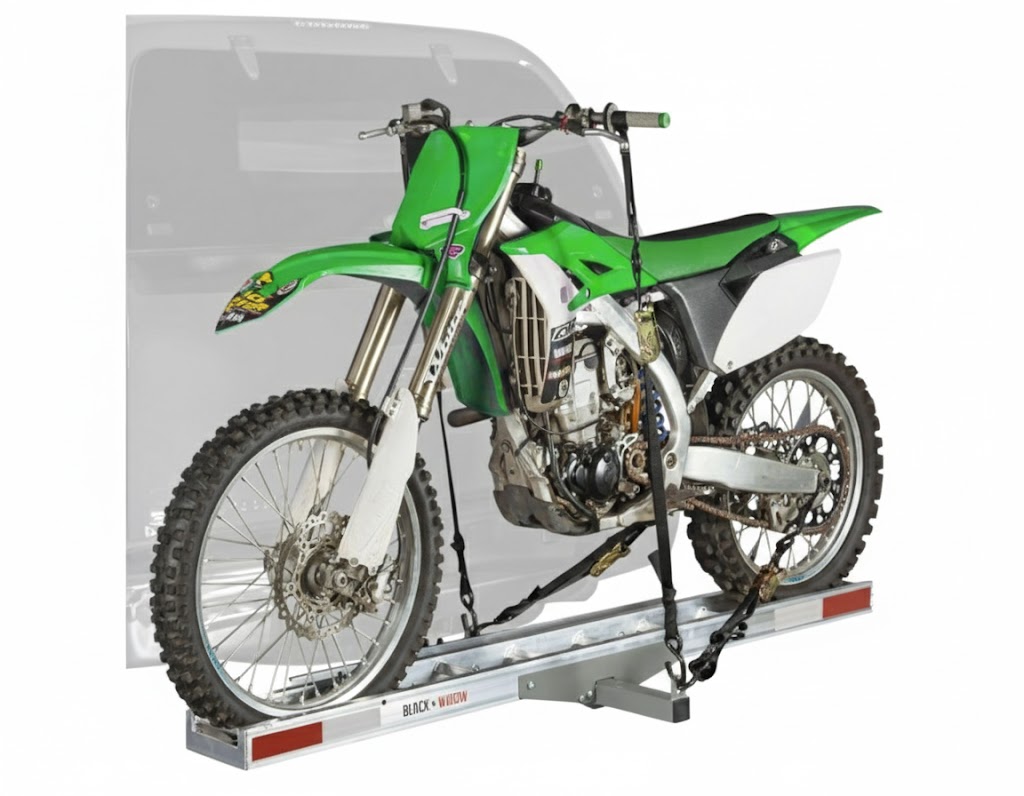
Black Widow 400 lb Motorcycle Hitch Carrier w/ 6FT Ramp
400 lb capacity, lightweight aluminum track, 6 ft roll-on ramp (mountable both sides), steel hitch tube, anti-rattle device, youth bike adapter, fits 2″ Class III/IV receivers
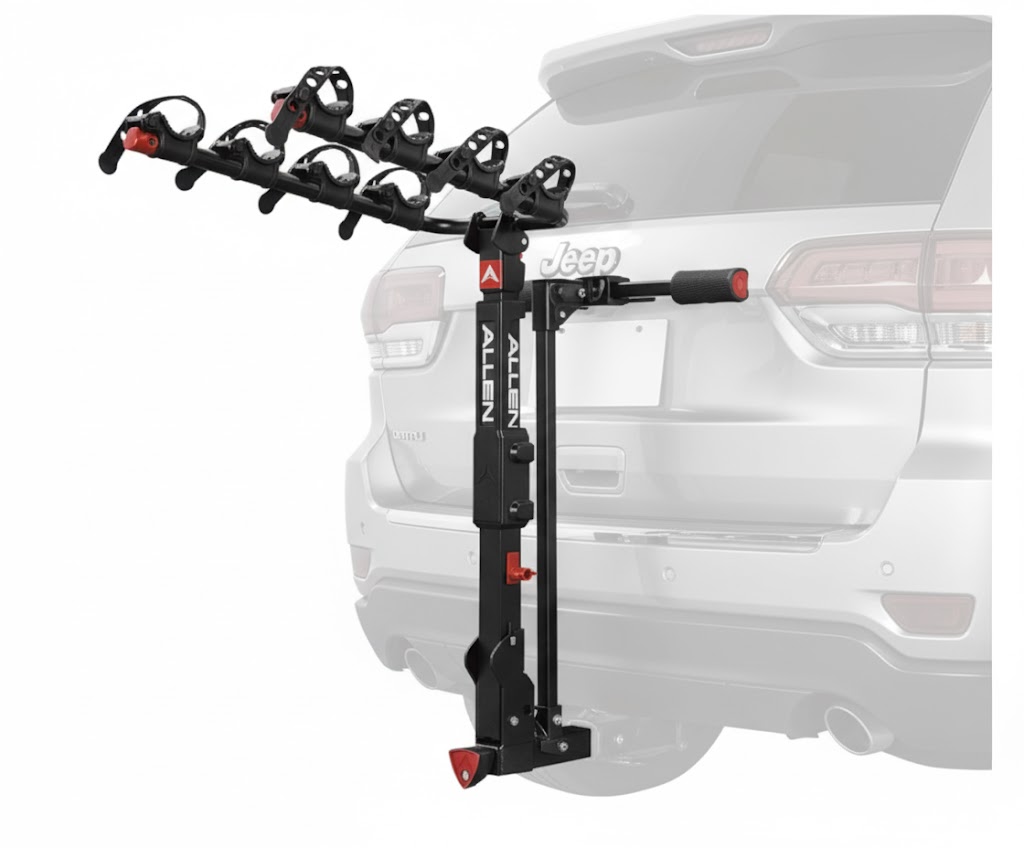
Allen Sports Premier Locking Quick Release 4-Bike Carrier (2″ Hitch)
Quick-set arms, foldable design, locking system, dual tie-down cradles, tilt-away access, padded spine shield, 140 lb capacity, fits 2″ hitches
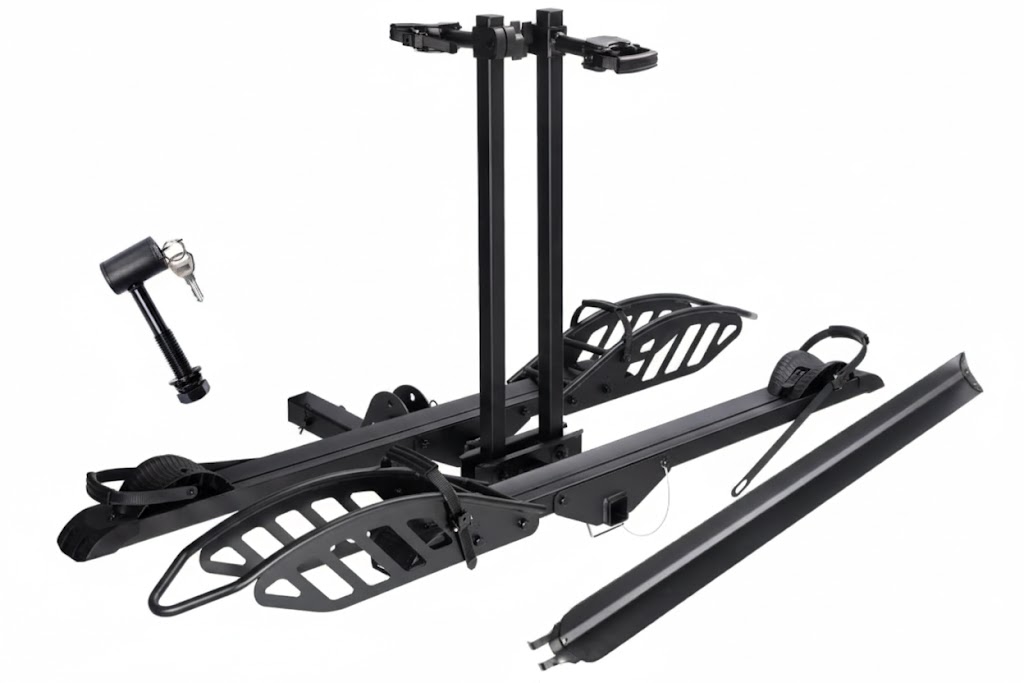
CyberRack E2 Hitch 2-Bike Rack with Ramp & Lock (2” Receiver)
CyberRack E2 Hitch 2-Bike Rack – 200 lb capacity, built-in loading ramp, secure hitch lock, anti-wobble stability, fits 2” receivers, supports fat tires 2.5”–5”, rust-resistant, foldable design
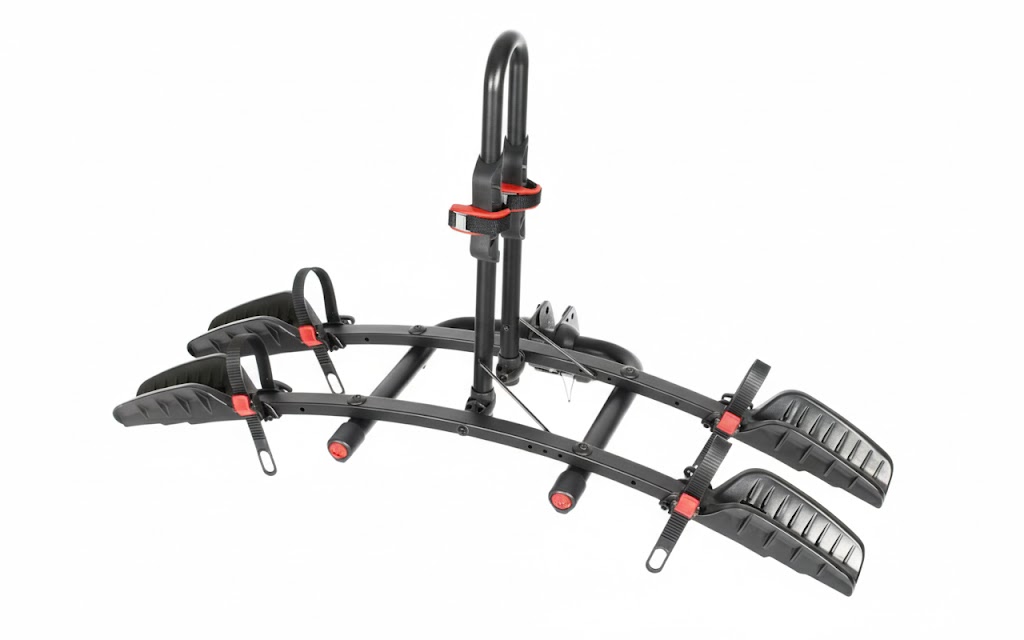
TRIMAX Road-Max Blade-Runner2 Hitch Bike Carrier
Secure 2-bike tray-style carrier with padded adjustable arm, strong locking hitch system for any 2″ receiver, 66 lbs capacity, foldable steel design, easy to mount and perfect for cars, SUVs, trucks, and vans
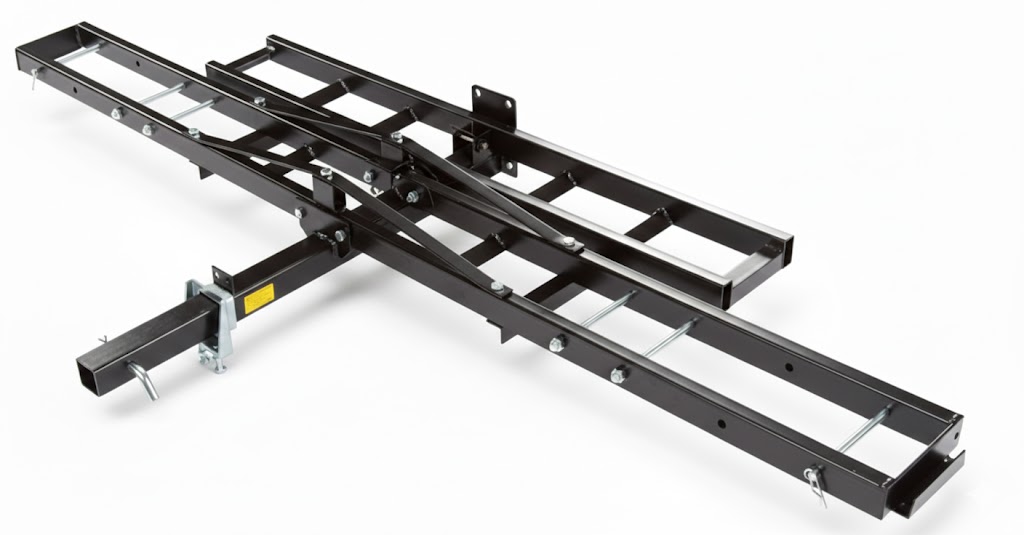
Black Widow Steel Motorcycle Carrier
Heavy-duty 500 lb hitch carrier with grit-coated track and ramp for safe loading, durable powder-coated steel, built-in wheel chock, anti-rattle device, fits 2″ receivers and tires up to 5″ wide
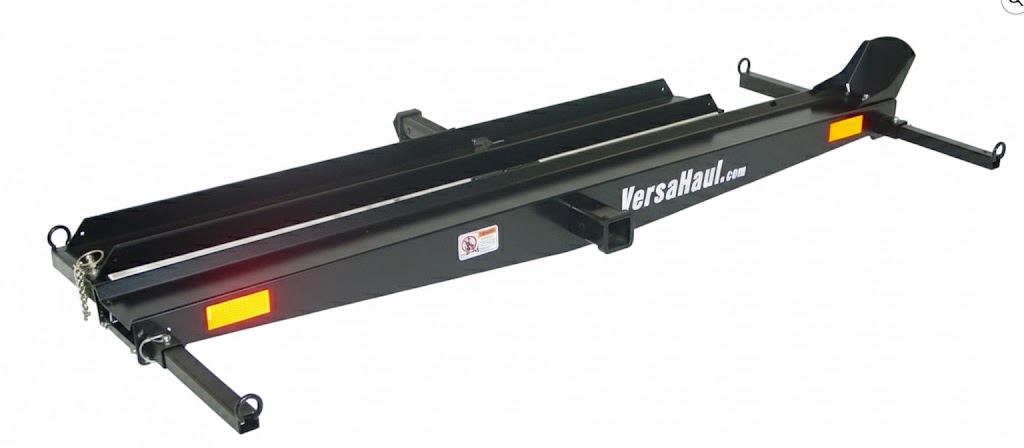
VersaHaul Dirt Bike Hitch Carrier with Ramp
Heavy-duty 500 lb capacity, carbon-steel build, fits 2″ Class III/IV hitches, includes loading ramp, 4 tie-down points, and integrated hitch tube for added towing versatility
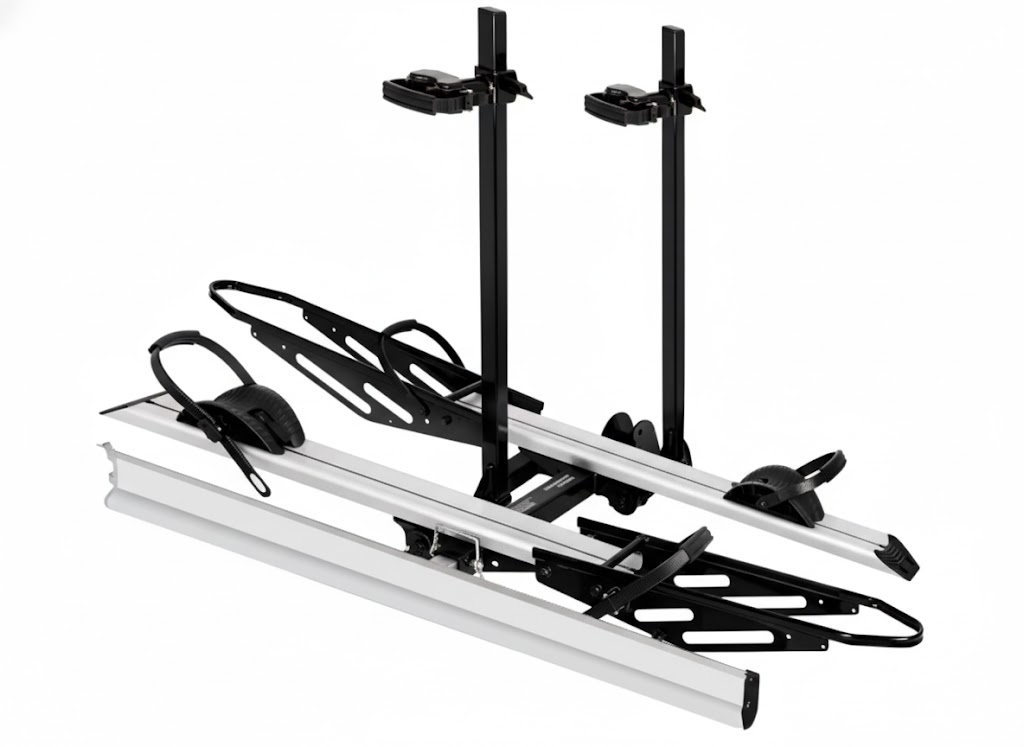
Young Hitch Mount Bike Rack with Ramp
Carries 2 e-bikes up to 200 lbs total, reinforced steel/aluminum build, built-in loading ramp, anti-wobble secure hold, RV-approved, fits 2″ hitch for easy, stable transport
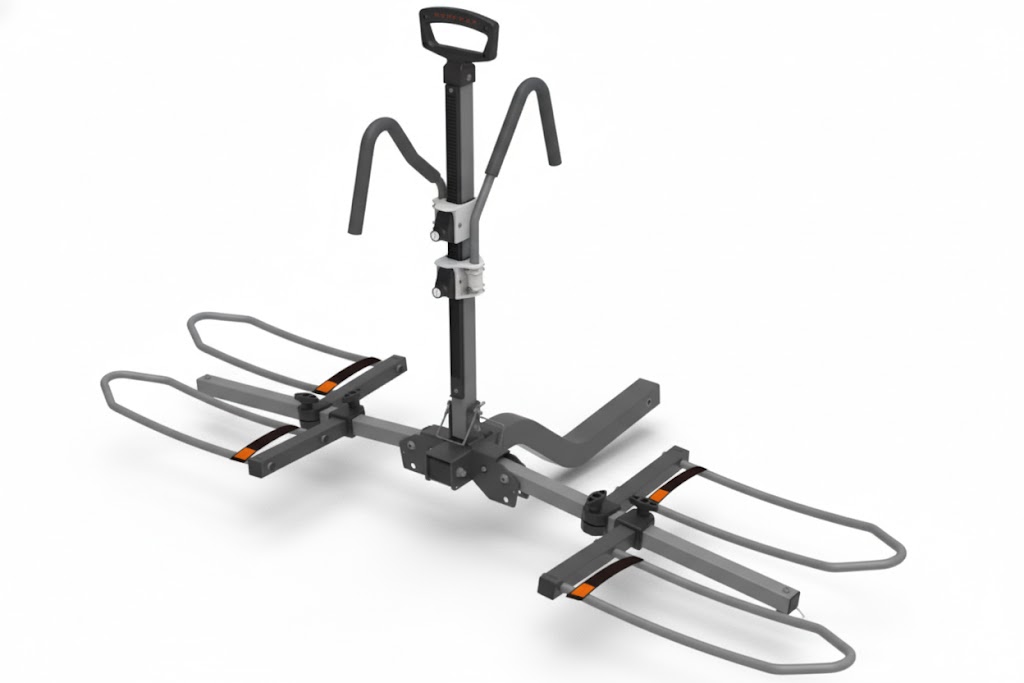
HYPERAX Volt 2 E-Bike Hitch Rack
Holds 2 bikes (70 lbs each), tilts for trunk access, rubberized secure clamps, dual locks, fits up to 5″ tires, anti-wobble 2″ hitch design, easy carry and wall-mount storage
The 10 Best Hitch Carriers, Reviewed
1. Black Widow Aluminum Motorcycle Hitch Carrier with Ramp — Best Lightweight Motorcycle Carrier
Aluminum construction, so the carrier itself eats less of your tongue weight allowance.
This is the specification that catches people out: the carrier’s own weight counts against your vehicle’s tongue weight limit, along with the bike. An aluminum carrier can weigh 30–40 lbs less than a steel equivalent, which is 30–40 lbs of motorcycle you can carry instead. The ramp mounts on either side, which matters when you are loading on a slope or against traffic.
What we like
- Aluminum build leaves more tongue weight for the bike
- Ramp mounts on either side for flexible loading
- Anti-rattle device reduces movement and noise in the hitch
- 400 lb capacity covers most small and mid-size bikes
What you give up
- 400 lb limit rules out larger touring motorcycles
- Aluminum costs more than steel for the same capacity
- Wheel width limit applies — check against your tires
- Loading a heavy bike up a ramp alone is actually difficult
Right for: scooters, dirt bikes and mid-size motorcycles. Skip it if: your bike is over 400 lbs.
Check the current price on Amazon →
2. Goplus 600 lb Motorcycle Hitch Carrier with Ramp — Highest Capacity
Six hundred pounds and a 79-inch rail — the most capable carrier here.
Six hundred pounds is the highest capacity in this group, and the 79-inch rail with adjustable positioning handles longer wheelbases that shorter carriers cannot. Before being tempted, check your vehicle’s tongue weight rating: many SUVs are rated at 500–600 lbs total, and the carrier itself uses 60–80 lbs of that.
What we like
- 600 lb capacity — the highest here
- 79-inch rail with adjustable positioning for longer bikes
- Heavy-duty steel construction
- Fits 7.5-inch tires, wider than most carriers allow
The part that annoys people
- Check your vehicle tongue weight first — few vehicles can actually use 600 lbs
- Steel construction is heavy, using up your allowance
- Requires a 2-inch Class III/IV receiver
- Long rail extends well behind the vehicle, affecting handling and parking
Right for: larger bikes on vehicles with a high tongue weight rating. Skip it if: your vehicle is rated below 600 lbs.
Check the current price on Amazon →
3. Black Widow 400 lb Carrier with 6ft Ramp — Best for Tall Vehicles
A six-foot ramp, which is the difference between loading and struggling.
Ramp length determines the loading angle, and loading angle determines whether you can push a bike up it. A six-foot ramp on a high SUV or a lifted truck makes an angle that is manageable; a short ramp on the same vehicle does not. This is the specification to look at if your vehicle sits high.
What we like
- 6 ft ramp gives a manageable loading angle on tall vehicles
- Lightweight aluminum track
- Ramp mounts on either side
- Steel hitch tube for strength where it matters
Where it disappoints
- Long ramp needs storing somewhere when not in use
- 400 lb capacity
- Aluminum track with steel tube means mixed maintenance needs
- Still a two-person job for heavier bikes
Right for: trucks, lifted vehicles and tall SUVs. Skip it if: you have a low vehicle and want a compact ramp.
Check the current price on Amazon →
4. Allen Sports Premier Locking Quick Release 4-Bike Rack — Best Multi-Bike Rack
Four bicycles, folding, with locking and tilt-away access.
This is a bicycle rack rather than a motorcycle carrier — a different product for a different job. Four bikes with quick-set arms, a locking system and tilt-away access to the boot covers a family with pedal bikes. Tilt-away is the feature people miss until they need to open the tailgate with the rack loaded.
What we like
- Carries four bicycles
- Tilt-away access to the boot without unloading
- Integrated locking system
- Folds when not in use
The drawbacks
- Not for motorcycles — bicycles only
- Four bikes hanging rearward affects handling noticeably
- Hanging-style racks can mark bike frames without padding
- Check per-bike weight limits for e-bikes, which are much heavier
Right for: families with pedal bikes. Skip it if: you are carrying anything motorised.
Check the current price on Amazon →
5. CyberRack E2 Hitch 2-Bike Rack with Ramp — Best E-Bike Rack
Two hundred pounds with a built-in ramp — specified for e-bike weight.
E-bikes weigh two to three times what a pedal bike does, which puts them beyond most standard bike racks. A 200 lb capacity with a built-in loading ramp means you roll the bike up rather than lifting it, and the anti-wobble system keeps that weight stable rather than swaying.
What we like
- 200 lb capacity sized for e-bike weight
- Built-in ramp — no lifting a 60 lb bike to shoulder height
- Anti-wobble system for stability with heavy loads
- Hitch lock for security
The catch
- Two bikes maximum
- Still not a motorcycle carrier
- Heavier and bulkier than a standard bike rack
- Ramp adds length when in use
Right for: e-bike owners. Skip it if: your bikes are light enough to lift.
Check the current price on Amazon →
6. TRIMAX Road-Max Blade-Runner2 Hitch Bike Carrier — Best Tray-Style Bike Carrier
Tray-style rather than hanging, which is gentler on bike frames.
Hanging racks suspend bikes by the top tube, which does not work for step-through frames and can mark carbon. A tray-style carrier supports the wheels instead, holding the bike by contact points designed for load. The padded adjustable arm and locking hitch system round it out.
What we like
- Tray-style support works with any frame shape, including step-through
- Padded adjustable arm protects finishes
- Strong locking hitch system
- More stable than hanging racks at speed
Where it falls short
- Two bikes only
- Bicycles, not motorcycles
- Tray carriers are heavier than hanging racks
- Takes more storage space when not fitted
Right for: carbon frames, step-through bikes and mixed bike shapes. Skip it if: you need to carry more than two.
Check the current price on Amazon →
7. Black Widow Steel Motorcycle Carrier — Best Value Motorcycle Carrier
Five hundred pounds of steel with a grit-coated track.
The grit coating is the detail worth noting: a smooth metal track becomes dangerous with wet boots and wet tires, and grit coating is what keeps loading controlled in the rain. At 500 lb capacity in powder-coated steel, this is the durable, less expensive alternative to aluminum.
What we like
- Grit-coated track for grip when loading in wet conditions
- 500 lb capacity
- Powder-coated steel resists corrosion
- Cheaper than aluminum equivalents
What owners complain about
- Steel is heavy, using more of your tongue weight allowance
- Heavier to fit and remove from the receiver single-handed
- Powder coating chips and then rusts if not touched up
- 500 lbs still requires checking your vehicle rating
Right for: durability and value on a capable vehicle. Skip it if: tongue weight is tight.
Check the current price on Amazon →
8. VersaHaul Dirt Bike Hitch Carrier with Ramp — Best for Dirt Bikes
Carbon steel, four tie-down points, and built for off-road bikes.
Four tie-down points rather than two is the detail that matters on rough roads — a dirt bike on forest tracks and unpaved access roads moves in ways a road bike on tarmac does not. Carbon-steel construction and a 500 lb capacity cover the loads, with a Class III/IV fitment.
What we like
- Four tie-down points for secure strapping
- Carbon-steel construction built for rough use
- 500 lb capacity
- Loading ramp included
The downside
- Heavy steel construction
- Designed around dirt bikes rather than road motorcycles
- Requires a 2-inch Class III/IV receiver
- Tie-downs need checking during long journeys
Right for: dirt bikes and off-road use. Skip it if: you are carrying a road motorcycle.
Check the current price on Amazon →
9. Young Hitch Mount Bike Rack with Ramp — Best Value E-Bike Rack
Two e-bikes up to 200 lbs total, with a ramp, at a lower price.
The same category as the CyberRack — e-bike capacity with a loading ramp — at a more accessible price. Reinforced steel and aluminum construction with an anti-wobble hitch connection covers the essentials without the premium.
What we like
- 200 lb total capacity for two e-bikes
- Built-in ramp avoids lifting heavy bikes
- Anti-wobble hitch connection
- Lower cost than premium e-bike racks
What you give up
- 200 lbs total, not per bike — check your bikes’ combined weight
- Less established brand for long-term support
- Bicycles only
- Ramp adds length behind the vehicle
Right for: two e-bikes on a budget. Skip it if: your bikes together exceed 200 lbs.
Check the current price on Amazon →
10. HYPERAX Volt 2 E-Bike Hitch Rack — Best for Fat Tires
Five-inch tire clearance and 70 lbs per bike.
Fat-tire e-bikes do not fit standard racks — the trays are too narrow and the wheel straps do not reach. Five-inch clearance solves that, and 70 lbs per bike is a per-bike rating rather than a shared total, which is the more useful way to specify it. Tilt access keeps the boot usable.
What we like
- 5-inch tire clearance fits fat-tire e-bikes
- 70 lbs per bike rather than a shared total
- Tilts for boot access with bikes loaded
- Dual locks and rubberised clamps
The part that annoys people
- Two bikes maximum
- No loading ramp — you lift the bikes on
- Bicycles only, not motorcycles
- Heavy rack to fit and remove
Right for: fat-tire and wide-tire e-bikes. Skip it if: you need a ramp to load.
Check the current price on Amazon →
How to Choose a Hitch Carrier
Find your tongue weight rating first
It is in the owner’s manual and stamped on the receiver. Use the lower figure if they differ. Then subtract the carrier’s own weight — what is left is what you can actually carry. This calculation eliminates most of the market for most vehicles, and doing it after buying is how people end up returning carriers.
Check your receiver class
Most motorcycle carriers require a 2-inch Class III or IV receiver. A 1.25-inch receiver will not take them, and adapters are not a safe solution for these loads. Check what your vehicle has before shopping.
Ramp length matters more than you expect
The taller your vehicle, the longer the ramp needs to be for a manageable angle. Pushing a 350 lb motorcycle up a short, steep ramp is difficult and dangerous. If your vehicle sits high, prioritize ramp length over almost every other feature.
Plan the loading, not just the carrying
Loading a motorcycle onto a carrier is usually a two-person job, and it is considerably harder on a slope or uneven ground. Think about where you will load and unload, and whether there will be someone to help. A ramp that mounts on either side gives you options when the roadside dictates which way you work.
Account for the overhang
A loaded carrier extends several feet behind the vehicle. That changes your turning circle, your departure angle on ramps and curbs, and your parking. It may also legally require additional lighting or marking depending on your state — check local requirements.
Where people go wrong
- Not checking tongue weight. The most common and most serious error in this category.
- Forgetting the carrier’s own weight. It is part of the load.
- Using two tie-downs where four are needed. Bikes shift on rough roads.
- Ignoring receiver class. A 1.25-inch receiver is not suitable for motorcycle loads.
- Putting an e-bike on a standard bike rack. E-bikes routinely exceed standard per-bike limits.
Frequently Asked Questions
How do I find my vehicle’s tongue weight rating?
It is listed in the owner’s manual and usually stamped on the hitch receiver itself. If the two differ, use the lower figure. Remember that the carrier’s own weight counts towards it.
Can I carry a motorcycle on a 1.25-inch receiver?
No. Motorcycle carriers require a 2-inch Class III or IV receiver. Adapters that step up from 1.25 inches are not appropriate for these loads.
Do I need extra lighting on a hitch carrier?
Requirements vary by state, and a loaded carrier can obscure your tail lights and license plate. Check your state’s requirements — auxiliary light boards and plate relocation kits are commonly used.
How many tie-down straps do I need?
At least two, and four is considerably better for anything traveling on rough roads. Check tension at every stop on a long journey, as straps settle as the load shifts.
Will a hitch carrier damage my vehicle?
Not if you stay within the tongue weight rating and the receiver is correctly installed. Exceeding the rating stresses the receiver mounting points and unloads the front axle, which affects steering and braking.
Can I put an e-bike on a normal bike rack?
Usually not. E-bikes commonly weigh 50–80 lbs against 20–30 lbs for a pedal bike, which exceeds many racks’ per-bike limits. Racks specified for e-bikes have higher ratings and often a loading ramp.
Where we land
Check your tongue weight rating before anything else. For most vehicles carrying a mid-size bike, the Black Widow aluminum carrier is the sensible choice because its own weight leaves you more payload. If your vehicle sits high, the Black Widow with the 6ft ramp is the one that makes loading manageable, and for dirt bikes the VersaHaul and its four tie-down points is the more secure platform.
If you are actually carrying bicycles, the Allen Sports 4-bike rack covers a family and the TRIMAX tray carrier is gentler on carbon and step-through frames. For e-bikes, weight is the constraint: the CyberRack E2 and Young rack include ramps so you roll rather than lift, and the HYPERAX Volt 2 is the one that fits fat tires.
Prices and availability on Amazon change frequently — check the product page for current information before buying.