
 Victoria

GEPRC is one of the handful of Chinese manufacturers that turned FPV from a soldering hobby into something you can buy ready to fly. Cinewhoops, cinematic quads, freestyle frames and long-range machines, most offered in both DJI and Walksnail video versions, plus a deep catalogue of frames, arms, motors and spares.
This review covers what the brand does well, where the catalogue becomes hard to navigate, and what a buyer needs to understand before ordering anything from it. We have not flown these, so nothing here is a hands-on test; it is a reading of the published specifications and the product structure.
What GEPRC makes
Around six hundred listings, of which roughly a hundred are complete aircraft and the rest are parts. The aircraft fall into four families: CineLog ducted cinewhoops, Cinebot cinematic quads, MARK freestyle frames and Vapor long-range machines, in sizes from 2.5 to 6 inches. We compared eight of them in our guide to the best GEPRC FPV drones.
Almost every airframe is offered in at least two video configurations, typically a DJI O4 Air Unit Pro version and a Walksnail version, and often in several build states. That flexibility is the brand main strength and, as below, the source of most of the confusion.
Spares are the real story
This is the strongest argument for the brand and it has nothing to do with how the quads fly. Roughly five hundred of the six hundred listings are parts: frames, arms, canopies, motors, propellers, antennas, camera damping upgrades, screws. In a hobby where you will crash, that catalogue is the difference between a repairable aircraft and a write-off.
It also means an older model stays viable. A four-year-old airframe with arms still in stock is a usable machine; the same airframe from a brand that has moved on is scrap after the first serious crash. If you are choosing between brands on anything other than price, check the spares list first.
Where the range is confusing
The naming. CineLog35 V3 O4 Pro, Cinebot25 V2 WTFPV, Vapor-X5 O4 Pro, MARK5 O4 Pro DC, MARK5 O4 Pro Wide-X. Every element of those names means something, and none of it is explained on the listing in a way a newcomer can follow. Working out that DC and Wide-X are frame geometry variants of the same quad takes research you should not have to do.
The second problem is build state. Machines are sold in different levels of completeness, and it is not always obvious from the product page whether you are buying something ready to fly or an airframe that still needs a receiver bound and configured. Read the listing carefully and, if it is unclear, ask before ordering.
Where to start
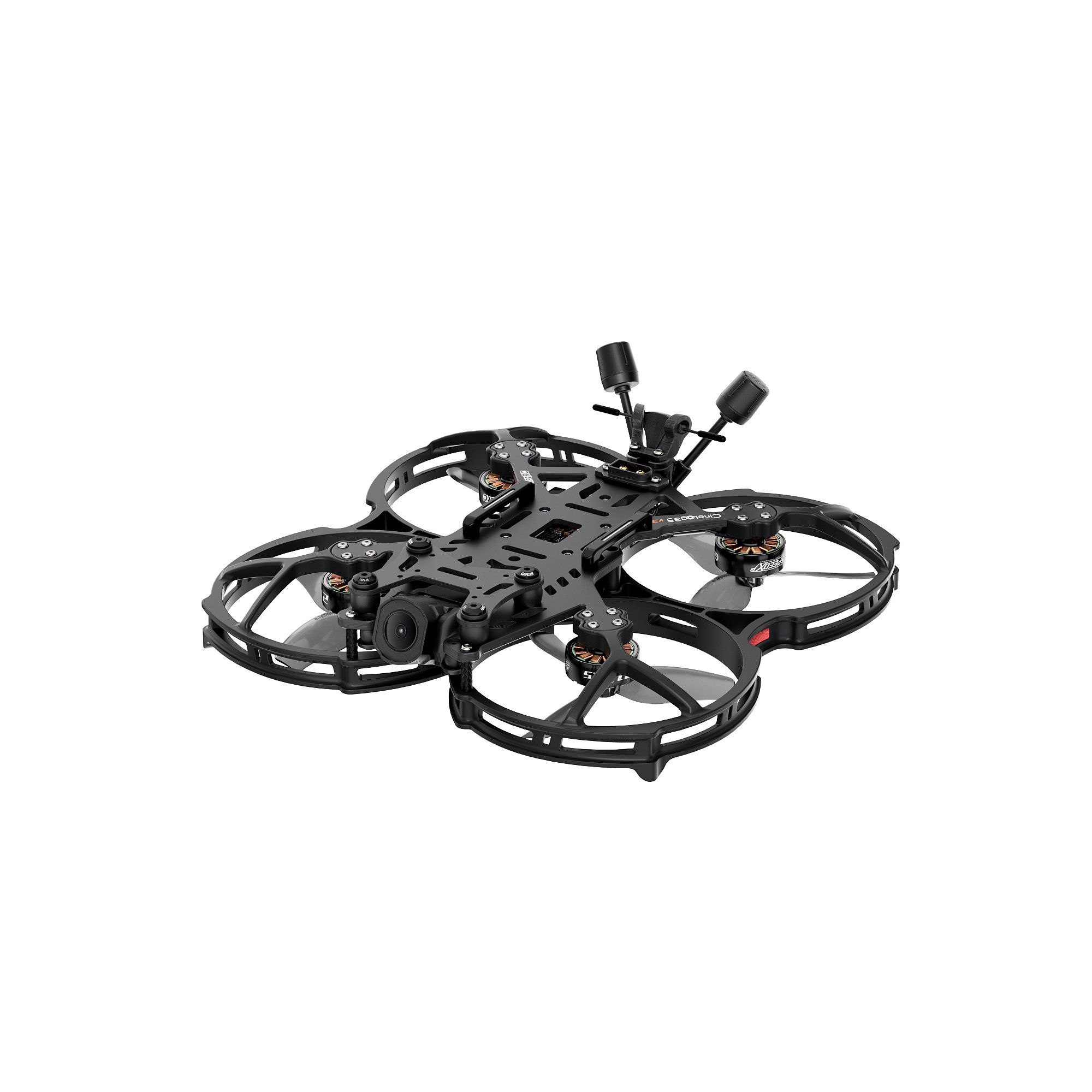
GEPRC CineLog35 V3 O4 Pro
Third generation of the ducted 3.5 inch cinewhoop, now with the O4 Air Unit Pro and 4K 120fps recording, on a bottom-mounted damped camera.
- Ducted props, safe to fly indoors and near people
- O4 Air Unit Pro with 4K 120fps recording
- Bottom-mounted damping for clean footage
- Four generations of refinement behind it
- Ducts cost flight time compared with an open frame
- Cinewhoops are slow; this is not a racing airframe
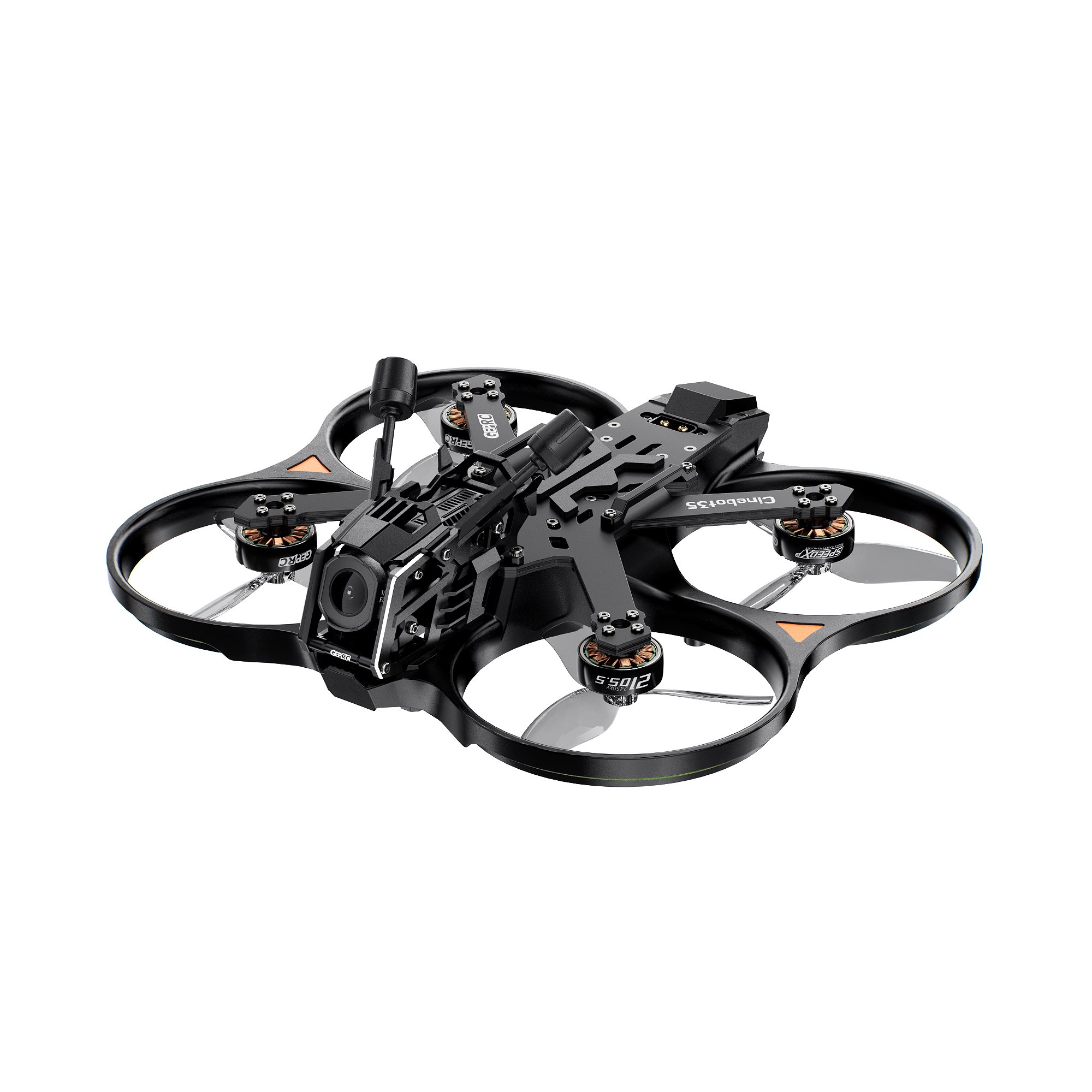
GEPRC Cinebot35 O4 Pro
The 3.5 inch version of the Cinebot, which is the size most people settle on for cinematic work that has to survive a breeze.
- 3.5 inch props handle wind better than 2.5
- O4 Air Unit Pro
- Open frame, so more efficient than a cinewhoop
- Open props mean it is not a safe indoor flyer
- Larger and louder than the 25

GEPRC Vapor-D5 O4 Pro
The Vapor line is built for efficiency and range rather than punch, in a 5 inch deadcat layout that keeps props out of the camera view.
- Deadcat arm layout keeps props out of shot
- Efficiency-focused for longer flights
- O4 Air Unit Pro
- Long-range flying raises the legal stakes considerably
- Less agile than a true freestyle frame
Who should not buy here
Anyone who has never flown FPV. Nothing in this catalogue is a learning aircraft, and buying a capable quad as a first purchase is the most reliable way to waste money in this hobby. Spend a few weeks on a simulator, then buy a cheap indoor whoop from anywhere, then come back.
Anyone who wants a camera drone. These are not that. There is no obstacle avoidance, no return to home you should rely on, no gimbal stabilisation and no automatic flight modes. They are manually flown aircraft that demand skill and produce footage nothing else can. If you want to press a button and get a smooth aerial shot, buy a consumer camera drone instead.
And anyone unwilling to deal with registration. Most of these are over the 250 g threshold, FPV flying requires a visual observer, and the rules are enforced. If that sounds like too much administration, this is the wrong hobby rather than the wrong brand.
Common questions
DJI or Walksnail version?
Whichever matches goggles you already own or can borrow. Both are current digital systems with good image quality, and the difference between them matters far less than the cost of buying into two ecosystems. DJI has the bigger accessory and second-hand market.
Are these ready to fly out of the box?
It depends on the listing, and this is the most common source of confusion. Some are sold as complete aircraft needing only binding to your radio, others expect you to supply and fit a receiver. You will also need a radio transmitter, goggles and batteries, none of which are typically included.
How repairable are they?
Very, by the standards of this market, because the spares catalogue is unusually complete: frames, arms, canopies, motors and camera mounts are listed individually. That is the strongest practical argument for buying this brand over a cheaper one.
What else do I need to budget for?
Goggles and a radio transmitter, which together often cost more than the aircraft, several batteries, a charger, and propellers as consumables. A realistic first setup is the quad plus roughly the same again in supporting equipment. Anyone who tells you the quad price is the total is not being straight with you.
The verdict
GEPRC is a good place to buy an FPV quadcopter once you can already fly one. The airframes cover every style of flying, the choice between DJI and Walksnail video is offered rather than forced, and the spare parts catalogue means a crash is a repair rather than a replacement. The weaknesses are a naming scheme that requires research to decode and build states that are not always clear on the listing. Work out the flying style first, decide the video system second, read the build state carefully, and this is a well-supported brand to own.