 Victoria
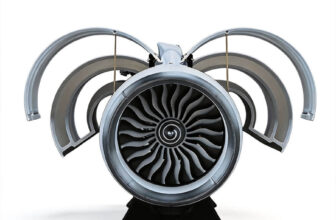
A desktop engine model is a strange product to justify and an easy one to love. It occupies space, it does no work, and its entire purpose is to make a mechanism visible: a Stirling cycle turning heat into rotation, a turbofan cut open so you can see the stages, a rotary engine you can turn by hand. For anyone who has wanted to understand how an engine works rather than read that it works, these do the job better than any video.
NikolaToy carries an unusually wide range of them, from flame-driven Stirling engines to genuine micro internal combustion engines that burn methanol. Below are eight, sorted by what each one demonstrates and how much commitment it asks for. We have not run these ourselves, so nothing here is a hands-on test; the dimensions, weights and materials are the maker published figures, and the judgements are about what those imply on a real desk.
Safety first
Most of these are not ornaments. The Stirling engines run on an alcohol burner, which is an open flame on a desk. The Toyan engines burn methanol, reach high temperatures and are loud. Neither is dangerous when treated sensibly, and both are a genuine hazard when treated as a toy.
The rules are short. Run them on a hard, non-flammable surface, clear of paper, curtains and anything above them. Never leave a burning engine unattended and never refuel a hot one. Keep children and pets out of reach, and let everything cool fully before handling. Methanol is toxic and burns with an almost invisible flame, so treat spills seriously and ventilate the room; the US National Institute for Occupational Safety and Health publishes handling guidance at cdc.gov. If that sounds like more responsibility than you want on a desk, the Wankel and turbofan models involve no fuel at all.
The models, ranked
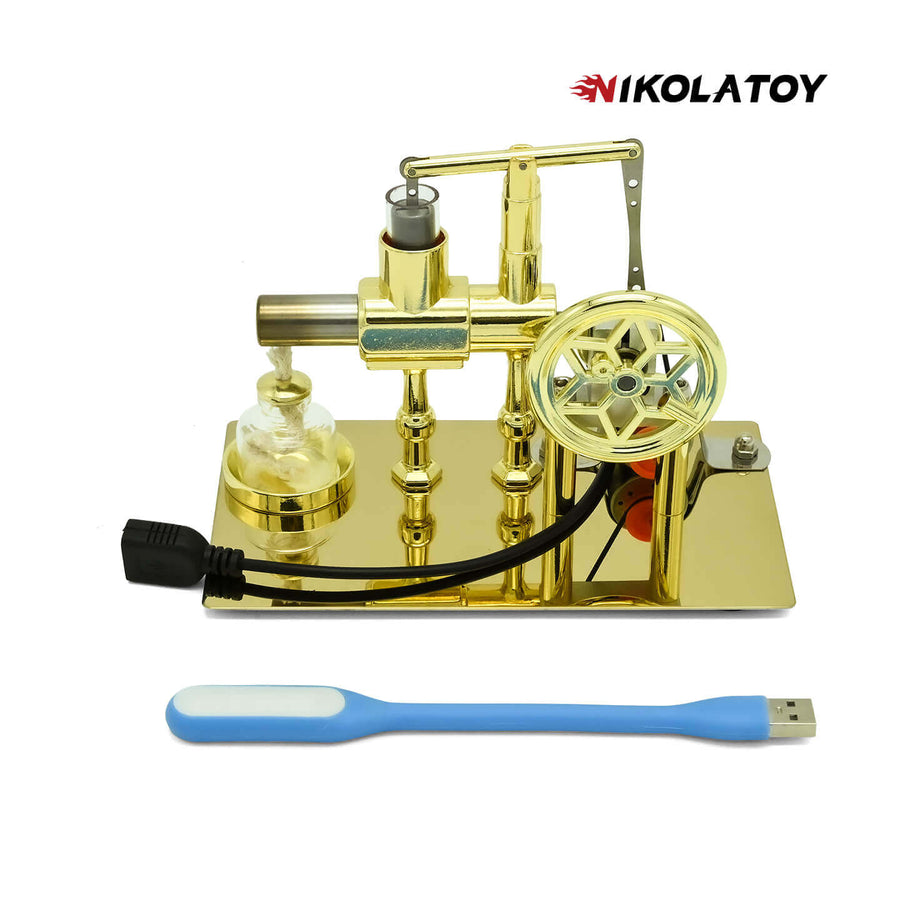
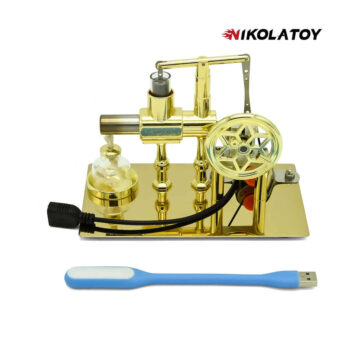
Stirling Engine with Power Generation
A Stirling engine that drives a small generator and lights an indicator, so you watch heat become electricity.
- Runs on a small alcohol burner, no batteries
- Drives a generator and lights an LED
- Shows the whole heat to motion to electricity chain
- Keeps running as long as there is fuel
- Involves an open flame on your desk
- Needs a minute of fiddling to start each time
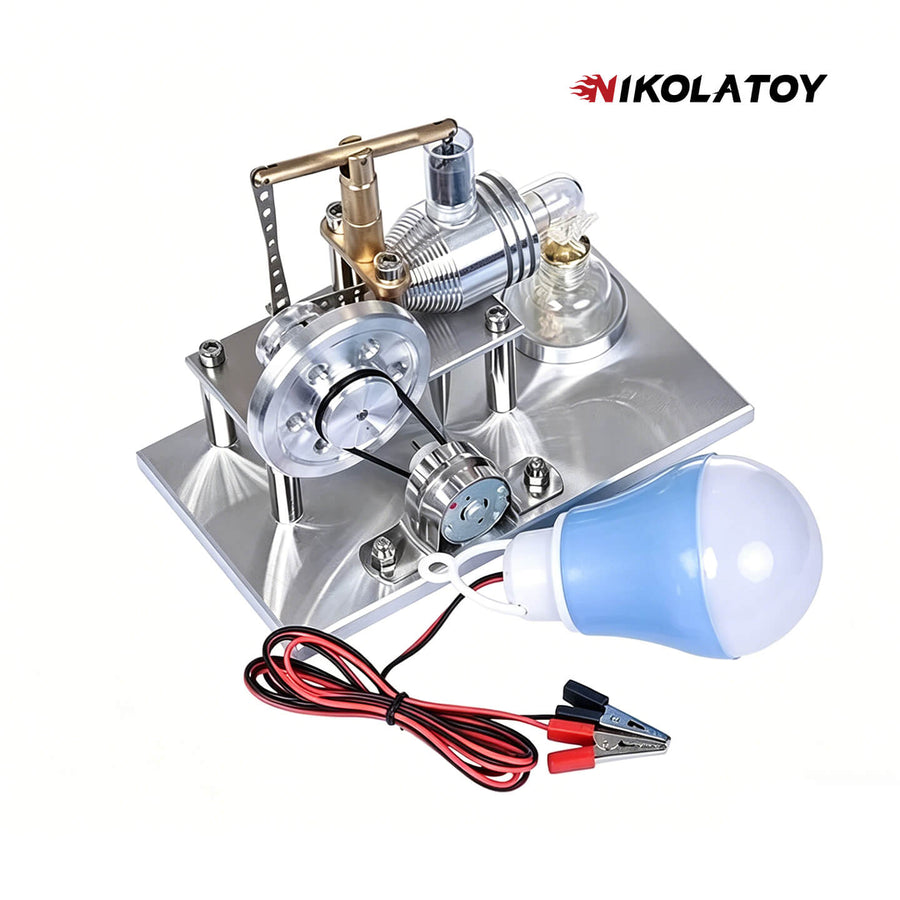
Alloy Stirling Engine with LED
The same principle in a machined alloy body with lighting, built to sit on a desk rather than in a workshop.
- Alloy construction rather than plastic
- Lit, so it works as an object when idle
- Compact footprint
- Open flame again, so never leave it running
- The lighting is decorative, not part of the mechanism
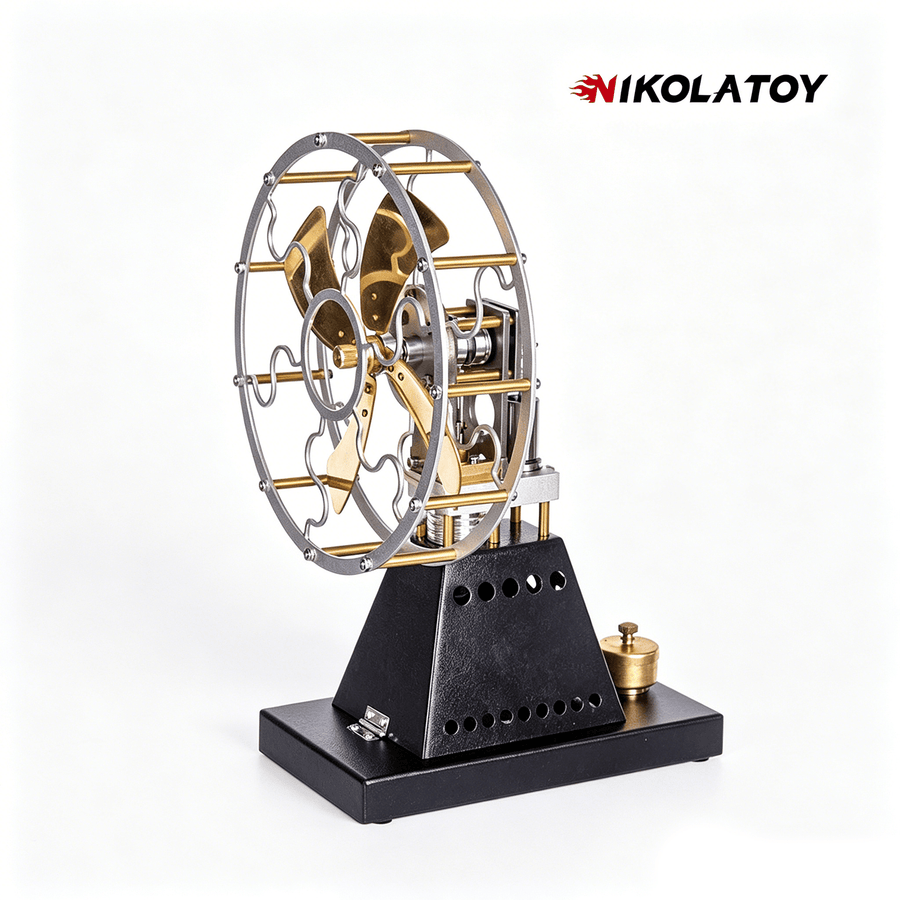
Stirling Engine Retro Fan
A vintage-style desk fan with no electrical parts at all. Alcohol goes in, the blades turn. 7.09 x 7.09 x 10.63 inches.
- No electrical components whatsoever
- It actually moves air
- Antique styling suits a study or a bookshelf
- A flame-powered fan is a demonstration, not cooling
- Taller than it looks in photographs
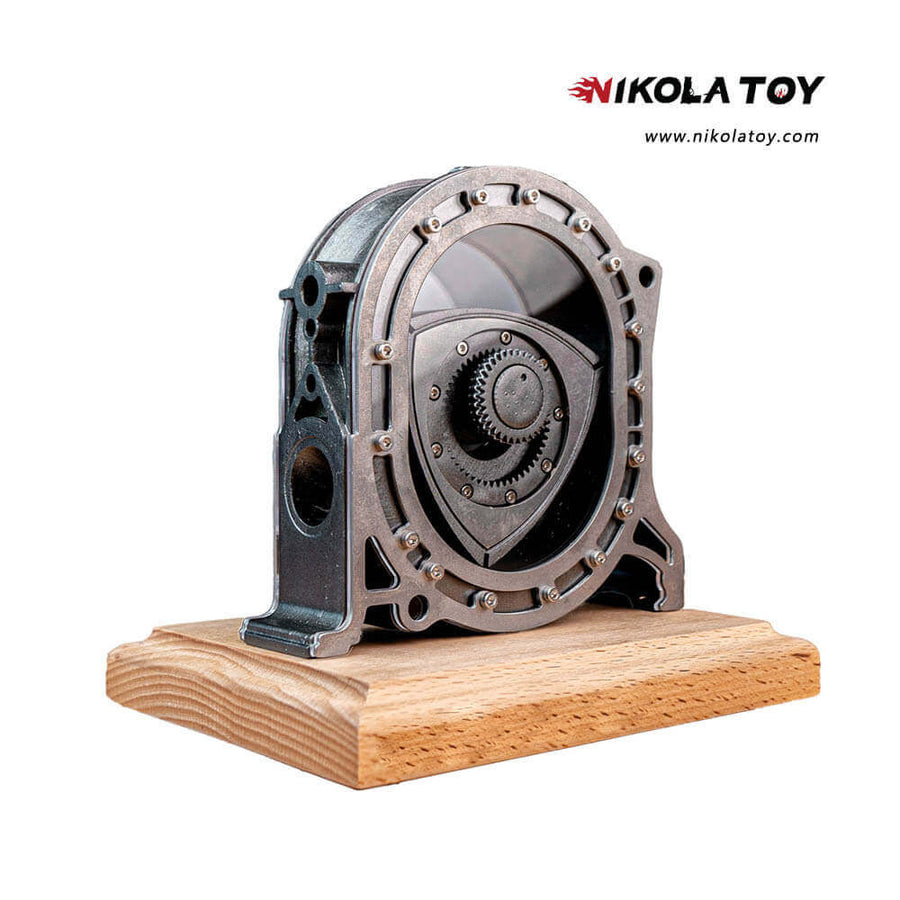
Wankel Engine Model
A cutaway of a rotary engine in solid wood and alloy, 15 x 12 x 15 cm and 800 g.
- Solid wood and alloy, 800 g
- Shows how a rotary engine actually works
- No fuel, no flame, no maintenance
- Does not run on its own
- Rotary engines are a niche interest
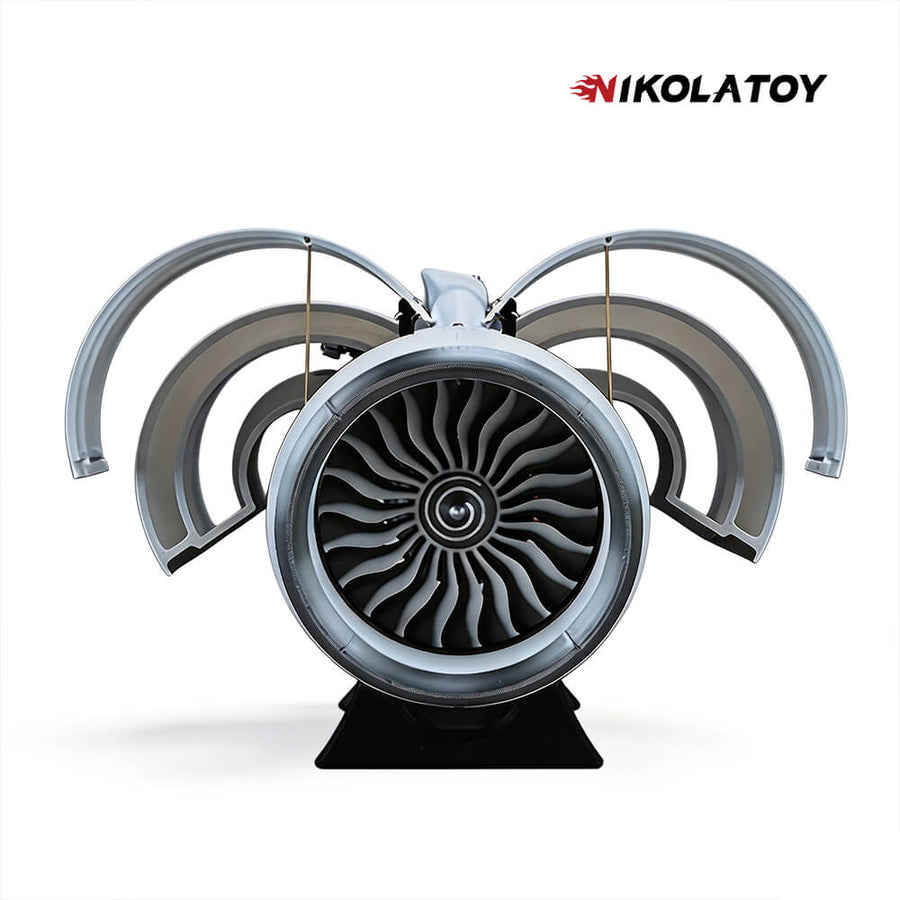
TR900 Turbofan Model, Full Version
A 3D-printed turbofan cutaway, up to 65 x 45 x 35 cm and 3.7 kg, battery driven so the fan and internal stages spin.
- Two sizes, the larger at 65 x 45 x 35 cm
- Motorised, so the stages actually turn
- 2000 mAh battery, no cable needed
- Cutaway shows the internal layout
- PLA plastic, not metal
- At 3.7 kg it needs a dedicated shelf
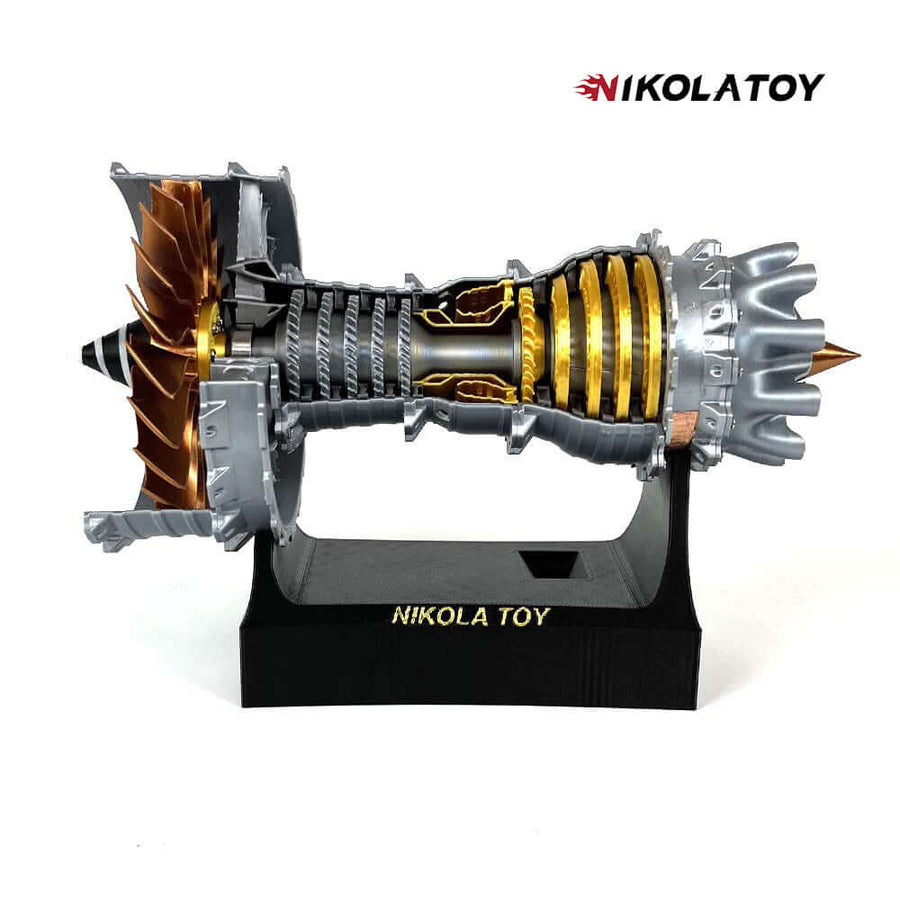
TR900 Turbofan Model, 20 cm
The same turbofan idea at 21 x 12 x 10 cm and 230 g, which fits beside a monitor instead of replacing it.
- 21 x 12 x 10 cm, 230 g
- Motorised like the large version
- Fits an ordinary desk
- Less internal detail than the full version
- PLA plastic construction
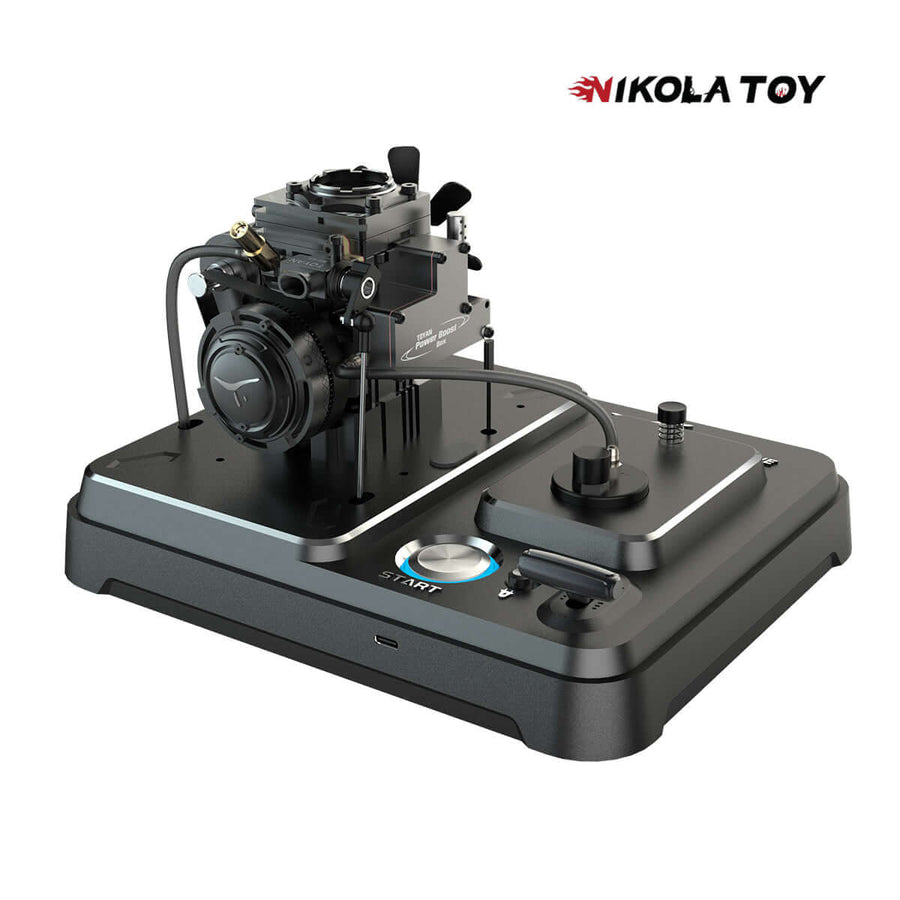
Toyan L100 Micro IC Engine
A genuine single-cylinder four-stroke that runs on methanol. Arrives assembled, so it can run the day it lands.
- A real running internal combustion engine
- Aluminium alloy construction
- Ships assembled and ready to start
- Fuel included in the gift set
- Burns fuel, gets hot and is loud
- Not a toy and not for unsupervised use
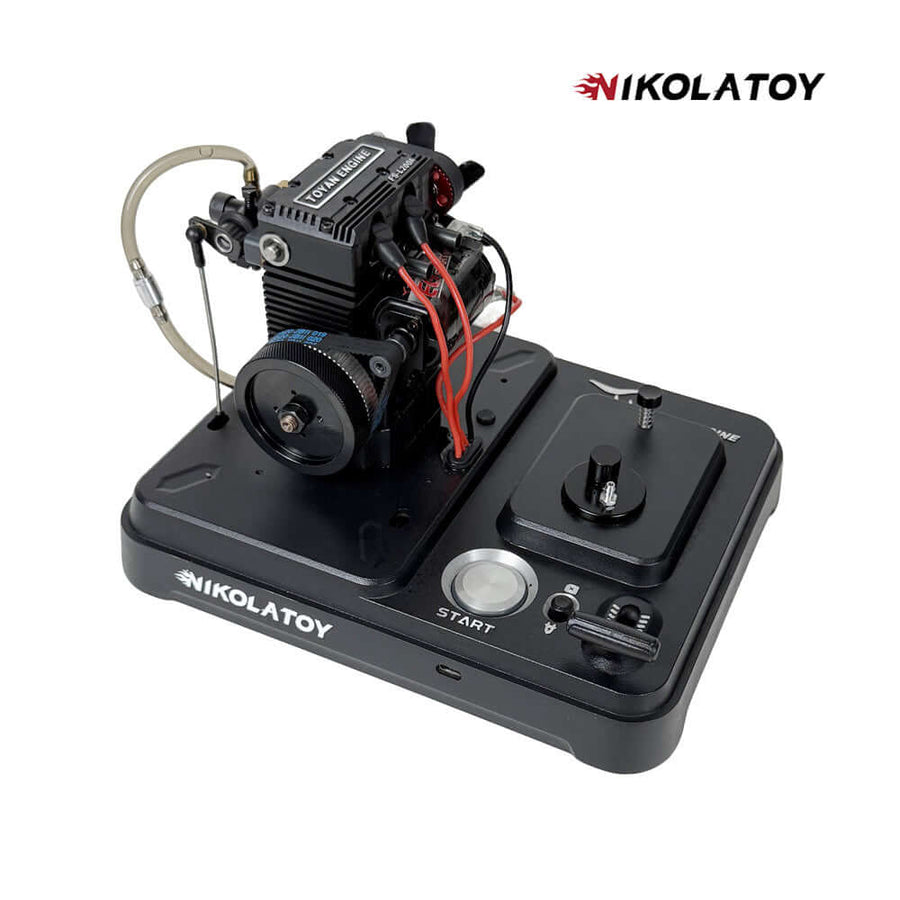
Toyan L200 Micro IC Engine
The step up: a micro internal combustion engine supplied as a DIY assembly, so you learn the mechanism by building it.
- You assemble it yourself
- Teaches the internal layout properly
- Realistic finish rather than toy styling
- Assembly is genuinely demanding
- Same fuel, heat and noise cautions as the L100
How we chose
There is no independent rating for products like these, and we do not invent scores. We picked one model per thing demonstrated rather than eight versions of the same cycle, and we weighted two questions heavily: does it actually move, and does the movement teach you something. A sealed model that spins is decoration; a cutaway that shows the mechanism is worth the shelf.
We also separated the fuel-burning models from the rest and said so clearly, because that is the biggest difference in daily use. A flame-driven engine is a fifteen-minute event you set up deliberately. A motorised or hand-turned model is something you switch on without thinking.
1. Stirling Engine with Power Generation
A Stirling engine is the clearest physics demonstration you can put on a desk. Heat one end, cool the other, and the pressure difference drives a piston. This version couples the flywheel to a small generator, so the motion lights an indicator. You can see the entire chain in one object: fuel, heat, motion, electricity.
That is why it is our pick. Plenty of desk engines spin prettily and do nothing; this one produces an output you can watch. The caveats are the same for every alcohol-fired Stirling: there is an open flame, it wants a stable surface away from paper, and starting it takes a gentle flick of the flywheel once the burner has warmed the cylinder.
Check availability at NikolaToy
2. Alloy Stirling Engine with LED
If the engine is going on a desk you actually work at, the finish matters. This one is machined alloy rather than plastic, with lighting built into the base, so it holds its own as an object even when it is not running. That is not trivial, because most of these engines spend most of their life switched off.
The lighting is decoration rather than mechanism, which is worth saying plainly: it does not indicate output the way the generator model does. Everything else applies as usual. It runs on an alcohol burner, it should never be left unattended, and it needs a minute of warm-up before the flywheel will catch.
Check availability at NikolaToy
3. Stirling Engine Retro Fan
This is the one people pick up. A retro desk fan with no electrical parts at all: fill the burner, wait, flick the flywheel, and the blades turn. At 7.09 by 7.09 by 10.63 inches it has real presence, and the mechanism is visible rather than hidden in a housing.
Be clear about what it is for. As a fan it moves a little air in its immediate vicinity and that is all; as a demonstration of an external combustion engine doing useful work, it is excellent. It is also taller than most photographs suggest, so measure the shelf before you commit.
Check availability at NikolaToy
4. Wankel Engine Model
Not every desk engine needs fuel. This Wankel model is a hand-turned cutaway in solid wood and alloy, 15 by 12 by 15 cm and 800 g, and its job is to show how a rotary engine turns an eccentric rotor into usable rotation, which is genuinely hard to picture from a diagram.
It does not run on its own, so it is a static piece with a moving demonstration rather than an engine. That makes it the right choice for a shared office or a classroom, anywhere an open flame is out of the question. The audience is narrower, though: if the recipient has no particular interest in rotaries, a Stirling will land better.
Check availability at NikolaToy
5. TR900 Turbofan Model, Full Version
If you want the piece people ask about, this is it. The full version is a turbofan cutaway up to 65 by 45 by 35 cm and 3.7 kg, 3D printed in PLA, with a 2000 mAh battery driving the fan and the internal stages so the whole thing turns.
The cutaway is the point: fan, compressor and core laid out where you can see them, which is far more informative than a sealed model. Two honest limitations. It is plastic, and close up it looks like good plastic rather than metal. And 3.7 kg at that size is furniture, not a desk ornament, so decide where it lives before ordering.
Check availability at NikolaToy
6. TR900 Turbofan Model, 20 cm
The same idea scaled to a desk. At 21 by 12 by 10 cm and 230 g it sits beside a monitor instead of replacing it, and it is still motorised, so the fan spins rather than poses.
Inevitably there is less internal detail than in the full-size cutaway, and it is the same PLA construction. For most people it is the more sensible purchase: you get the effect, the movement and the conversation without surrendering a shelf to it.
Check availability at NikolaToy
7. Toyan L100 Micro IC Engine
This is where the category stops being decorative. The Toyan L100 is a real single-cylinder four-stroke that burns methanol, built in aluminium alloy, and it ships assembled with fuel in the gift set, so it can run the day it arrives.
Treat that seriously. It gets genuinely hot, it is loud, and it should be run on a hard, non-flammable surface with nothing above it and nobody leaning over it. Run it outdoors or somewhere well ventilated, keep children and pets away, and let it cool fully before handling. As an object that shows how an engine actually works, nothing else here comes close.
Check availability at NikolaToy
8. Toyan L200 Micro IC Engine
The L200 is the same proposition with the assembly left to you. You build the engine, then you run it, and the building is where most of the learning happens, because you handle every part rather than looking at a finished block.
It is genuinely demanding, and it is not the place to start if you have never assembled anything mechanical. All the cautions from the L100 apply and then some, because a self-assembled engine needs checking before its first run. Buy the L100 first if you are unsure; buy this if the assembly is the reason you wanted one.
Check availability at NikolaToy
For a wider view of the store itself, including where its product documentation falls short, read our NikolaToy review.
Stirling, turbofan or internal combustion
A Stirling engine is external combustion: heat applied outside a sealed cylinder drives a piston through pressure differences. It is quiet, it is mesmerising, and it is the simplest way to own a working engine. The trade is the burner.
The turbofan models are not engines at all, they are motorised cutaways. Nothing burns, nothing needs fuel, and you get the visual payoff of a jet engine spinning on a shelf. If you want the look without the ritual, that is the honest answer.
The Toyan micro internal combustion engines are the real thing in miniature: intake, compression, ignition, exhaust, in a single cylinder burning methanol. They are the most impressive and the most demanding, and the only ones here that belong in a garage rather than a study.
Where to put one
Fuel-burning models need a surface you are willing to expose to heat, with clearance above and nothing flammable nearby. In practice that means a workbench, a kitchen worktop or a garage rather than a desk covered in paper. A small metal tray under the burner is a sensible habit.
Motorised and hand-turned models go anywhere. The only real constraint is size: the full turbofan at 65 by 45 by 35 cm and 3.7 kg needs a dedicated spot, while the 20 cm version and the Wankel model fit on a normal desk without rearranging anything.
Common questions
Do the Stirling engines need electricity?
No. They run on heat from a small alcohol burner and nothing else. The models that include lighting use it either as an output indicator, in the generator version, or as decoration in the base.
How long does a Stirling engine run on one fill?
As long as the burner has fuel, which in practice is minutes rather than hours. That suits them: they are something you set running while you watch, not something that ticks over in the background.
Are the Toyan engines suitable for a teenager?
With direct adult supervision and outdoors, a responsible older teenager can run one safely. Unsupervised, no. Flammable fuel, high temperature and a spinning flywheel is not a set of risks to leave to enthusiasm.
Is the turbofan model an official replica?
Treat it as a generic turbofan cutaway rather than a licensed product. It is a 3D-printed PLA model reproducing the general architecture of a large commercial turbofan, and it is sold on that basis rather than as manufacturer-approved memorabilia.
The short version
For most people the Stirling engine with power generation is the right first buy: it runs, it produces something you can see, and it needs nothing but a burner of alcohol. If an open flame is out of the question, the 20 cm turbofan or the Wankel cutaway give you the mechanism without the ritual. And if you want the real thing, start with the assembled Toyan L100 rather than the kit.