 Victoria
Electric bikes have split into two products that share a name. One is a bicycle with assistance, legally a bicycle, ridden on roads and paths. The other is a light electric motorcycle with pedals attached, and no amount of marketing changes what a 4500 watt motor is. Buying the wrong one is the most expensive mistake in this category, because it arrives and you discover you cannot legally ride it anywhere you wanted to.
Freego sells both, plus mini bikes and a scooter. Below are eight, sorted by what each is genuinely for, with the legal position stated plainly for each. We have not ridden these, so nothing here is a hands-on test; motor outputs, battery capacities, speeds and ranges are the maker published figures.
Read this first
Electric bikes are heavier and faster than the bicycles most people learned on, and the two things that most often go wrong are braking distance and battery care. Ride the first week well below what the machine will do, and get the brakes checked and bedded in before you rely on them. A helmet is not optional at these speeds, and anything capable of 28 mph or more deserves a full-face helmet, gloves and eye protection rather than a road-cycling shell.
On batteries, the practical rules are short: charge on a hard surface away from exits and anything flammable, do not charge overnight unattended, do not use a charger that did not come with the bike, and stop using a pack that has been crashed, swollen or soaked. The US Consumer Product Safety Commission publishes lithium battery safety guidance for micromobility devices at cpsc.gov, and certification to a recognised standard is worth asking the seller about before you buy.
Finally, the legal point. Motor power and top speed decide whether a machine is a bicycle, a moped or a motorcycle where you live, and the answer differs by country and by state. Several bikes on this list are above the bicycle threshold in most places. Check before you order, not after.
The picks
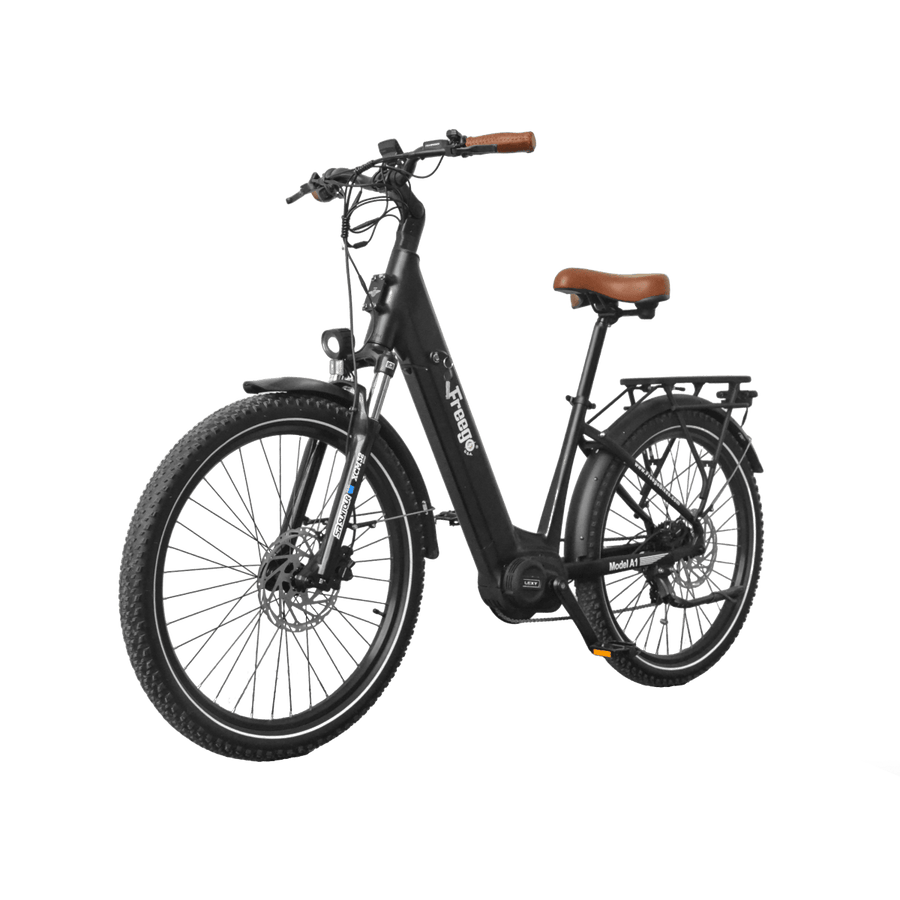
Freego City Flow A1
500 W nominal and 750 W peak, a 48V 15Ah (720 Wh) battery, up to 60 miles of claimed range, 120 Nm of torque and 28 mph.
- 720 Wh battery, up to 60 miles claimed
- 120 Nm torque handles hills
- 28 mph top speed
- Sized for city and light trail
- 28 mph puts it beyond Class 2 limits in many places
- Range claims assume low assist and flat ground
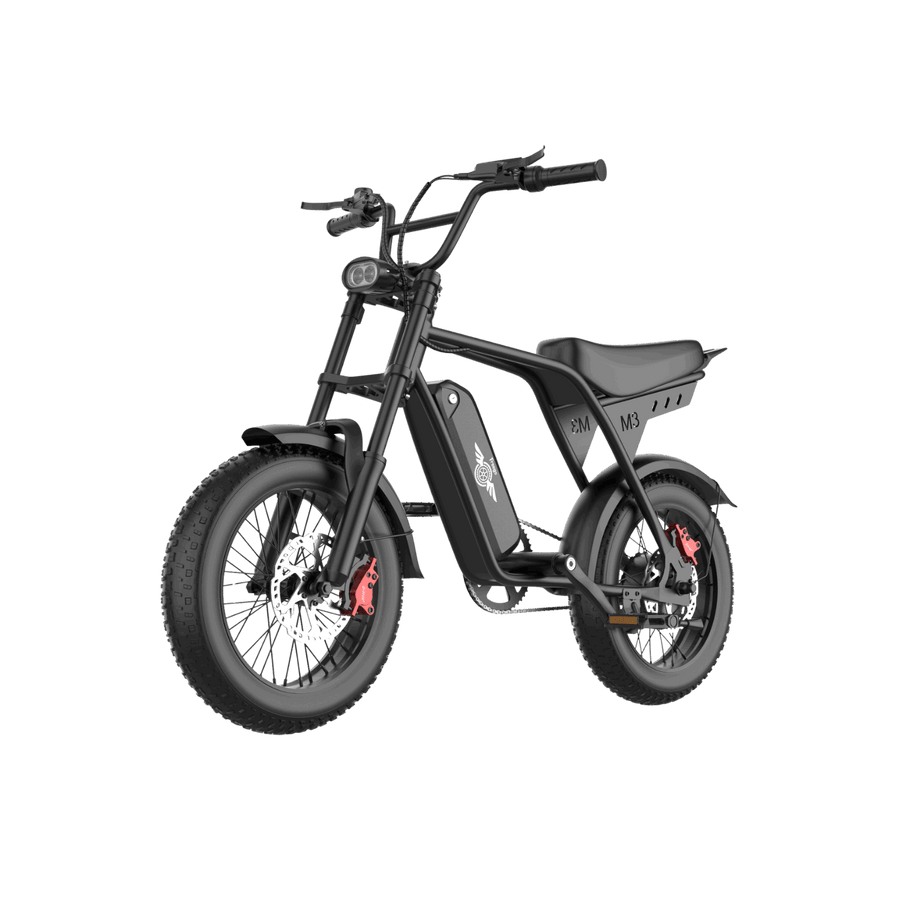
Freego Maxx M3
A compact Class 2 fat-tyre bike with a 600 W rated, 750 W peak motor and a 48V 13Ah battery, aimed at students and shorter riders.
- Genuinely Class 2, which matters legally
- Compact frame suits shorter riders
- Fat tyres for kerbs and gravel
- 600 W rated motor is enough for a campus
- Smaller battery than the rest of the range
- Fat tyres are slow and heavy on tarmac
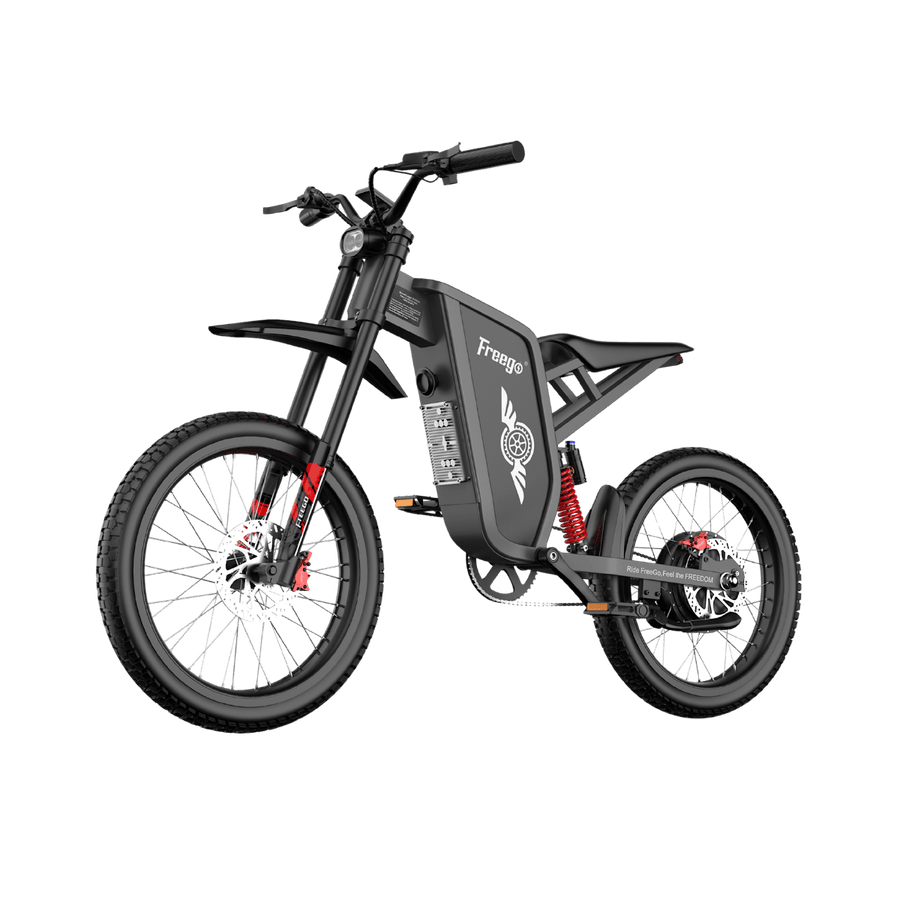
Freego X1 SE
750 W nominal with a 60V 25Ah battery, pedal assist and throttle, configurable as Class 2 or Class 3.
- 60V 25Ah battery, large for this price point
- Pedal assist and throttle
- Configurable between Class 2 and Class 3
- Class 3 configuration is not legal on every path
- Heavy enough that carrying it upstairs is not happening
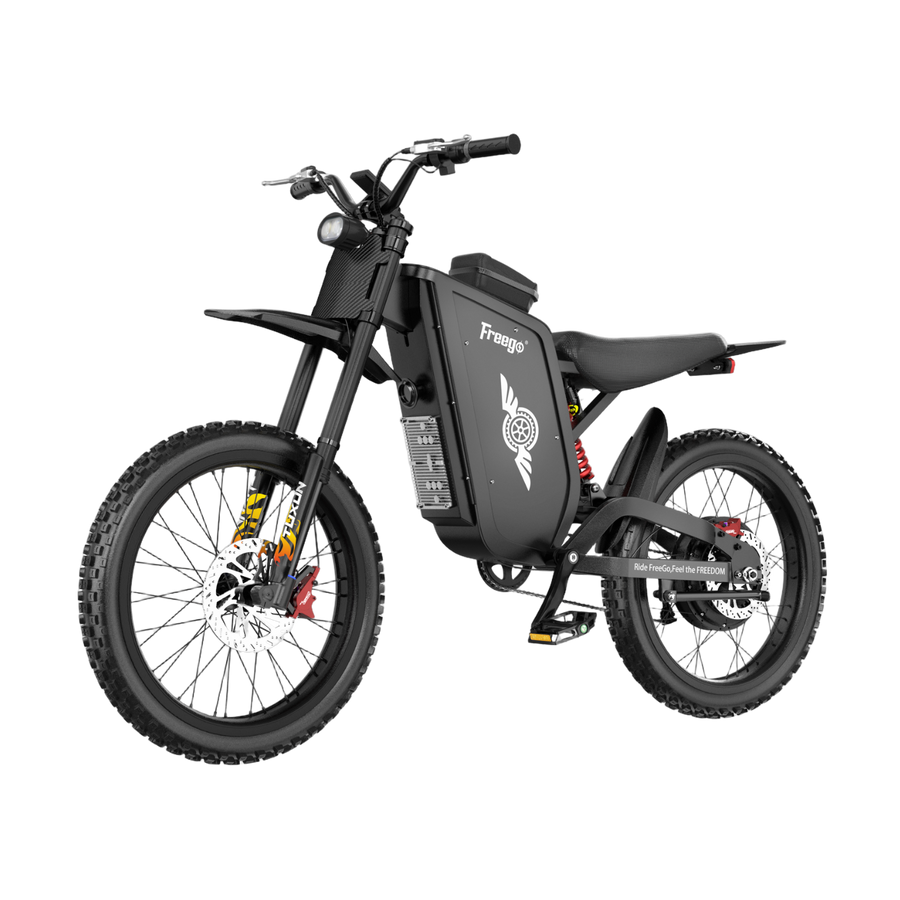
Freego X3 / X3 Pro
A 4500 W nominal, 8000 W peak rear hub motor with 40Ah or 50Ah battery options, and pedals fitted.
- 4500 W nominal, 8000 W peak
- 40Ah or 50Ah battery choice
- Pedals fitted, unlike most machines at this output
- At this power it is a motorcycle in everything but paperwork
- Almost certainly not road legal as a bicycle where you live
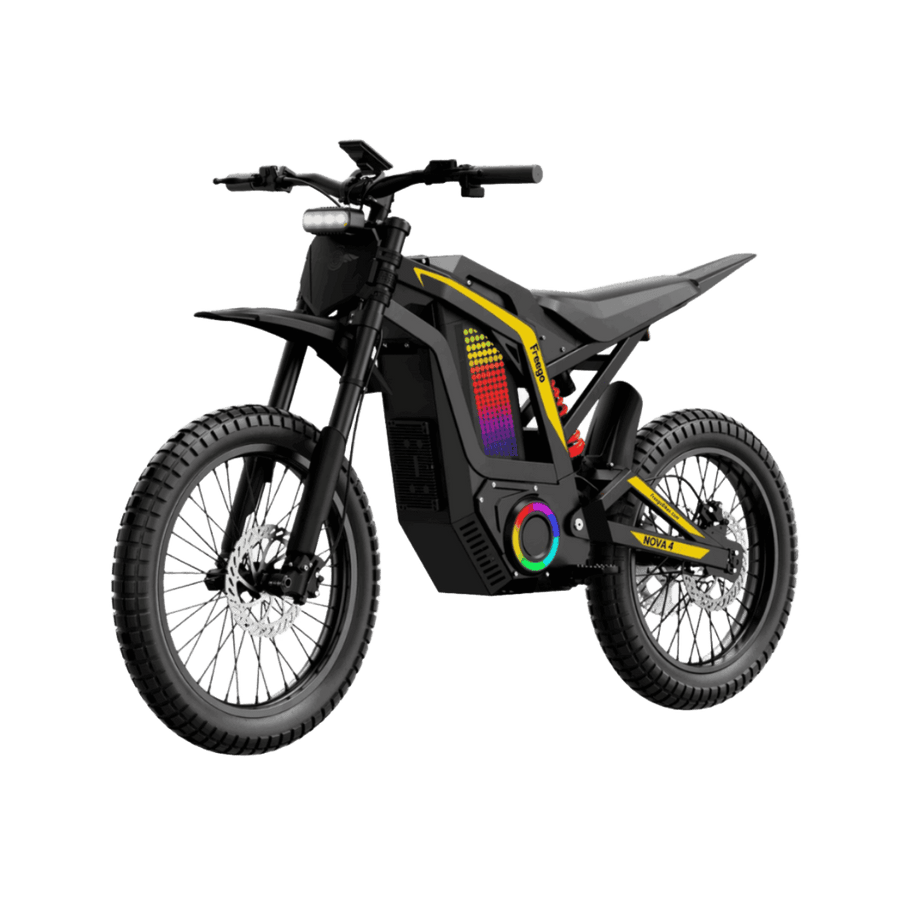
Freego Nova 4
A mid-drive electric dirt bike, which puts the motor at the cranks rather than in the hub and changes how it climbs.
- Mid-drive motor, better weight distribution
- Uses the gearing, so it climbs better than a hub motor
- Dirt-bike geometry rather than a converted bicycle
- Mid-drives wear chains and sprockets faster
- Off-road machine, not a commuter
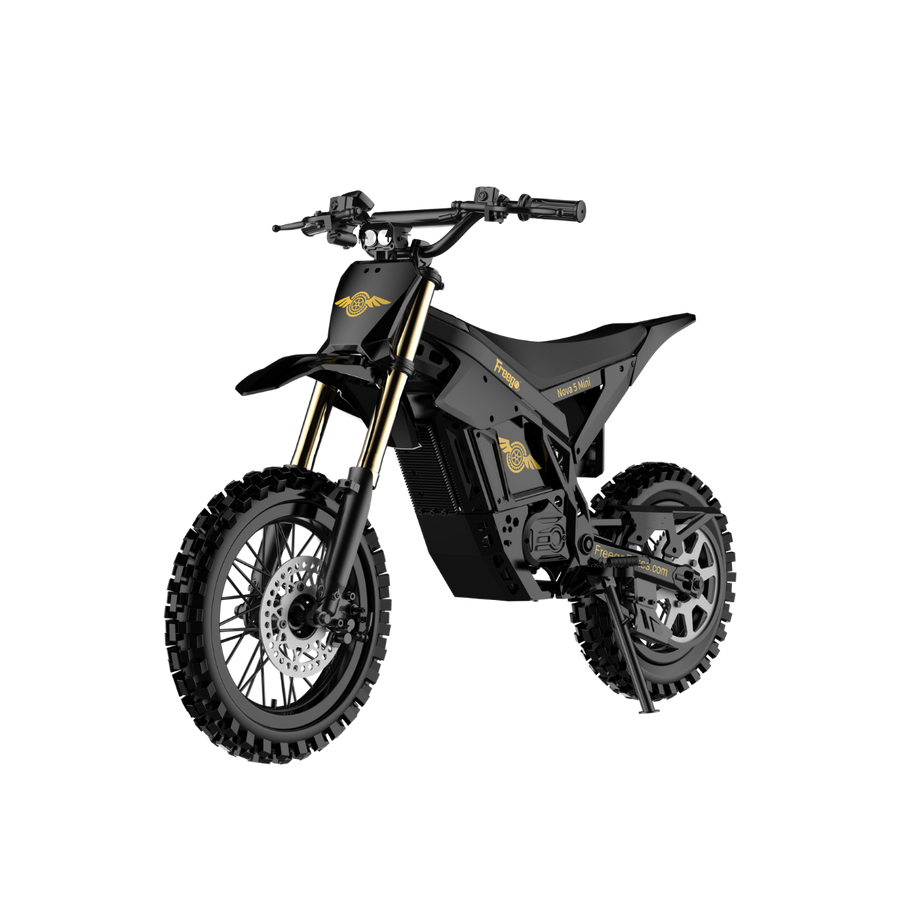
Freego Nova 5 Mini
1500 W nominal and 2500 W peak mid-drive, 48V 21Ah (1008 Wh), with three speed levels from 10 mph up to 37 mph.
- Three speed levels, including a 10 mph setting
- 1008 Wh battery in a small frame
- Mid-drive despite the size
- 37 mph on a mini bike is a lot for an inexperienced rider
- Marketed for teens, which makes the speed limiter setting a parental decision
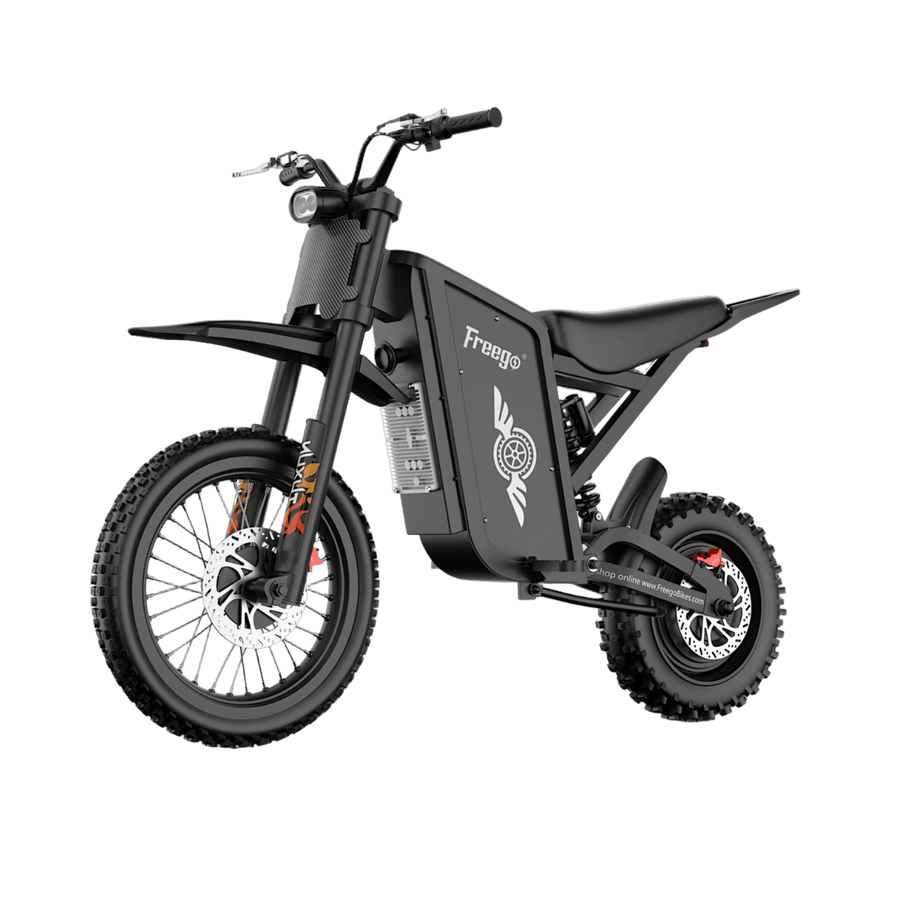
Freego X0
2000 W nominal and 3600 W peak rear hub motor with a 60V 23Ah (1380 Wh) battery in a mini-bike frame.
- 1380 Wh battery, the largest here relative to size
- 3600 W peak
- Compact enough to transport in a van
- Very high power in a short-wheelbase frame
- Mini bikes are unstable at speed compared with a full-size frame
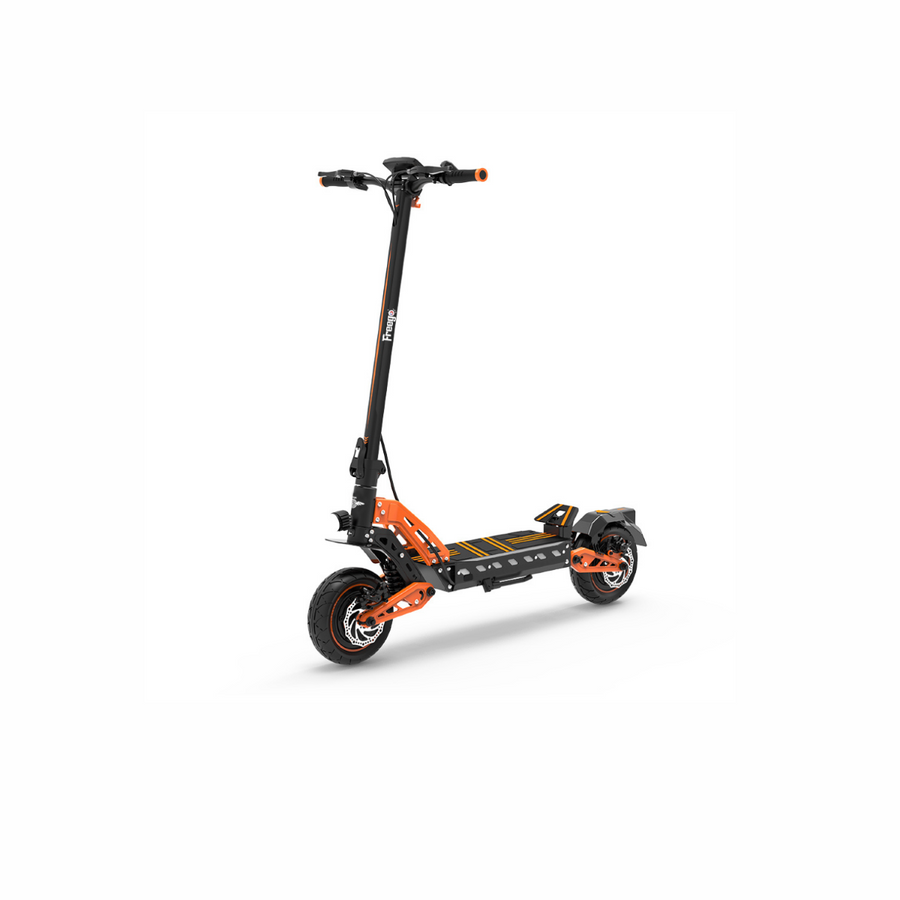
Freego C10 Pro Landtiger
A foldable scooter with dual 1650 W motors, for people who want performance without a bicycle frame.
- Dual motor for traction and hill climbing
- Folds for transport and storage
- No pedals to get in the way in traffic
- A high-power scooter is harder to control than a bike at speed
- Small wheels are much worse on potholes than bicycle wheels
How we chose
We sorted by purpose rather than by power, because the most powerful machine here is useless to somebody who wanted to ride to work. Where a model is above the legal threshold for a bicycle in most jurisdictions, we said so in the entry rather than leaving it to the reader to discover.
Motor output, battery capacity in watt-hours and top speed are the published figures and they are comparable between models. Range is not, and we treat every range claim as a best case. Nothing here is a measured test.
1. Freego City Flow A1
If the job is getting to work and back, this is the one designed for it. 500 W nominal with 750 W peak, a 720 Wh battery, a claimed 60 miles and 120 Nm of torque, which is the number that matters on a hill with a bag on your back.
Two things to be clear-eyed about. The 28 mph top speed is above the 20 mph Class 2 threshold, which affects where you may ride it and whether it needs registration; check your local rules before buying rather than after. And no manufacturer range figure survives headwind, hills and full assist. Treat 60 miles as the best case and plan around half.
2. Freego Maxx M3
The M3 is the sensible one. It is a genuine Class 2 bike, meaning pedal assist and throttle up to 20 mph, and that single fact removes most of the legal uncertainty attached to the rest of this range. The 600 W rated motor is plenty for a campus or a neighbourhood, and the compact frame suits riders that standard bikes are too large for.
The trade is the 48V 13Ah battery, smaller than everything else here, so plan shorter rides or carry a charger. Fat tyres are a mixed blessing too: excellent over kerbs, gravel and snow, noticeably heavy and slow on smooth tarmac. If your commute is entirely paved, a narrower tyre serves you better.
3. Freego X1 SE
This is the most versatile machine in the range: a 750 W nominal motor with a 60V 25Ah battery, both pedal assist and throttle, and configuration as Class 2 or Class 3. That covers commuting during the week and trails at the weekend without compromising badly at either.
The Class 2 or Class 3 choice is worth understanding rather than skipping. Class 3 raises the assisted speed but restricts where the bike may legally be ridden in many places, particularly on shared-use paths. And a 60V 25Ah battery is heavy; this is not a bike you carry up to a flat.
4. Freego X3 / X3 Pro
The X3 is where this catalogue stops pretending. A 4500 W nominal, 8000 W peak hub motor with a 40Ah or 50Ah battery is motorcycle output, and the pedals fitted to it do not change what it is. If you want an electric dirt bike for private land, this delivers it with a battery large enough for a real session.
Be honest about the legal position. Almost nowhere treats a 4500 W machine as a bicycle, which means public roads and paths are very likely off limits without registration, insurance and a licence. Buy it for land where that does not apply, wear proper off-road protection, and do not assume the pedals make it road legal.
5. Freego Nova 4
Mid-drive is the meaningful distinction here. Putting the motor at the cranks rather than in the rear hub lets it use the bike gearing, which transforms low-speed climbing and puts the weight low and central where it helps handling. On steep or loose ground a mid-drive out-climbs a hub motor of the same power.
The costs are mechanical. A mid-drive pushes its torque through the chain and sprockets, so those wear noticeably faster and need checking. And the Nova 4 is an off-road machine with dirt-bike geometry, not a commuter you happen to be able to take on a trail.
6. Freego Nova 5 Mini
The Nova 5 Mini packs a 1500 W nominal, 2500 W peak mid-drive and a 1008 Wh battery into a small frame, and the detail that matters most is the three-level speed setting: 10 mph at level one, up to 37 mph at level three.
That setting is the whole story on a machine marketed for teenagers. 37 mph on a short-wheelbase mini bike is fast, and a new rider should spend a long time at level one before touching level three. If you are buying for a younger rider, treat the speed limiter as part of the purchase decision, along with a full-face helmet and gloves.
7. Freego X0
The X0 is the extreme version of the same idea: 2000 W nominal, 3600 W peak and a 1380 Wh battery in a mini-bike frame. The battery is the largest here relative to the size of the machine, which means genuine session length rather than a ten-minute novelty.
Physics still applies. A short wheelbase and small wheels are less stable at speed than a full-size frame, and adding 3600 W of peak output to that is a machine that demands respect and space. Like the X3, it is very unlikely to be classed as a bicycle anywhere, so plan on private land.
8. Freego C10 Pro Landtiger
If you want the performance without the bicycle, the C10 Pro is a foldable scooter with dual 1650 W motors. Two driven wheels help on loose surfaces and steep climbs in a way a single-motor scooter does not, and folding makes it far easier to store in a flat or carry in a boot.
Two real drawbacks come with the format. A scooter puts you upright over small wheels with a short wheelbase, much less forgiving at speed than a bicycle, and small wheels turn a pothole into an event rather than a bump. Ride it accordingly, and wear a helmet that covers more than the top of your head.
For a wider view of the brand, including its spare parts catalogue, read our Freego review.
Class 1, 2 and 3 explained
In the United States most states use a three-class system. Class 1 is pedal assist only, up to 20 mph. Class 2 adds a throttle, still limited to 20 mph. Class 3 is pedal assist up to 28 mph, usually with no throttle and often with an age minimum and a helmet requirement. Class 1 and 2 are generally allowed where bicycles are allowed; Class 3 is frequently barred from shared-use paths.
Above that, a machine is not an electric bicycle in the legal sense, whatever the listing calls it. Several models here are far above it. That does not make them bad products, and it does mean the honest use case is private land or, where the law allows, registration as a moped or motorcycle with the licence and insurance that implies. Other countries set the limits differently and usually lower, so check locally rather than assuming the American classes apply.
Range figures and what they mean
A quoted range of 60 miles is measured in the conditions that produce the highest number: lowest assist, a light rider, flat ground, no wind, warm weather and a new battery. Real riding on hills, in cold weather, at higher assist and with luggage typically produces half that or less.
The number worth comparing between bikes is watt-hours, which is volts multiplied by amp-hours. A 48V 15Ah pack is 720 Wh; a 60V 23Ah pack is 1380 Wh. That is a like-for-like comparison of how much energy you are carrying, and far more useful than two manufacturers range claims.
Common questions
Do I need a licence for these?
For genuine Class 2 bikes, generally not in the US, though some states set an age minimum. For anything above the class limits, very likely yes, along with registration and insurance, and in many places it cannot be made road legal at all. Check with your local licensing authority before buying a high-power model.
How long do the batteries last?
Lithium packs degrade with charge cycles and with heat. Expect a gradual loss of capacity over a few hundred full cycles rather than a sudden failure. Storing a pack at around half charge in a cool place, rather than full or empty in a hot shed, meaningfully extends its life.
Are fat tyres better?
Better on sand, snow, gravel and kerbs. Worse on tarmac, where they add rolling resistance and weight and reduce your range. If you ride mostly on paved surfaces, fat tyres are a cost rather than a feature.
Hub motor or mid-drive?
Hub motors are simpler, cheaper and need almost no maintenance, and they are fine on flat and rolling ground. Mid-drives use the bike gears, so they climb much better and put weight low and central, at the cost of faster chain and sprocket wear. For commuting a hub motor is usually right; for steep off-road riding, a mid-drive.
The short version
Commuting on public roads: the City Flow A1, or the Maxx M3 if you want to stay firmly inside Class 2. Doing both commuting and trails: the X1 SE. Off-road on land where the law permits it: the Nova 4 for climbing or the X3 for outright power. Buying for a younger rider: the Nova 5 Mini, with the speed limiter set to level one and a full-face helmet bought at the same time.