 Victoria

FPV quadcopters are bought in the wrong order more often than almost any other hobby product. People see a five inch freestyle machine in a video, buy one, and discover that it is fast, fragile, loud and legally restricted in ways the video never mentioned. The right first question is not which drone but which kind of flying, because a cinewhoop and a freestyle quad are barely the same product.
GEPRC builds across that whole spread. Below are eight machines sorted by what each is actually for. We have not flown these, so nothing here is a hands-on test; the airframe sizes, video systems and layouts are the maker published details and the judgements are about what those mean in the air. Before any of it, read the section immediately below.
Rules and safety first
In the United States, recreational drone flying requires you to pass the free TRUST test, to register any aircraft weighing 250 g or more, and to fly within visual line of sight, below 400 feet, away from other aircraft and outside controlled airspace without authorisation. Remote ID applies to registered aircraft. The FAA publishes all of it at faa.gov/uas, and most of these machines are over the registration threshold once a battery is fitted.
FPV flying adds one specific requirement: because you are looking through goggles, you are not maintaining visual line of sight yourself, so a visual observer is required. That is not a technicality, it is the rule. Other countries have their own regimes, usually with a similar weight threshold and a registration requirement, so check your national aviation authority rather than assuming.
On physical safety, a 5 inch quad spins carbon propellers fast enough to cause serious injury. Fly open-prop machines away from people, wear eye protection when working on an armed quad, remove propellers before bench testing, and treat lithium polymer batteries with the care they deserve: charge on a hard surface, never unattended, and retire any pack that is puffed or damaged.
The picks
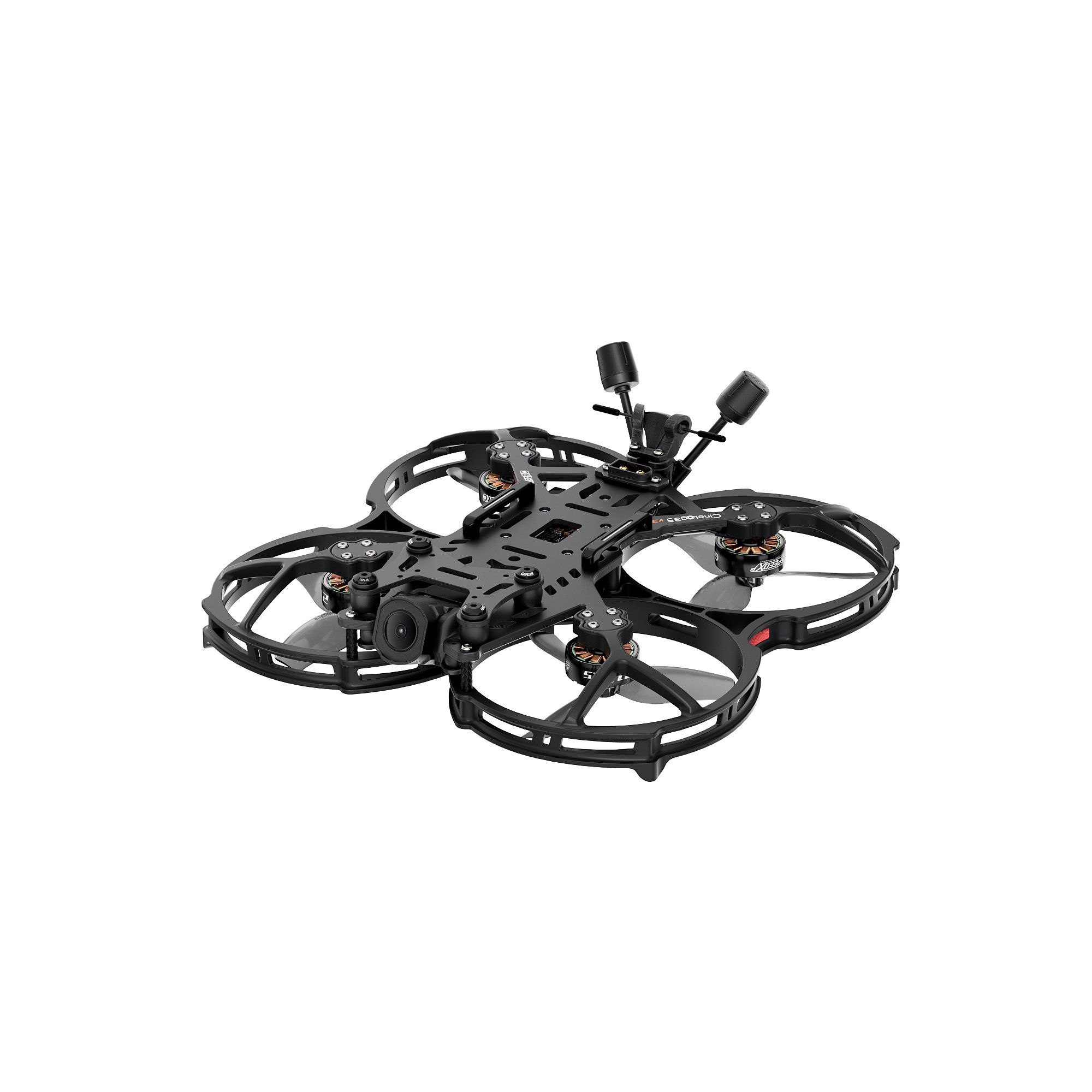
GEPRC CineLog35 V3 O4 Pro
Third generation of the ducted 3.5 inch cinewhoop, now with the O4 Air Unit Pro and 4K 120fps recording, on a bottom-mounted damped camera.
- Ducted props, safe to fly indoors and near people
- O4 Air Unit Pro with 4K 120fps recording
- Bottom-mounted damping for clean footage
- Four generations of refinement behind it
- Ducts cost flight time compared with an open frame
- Cinewhoops are slow; this is not a racing airframe
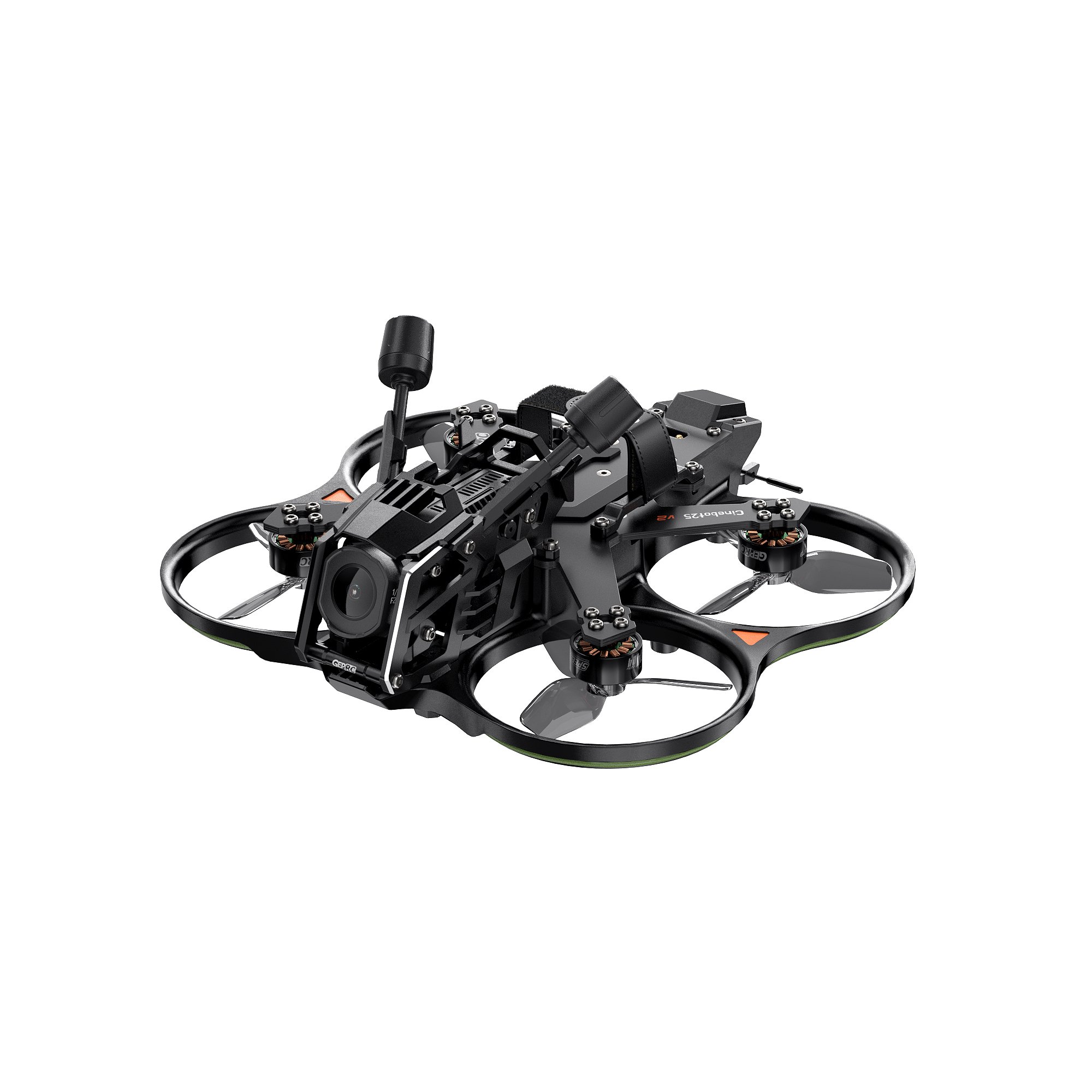
GEPRC Cinebot25 V2 O4 Pro
A 2.5 inch cinematic quad with a quick-release modular camera and the O4 Air Unit Pro suspended in its own damping module.
- Quick-release camera module
- O4 Air Unit Pro isolated from frame vibration
- Small enough for tight interior shots
- 2.5 inch props struggle in wind outdoors
- Short flight times, as with anything this size
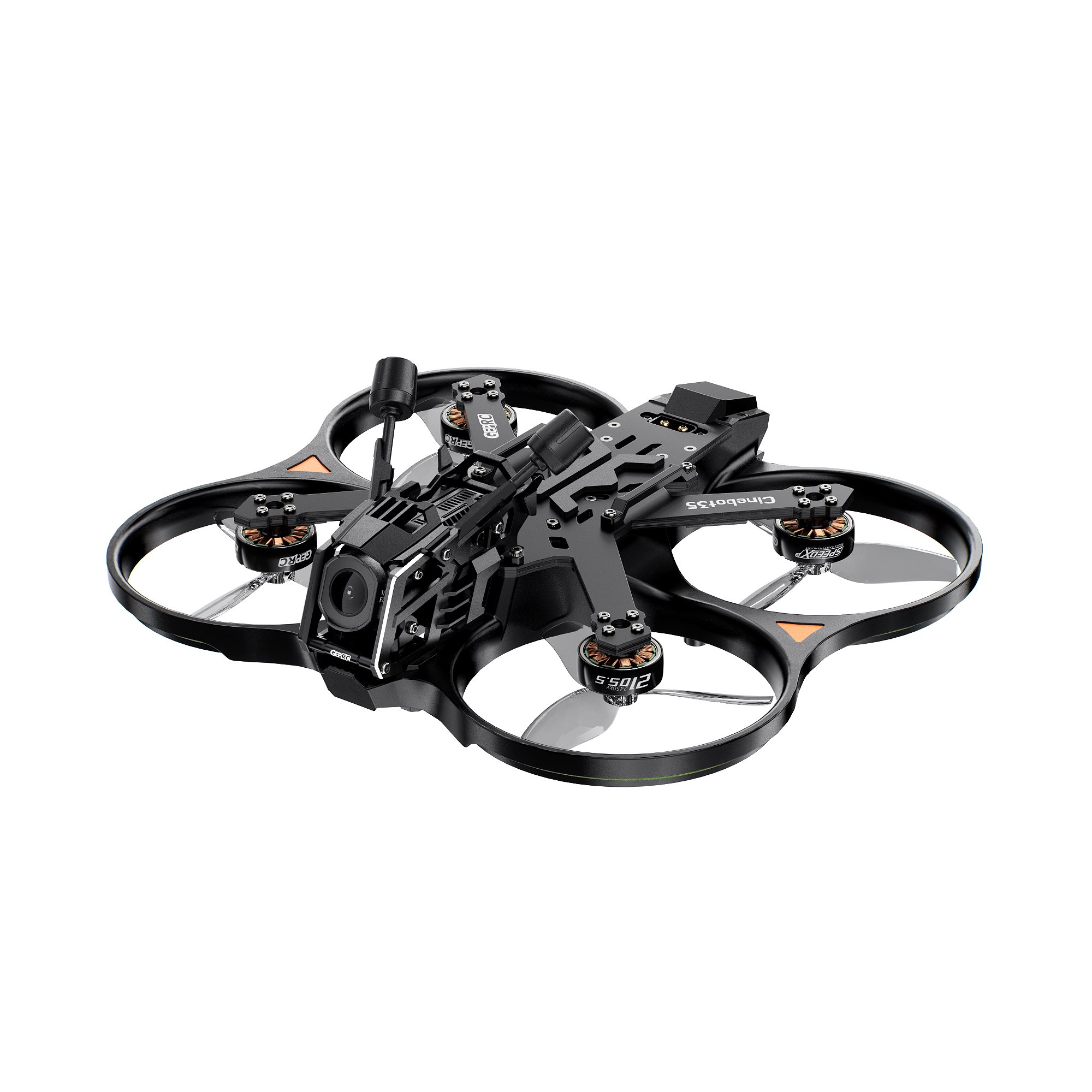
GEPRC Cinebot35 O4 Pro
The 3.5 inch version of the Cinebot, which is the size most people settle on for cinematic work that has to survive a breeze.
- 3.5 inch props handle wind better than 2.5
- O4 Air Unit Pro
- Open frame, so more efficient than a cinewhoop
- Open props mean it is not a safe indoor flyer
- Larger and louder than the 25
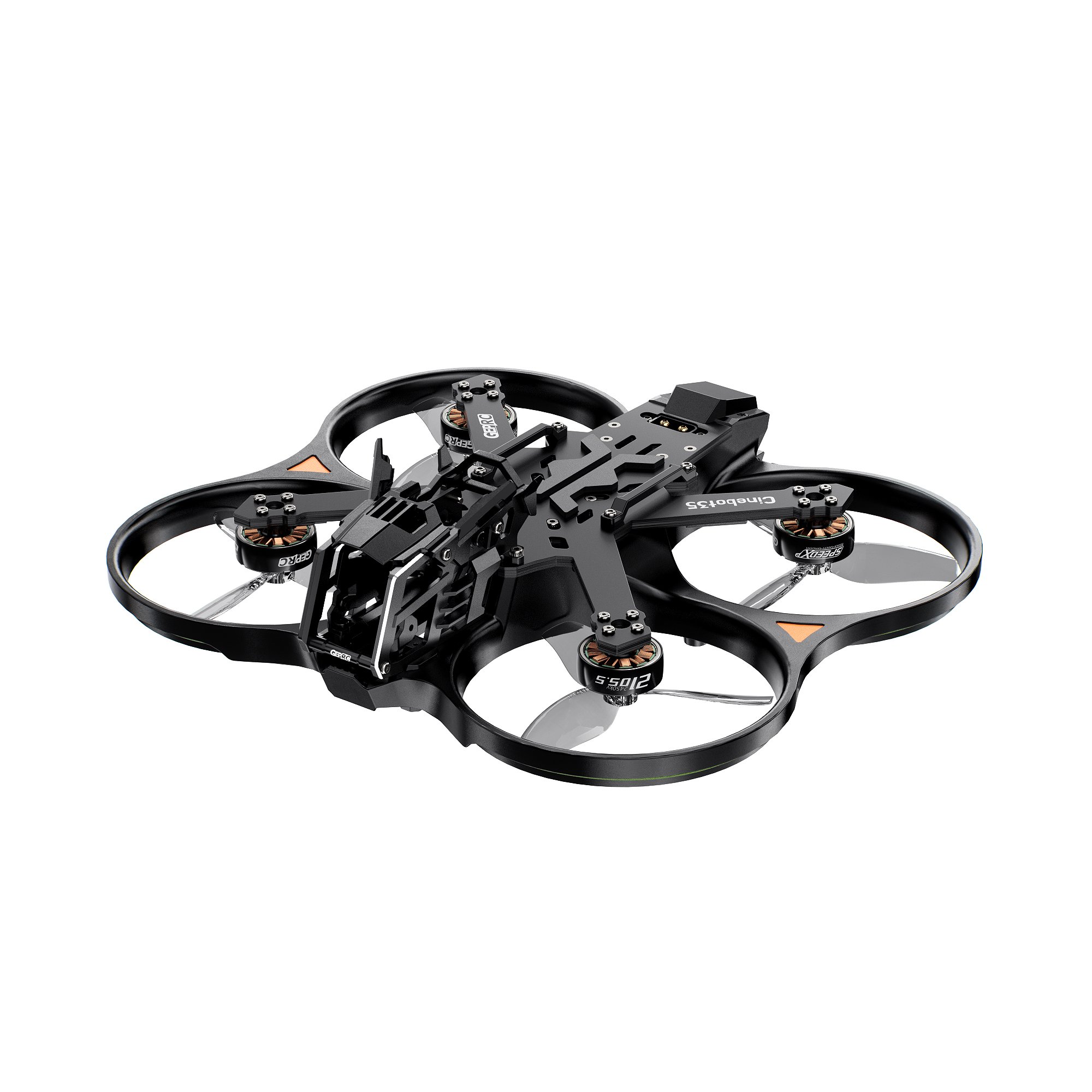
GEPRC Cinebot35 WTFPV
The same Cinebot35 airframe built around the Walksnail digital system instead of DJI, for pilots already invested in that ecosystem.
- Walksnail system rather than DJI
- Same proven 3.5 inch airframe
- Useful if you already own the goggles
- Ecosystem choice locks you in as much as DJI does
- Fewer accessories and less second-hand support than DJI

GEPRC MARK5 O4 Pro DC
A 5 inch freestyle machine with the O4 Air Unit Pro, which is the classic size for the kind of flying most people mean by FPV.
- 5 inch, the standard freestyle size
- Huge parts and spares ecosystem at this size
- O4 Air Unit Pro
- 5 inch quads are genuinely dangerous and need open space
- Not a beginner machine under any reading

GEPRC Vapor-D5 O4 Pro
The Vapor line is built for efficiency and range rather than punch, in a 5 inch deadcat layout that keeps props out of the camera view.
- Deadcat arm layout keeps props out of shot
- Efficiency-focused for longer flights
- O4 Air Unit Pro
- Long-range flying raises the legal stakes considerably
- Less agile than a true freestyle frame

GEPRC Vapor-X5 O4 Pro
The X-frame version of the Vapor-5, which trades the clean camera view of the deadcat for a stiffer, more conventional layout.
- Stiffer X layout
- Same efficiency focus as the D5
- O4 Air Unit Pro
- Props visible in shot at wide angles
- Same long-range legal considerations
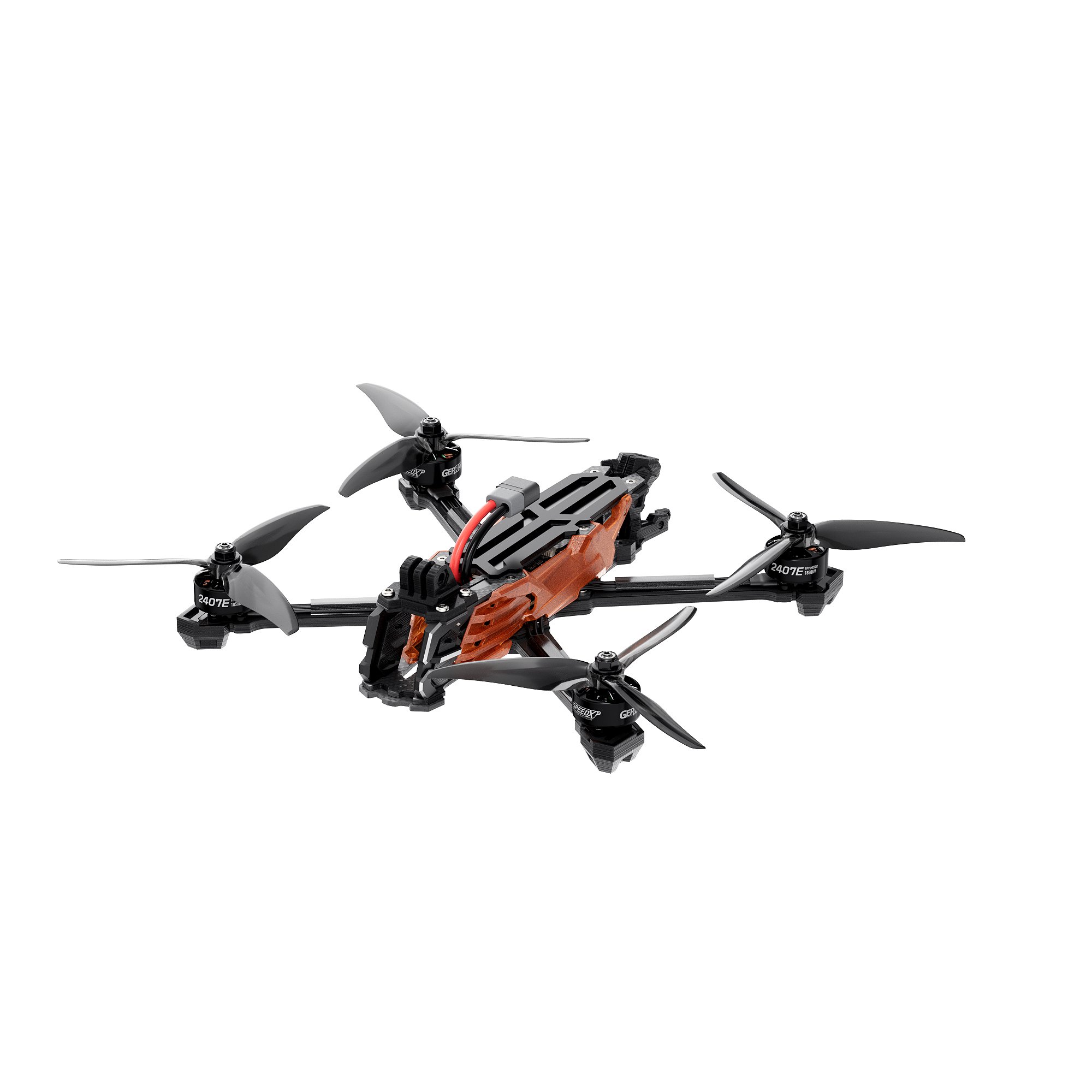
GEPRC Vapor-X6 O4 Pro
A 6 inch version of the Vapor, where the larger props buy efficiency and flight time at the cost of agility and portability.
- 6 inch props are far more efficient than 5
- Longest flight times in this list
- O4 Air Unit Pro
- Bigger, heavier and less agile
- 6 inch props raise registration weight questions in some places
How we chose
One machine per kind of flying rather than eight variations of a five inch quad. Prop size, frame layout and video system are the three published facts that decide what a quad is good at, and they are comparable across models, so we used them.
We also said clearly which machines are unsuitable for beginners, because the most common bad outcome in this hobby is not a bad purchase but a first purchase that is far too capable.
1. GEPRC CineLog35 V3 O4 Pro
A cinewhoop is a quad with ducts around the propellers, and the ducts are the entire point: they let you fly close to people, through doorways and between objects with a margin of safety an open-prop machine does not give you. The CineLog35 has been the reference example of the format for four generations, and V3 pairs the airframe with the O4 Air Unit Pro and 4K 120fps recording.
The bottom-mounted damped camera mount separates usable footage from unusable footage, because a rigidly mounted camera records every frame vibration as jello. Two costs to accept. Ducts add weight and drag, so flight times are shorter than an open frame of the same size. And a cinewhoop is slow by design; if you want to chase a car, this is not it.
2. GEPRC Cinebot25 V2 O4 Pro
The Cinebot25 is the small one, and its interesting feature is the quick-release modular camera with the air unit suspended in its own damping module rather than bolted to the frame. That is genuinely good engineering, because it isolates the most vibration-sensitive component from the airframe.
At 2.5 inches it is for interiors and tight spaces. Take it outside on a windy day and it will be fighting rather than flying, and flight times at this size are short whatever the battery. Buy it as a second quad for indoor and close-quarters work, not as your only one.
3. GEPRC Cinebot35 O4 Pro
If you can own only one cinematic quad, 3.5 inches is the size to pick. It has enough prop area to hold a line in a breeze, it is small enough to fly in interesting places, and the open frame is more efficient than a ducted cinewhoop so flight times are better.
The trade against the CineLog is safety. Open propellers are not something to fly near people or indoors without a very good reason, and they are noisier. If most of your flying is outdoors and away from crowds this is the more useful machine; if it is indoors and around people, the ducted CineLog is.
4. GEPRC Cinebot35 WTFPV
This is the same Cinebot35 airframe built around the Walksnail digital video system rather than DJI. The airframe, motors and handling are the same; what changes is the goggles and the ecosystem you buy into.
There is no objectively correct answer here and anyone who says otherwise is selling something. Pick based on what you or your flying friends already own, because goggles are the expensive part and switching later means replacing them. Walksnail generally has fewer accessories and a thinner second-hand market than DJI, which is worth weighing.
5. GEPRC MARK5 O4 Pro DC
Five inches is the default size for freestyle, the flying most people picture when they think of FPV: flips, rolls, dives and proximity. The MARK5 is GEPRC long-running freestyle platform and the O4 Pro version puts current digital video on it.
Two things need saying plainly. A 5 inch quad carries carbon propellers at high speed and is capable of serious injury; it needs open space, distance from people and ideally a spotter. And it is not a first drone. Learn on a simulator, then a small whoop, then come to this. Buying a 5 inch freestyle quad as a beginner is how people end up with a broken machine in week one.
6. GEPRC Vapor-D5 O4 Pro
The Vapor line is built around efficiency rather than punch, and the D5 uses a deadcat arm layout, which sweeps the front arms outward so the propellers stay out of the camera view at wide angles. For long-range cruising footage that matters more than it sounds.
Long range raises the legal stakes sharply. Flying beyond visual line of sight is restricted or prohibited in most countries, and the fact that a machine can do it does not mean you may. Check your national rules before planning the flight, not after. It is also less agile than a freestyle frame, which is the deliberate trade.
7. GEPRC Vapor-X5 O4 Pro
The X5 is the same efficiency-focused Vapor concept on a conventional X frame instead of a deadcat. The X layout is stiffer and simpler, which some pilots prefer for handling, at the cost of propellers appearing in shot at wide angles.
Choose between this and the D5 on what you are filming. If the footage is the point and you shoot wide, the deadcat keeps the frame clean. If you want the more precise-feeling airframe and can live with prop tips in the corners, the X5. The same long-range legal considerations apply to both.
8. GEPRC Vapor-X6 O4 Pro
Six inch propellers move more air per watt than five inch ones, which is why long-range pilots move up. The Vapor-X6 is the longest-endurance machine in this list, and the practical effect is flights long enough to actually go somewhere.
The costs are size, weight and agility, all in the wrong direction, and one administrative point worth checking: crossing weight thresholds can change which registration and rules apply to you. Weigh the machine as you will fly it, with battery and camera fitted, and check that number against your national threshold rather than the bare airframe weight.
For a wider view of the brand, including why its spare parts catalogue matters more than the airframes, read our GEPRC review.
Cinewhoop, cinematic or freestyle
A cinewhoop has ducted propellers. It is slow, safe around people and objects, and the only category here you can sensibly fly indoors. Buy one if the footage you want involves moving through spaces rather than over them.
A cinematic quad like the Cinebot has open props and a damped camera. It is more efficient and faster than a cinewhoop, and it is an outdoor machine. Freestyle quads, typically 5 inch, are built for acrobatics and speed and are the most demanding to fly and most dangerous to be near. Long-range machines like the Vapor line trade agility for efficiency and are about covering distance, which is where the legal restrictions bite hardest.
Choosing a video system
This is a bigger decision than the airframe, because the goggles cost more than the quad and do not transfer between systems. DJI O4 and Walksnail are both current digital systems with good image quality. DJI has the larger ecosystem and the better second-hand market; Walksnail is the alternative with its own following.
Our practical advice is unromantic: buy whatever your local flying group uses. Being able to borrow goggles, share spares and get help from someone with the same setup is worth more than any specification difference between the two.
Common questions
Is any of these suitable for a beginner?
None of them, honestly. Start on a simulator, which costs very little and teaches the control scheme that breaks most beginners, then a small indoor whoop, then move up. A cinewhoop is the gentlest machine here and it is still not a learning aircraft. Coming to these after a few months of practice is the right order.
Do I have to register an FPV drone?
In the US, any drone weighing 250 g or more must be registered, and most of these exceed that once a battery is fitted. Recreational fliers also need to pass the free TRUST test. Rules differ by country but a weight threshold and registration are near universal now. Check your national authority before the first flight.
What is the O4 Air Unit Pro?
It is DJI current digital FPV transmission and recording module, which sends live video to the goggles and records higher-quality footage onboard at the same time. In practical terms it decides your video quality and latency, which is why it appears in the name of most of these products.
How long do these fly for?
Far less than a camera drone: typically a handful of minutes rather than half an hour, with ducted cinewhoops at the short end and 6 inch long-range machines at the long end. Plan on owning several batteries per session, and expect the packs to be a significant part of the total cost.
The short version
Flying indoors or near people: the CineLog35 V3. One cinematic quad for general use: the Cinebot35. Freestyle, once you can already fly: the MARK5. Long distance with clean footage: the Vapor-D5, or the X6 for maximum endurance. And whichever you choose, sort out the video system and the registration before the airframe.