 Victoria

ATK is one of a group of Chinese peripheral makers that arrived in the ultralight mouse market and immediately competed on specifications that used to be exclusive to flagship products. Flagship PixArt sensors, Nordic radios, carbon fibre composite shells and sub-40 gram weights, at prices well below the established brands. The reasonable question is where the difference went.
This review covers what the brand makes, what its specifications actually mean, and where we think the range is badly organised. We have not used these products, so nothing here is a hands-on test; it is a reading of the published specifications and the product structure.
What ATK sells
The catalogue is about a hundred items and it is narrow in a good way: lightweight wireless gaming mice under the Blazing Sky and Dragonfly names, hall-effect gaming keyboards in the RS and 60 series, glass and cloth mousepads, plus grip tape, skates, cables and cases. There is no attempt to sell headsets, chairs and webcams alongside, which is usually a sign a peripheral brand has stopped caring about any of it.
The mice are the centre of it and the reason to be here. We compared eight of them in our guide to the best lightweight wireless gaming mice. The keyboards use magnetic hall-effect switches with adjustable actuation, which is the current competitive standard, and the mousepads include a glass surface, which is a niche taste worth knowing about before you buy one.
Where the specifications are real
The parts are the parts. PAW3950 and PAW3955 are current PixArt flagship sensors and the same components sit inside mice from far better-known brands. Nordic 54 series microcontrollers are the standard choice for low-latency wireless. An 850 IPS tracking figure with 75 G of acceleration is a real specification with a real effect for low-sensitivity players.
The shell engineering is where the brand is doing something rather than assembling something. Reaching 36 g with no cutouts, as the F1 V3 does, is harder than reaching 36 g with a honeycomb, and the nano coating on the ZERO replaces grip tape that other makers expect you to stick on yourself. Those are decisions made by people who use mice, not by a spreadsheet.
The sub-model problem
Here is our main criticism, and it is not about quality. Almost every mouse in the range comes in three to five sub-models: Ultimate, Ultimate+, Extreme, Extreme+, Pro Max, Ultra Max 2.0. The differences are usually sensor tier and polling capability, and they are not explained in a way a first-time buyer can act on.
The effect is that choosing an ATK mouse takes two decisions instead of one: which shape, then which tier of that shape. Established brands solve this by selling one version and charging more. We would rather see three products than fifteen variants, and we suspect the people buying their first one would too.
Where to start
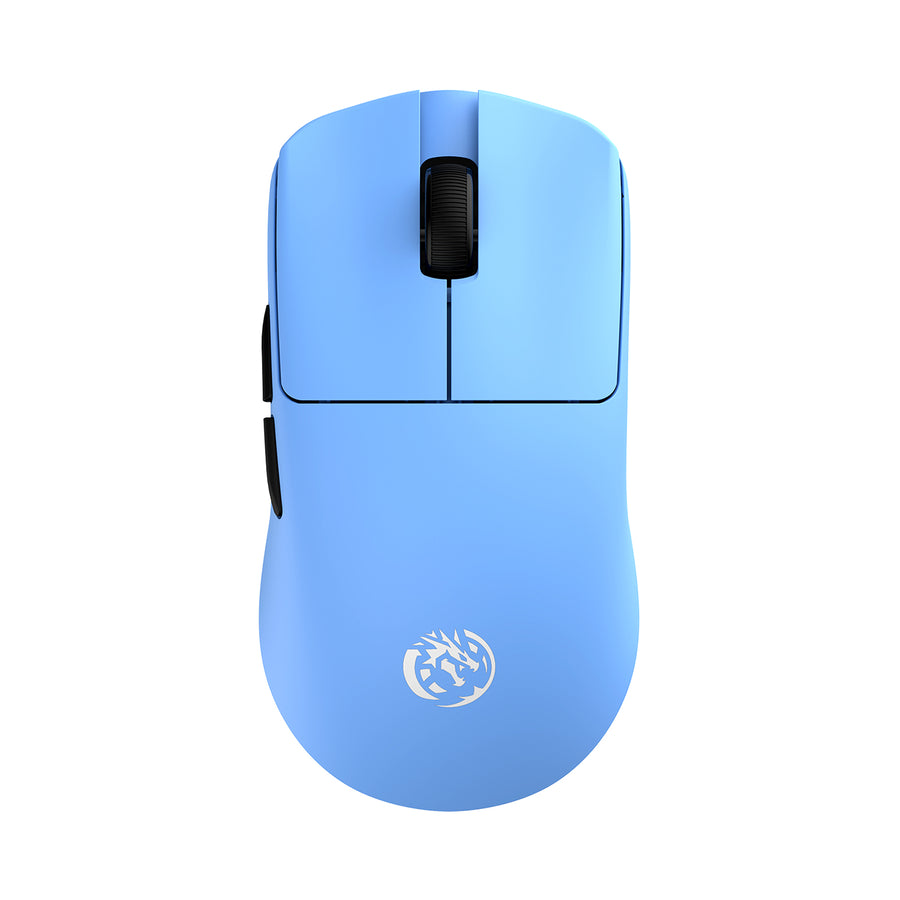
ATK Blazing Sky F1 V3
36 g hole-free shell, PAW3955 Master sensor and a Nordic 54 series MCU, developed with an esports team rather than in a marketing department.
- 36 g with no holes in the shell
- PAW3955 Master flagship sensor
- Nordic 54 series MCU
- Five colours
- Shape is tuned for claw and fingertip grips
- 36 g feels unsettlingly light until you adjust
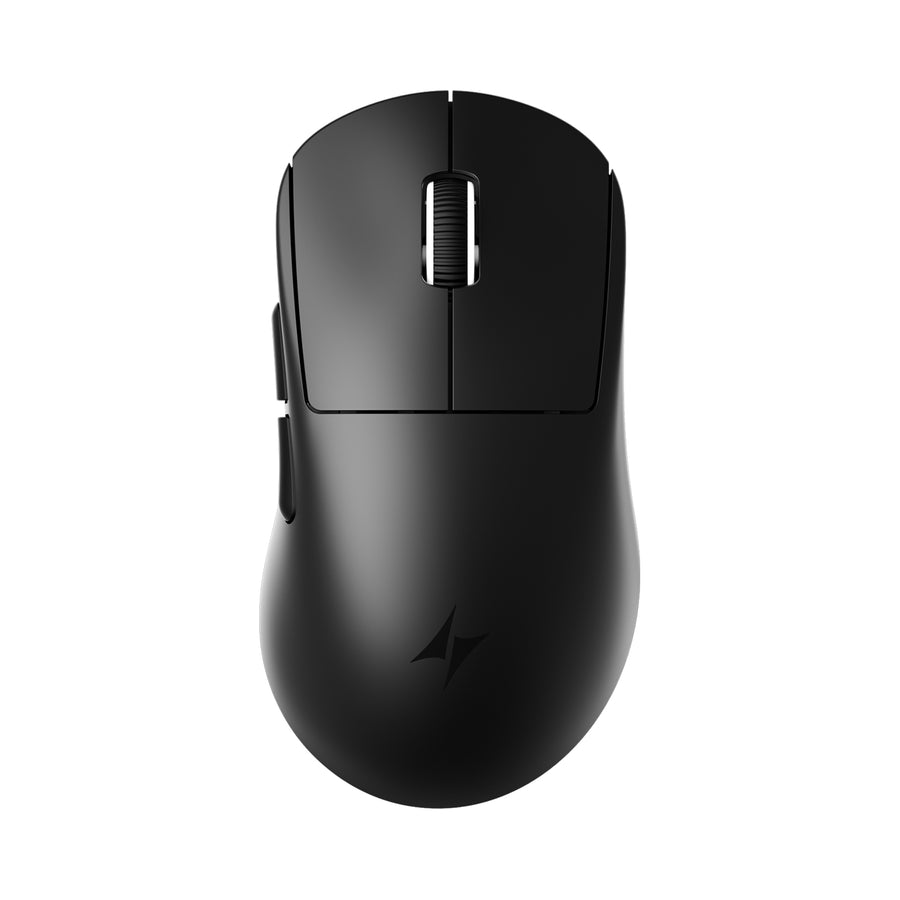
ATK Dragonfly Y9
A right-handed ergonomic shell with a contoured back and asymmetrical rear, built for long sessions rather than for the lowest possible weight.
- Proper right-handed ergonomic shape
- Thumb support for palm grip
- Two model tiers
- Right-handed only
- Ergonomic shells are always heavier than symmetrical ones
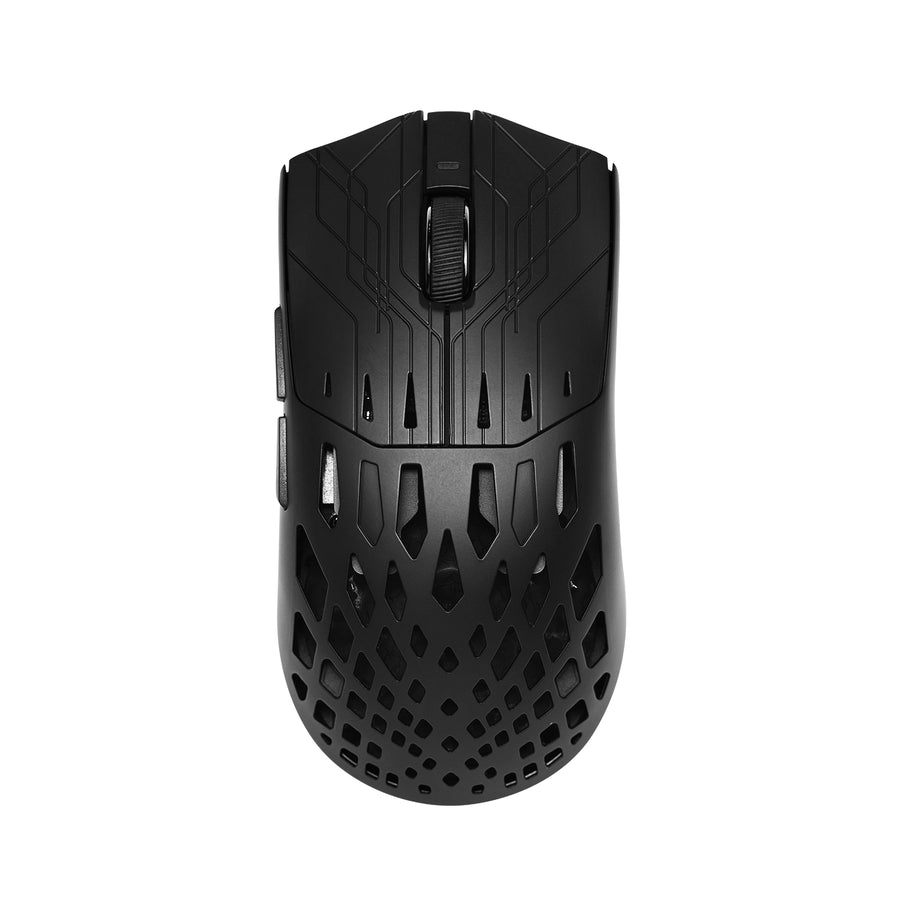
VXE Dragonfly X3
From 51 g, with a replaceable 300 mAh battery, tri-mode connectivity and a magnetic charging dock. The Turbo adds RGB and a vented shell.
- Replaceable 300 mAh battery, rare in this category
- Tri-mode connectivity
- Magnetic charging dock
- Three model tiers
- 51 g is heavy by this brand standards
- RGB on the Turbo costs battery life for no performance gain
Who should look elsewhere
Left-handed players. Almost everything here is symmetrical or right-handed ergonomic, and the ergonomic model is explicitly right-handed only. That is normal for the category and still a reason to look at the handful of makers who do left-handed shells.
Anyone who wants a mouse to last a decade through repair rather than replacement. Apart from the VXE Dragonfly X3 and its replaceable battery, these are sealed ultralight shells, and a soldered battery in a mouse used daily is a three to five year part. The established brands are no better, and it is worth knowing you are buying into that model.
And anyone who finds choosing stressful. The sub-model structure rewards research, and if you want to buy a mouse in five minutes you will do better with a brand that sells one version of each shape.
Common questions
Is ATK a reputable brand?
It is an established maker in the competitive mouse space, with products developed alongside esports teams and using the same sensor and radio components as far better-known brands. We have not tested its products ourselves and will not claim reliability figures we do not have.
Are the hall-effect keyboards worth it?
Magnetic switches allow adjustable actuation depth and features such as rapid trigger, a genuine advantage in fast shooters and irrelevant for typing. They also cannot be swapped for ordinary mechanical switches. Buy one for competitive play, not as a general keyboard upgrade.
What about a glass mousepad?
Glass surfaces are very fast and very consistent, and they wear skates much faster than cloth does. They also feel clinical to a lot of players who prefer some friction to control a stop. If you have only used cloth, a glass pad is a large change and not obviously an upgrade.
Do the mice work without software?
Gaming mice generally store DPI and polling settings on the device once configured, so they work on any computer after setup. Check the listing for the configuration method on the model you choose, because that varies across the range.
The verdict
ATK is a legitimate way to get flagship mouse hardware without paying for a flagship badge, and the shell engineering, particularly the solid sub-40 gram shells and the nano coating, is better thought through than the price suggests. The weaknesses are organisational rather than technical: too many sub-models, a naming scheme that explains nothing, and nothing at all for left-handed players. Work out your grip and hand size first, pick the shape, then pick the cheapest tier of that shape with the sensor you want. In that order, this is a good place to buy a mouse.