 Victoria
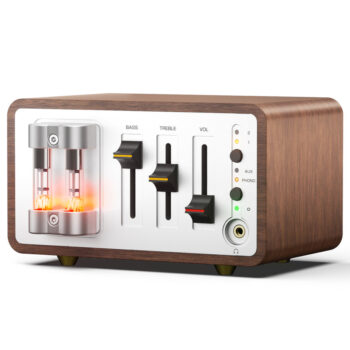
Small tube gear occupies an odd corner of hi-fi. The valves glow, the marketing promises warmth, and the boxes are cheap enough that people buy one without really knowing what it does to a system. Some of it genuinely improves how a modest setup sounds. Some of it is a light with a socket on the back.
Douk Audio, which also sells under the Nobsound name, makes a lot of both. Below are eight components from its range, sorted by the job each does in a real chain rather than by how good the photograph looks. We have not listened to these, so nothing here is a hands-on review; what follows is based on the published circuit descriptions, chipsets and connections, and on what those imply for how the box will behave.
The picks
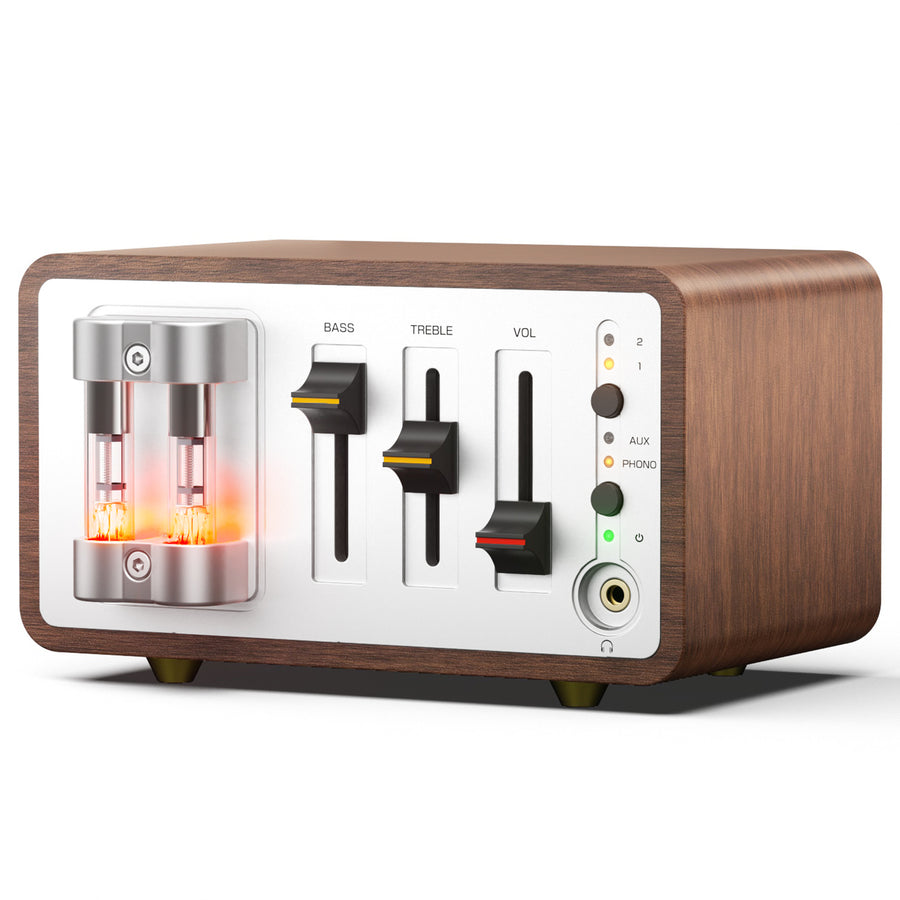
Douk Audio T12 Tube Phono Preamp
A tube phono stage for MM and MC cartridges in a real walnut case, with a line input and a headphone output so it can run a whole small system.
- Handles both MM and MC cartridges
- Real walnut housing, not vinyl wrap
- Line input as well as phono, so it doubles as a preamp
- Headphone amp built in
- Tube phono stages are noisier than good solid-state ones
- The VU meter is styling, not a calibrated instrument

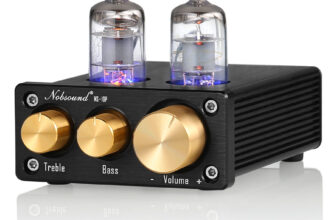
Nobsound NS-10P Tube Preamp
A small tube preamp with treble and bass controls, designed to sit between a source and an amplifier you already own.
- Adds tube character to an existing system
- Treble and bass controls, which most preamps drop
- Small enough for a crowded desk
- Tone controls are a compromise purists dislike
- A preamp alone cannot drive speakers
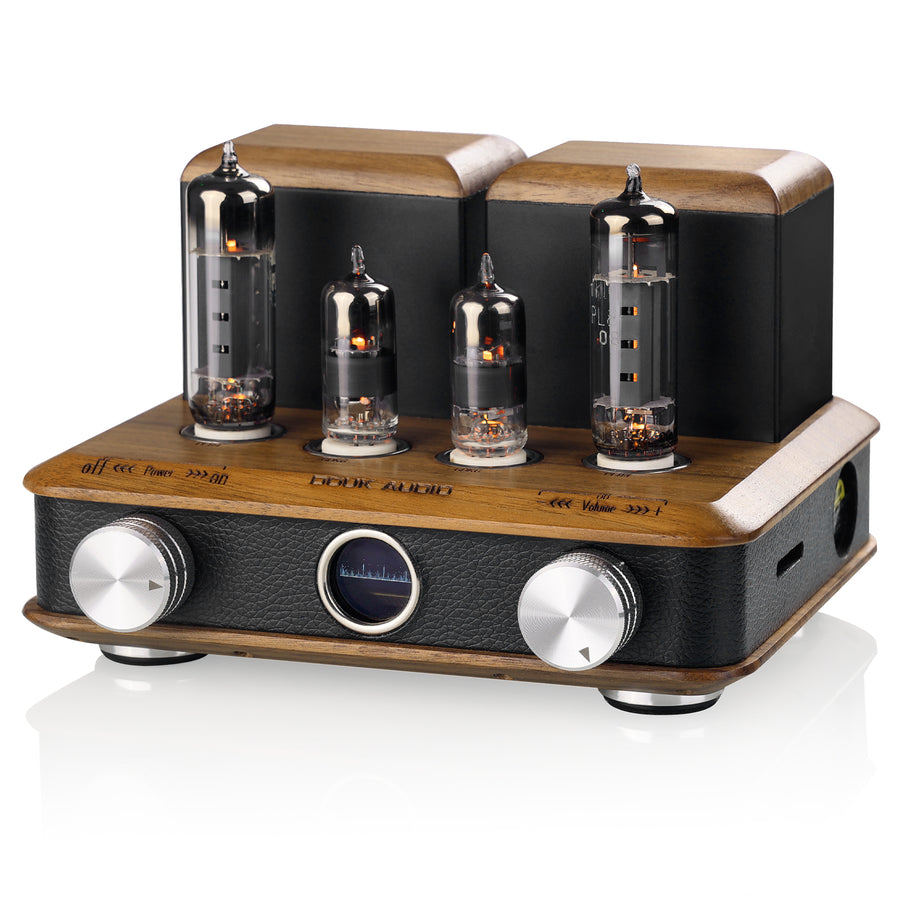
Douk Audio F3 Class A Tube Amp
A single-ended Class A tube amplifier that takes RCA line sources directly and drives speakers on its own.
- Single-ended Class A circuit
- Drives speakers without a separate power amp
- Plain RCA input for a DAC or CD player
- Single-ended Class A means modest power, so it needs efficient speakers
- Class A runs hot and wastes electricity by design
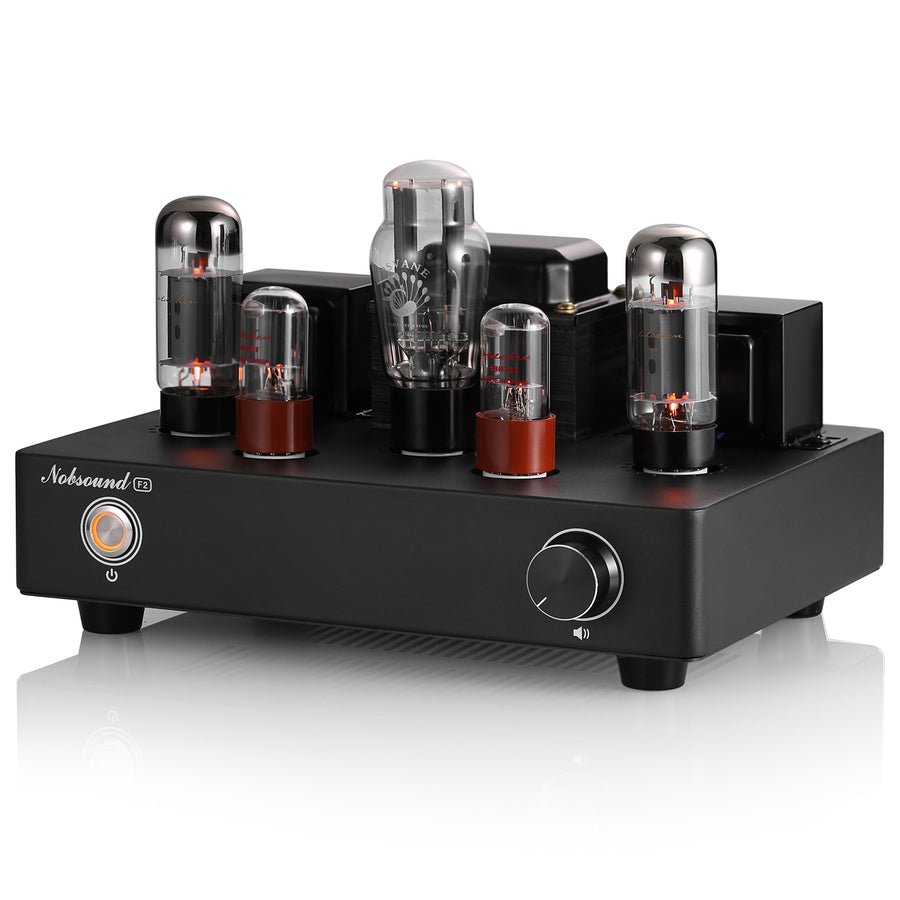
Nobsound F2 Class A Tube Amp
The same single-ended Class A idea with fully pluggable tubes, so swapping valves to change the sound is the intended use.
- All tubes socketed for rolling
- Ships with a known starting valve set
- Same Class A circuit character
- Tube rolling is a rabbit hole with running costs
- Low power, so speaker matching matters
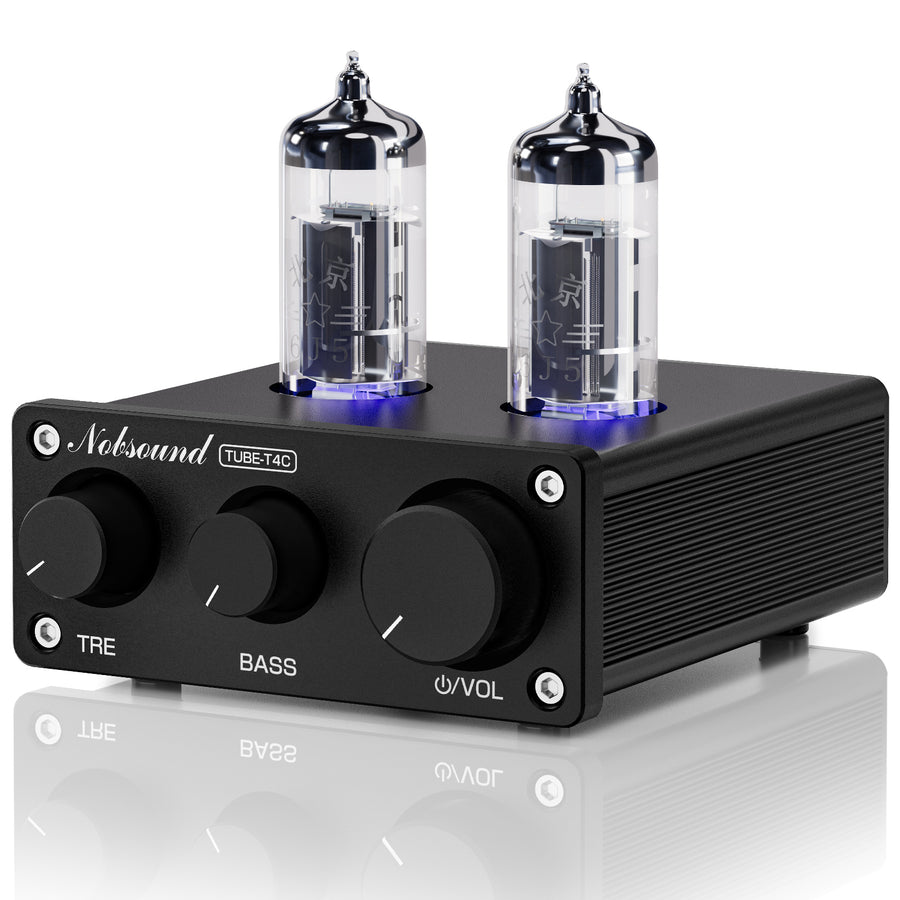
Nobsound T4C Tube Preamp
A plainer tube preamp with the tone controls stripped out, for people who want the valve stage and nothing else in the path.
- Minimal signal path
- Compact and easy to place
- Straightforward to add to an existing chain
- No tone controls at all
- Still needs a power amp and speakers
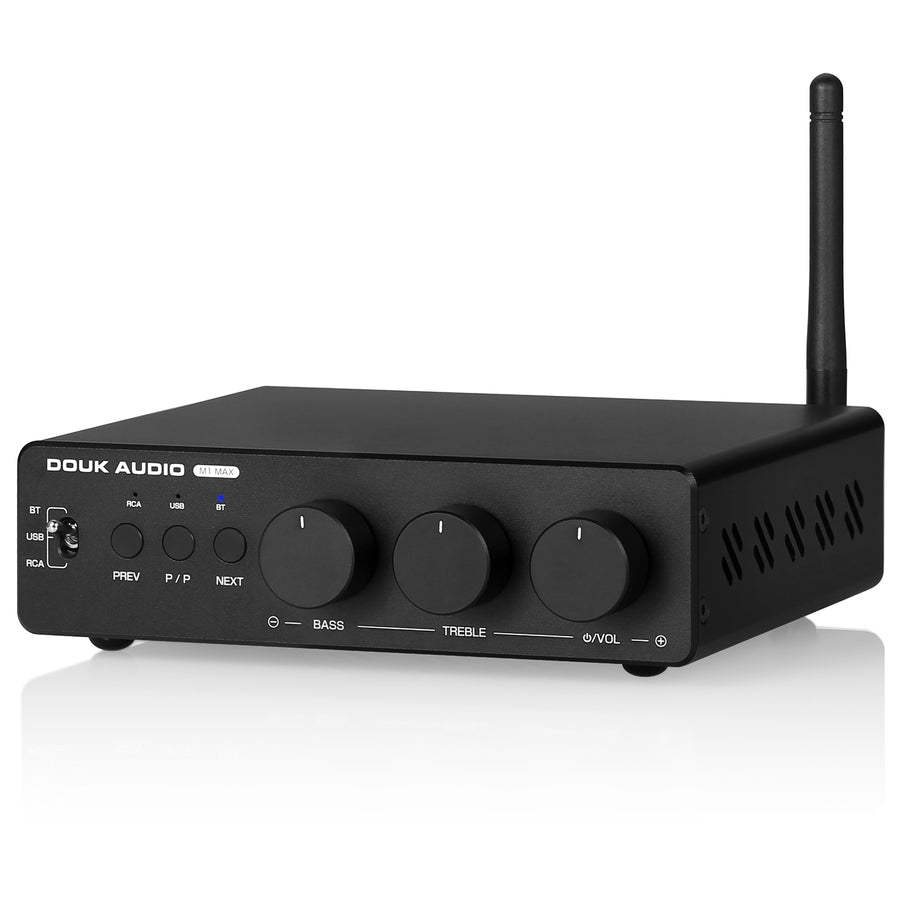
Douk Audio M1 MAX Power Amp
A TPA3255 class-D amplifier with Bluetooth 5.1, RCA and USB stick playback, banana speaker terminals and a 3.5 mm output for a subwoofer.
- Bluetooth 5.1, RCA and USB stick inputs
- Banana plug speaker terminals
- 3.5 mm output for a sub or second amp
- Far more power than the tube amps
- No tube character, which may be the point of shopping here
- Power adapter is a separate option on the listing
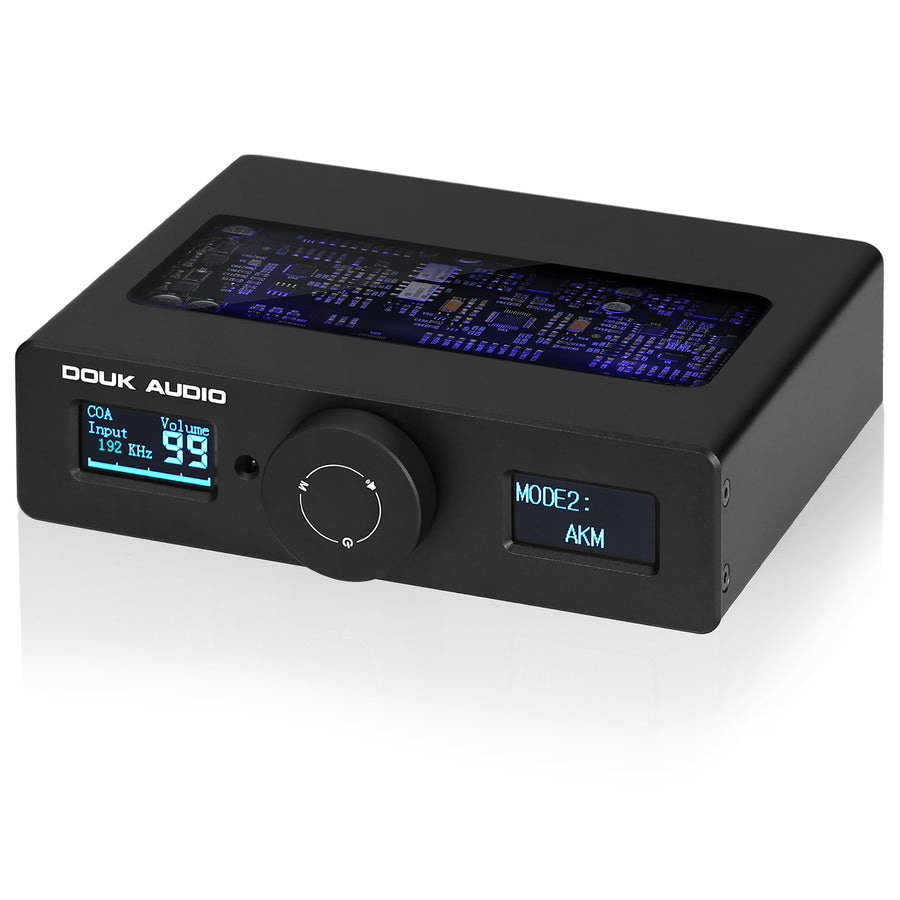
Douk Audio DAC-Q11
A desktop DAC with ESS9038Q2M and AK4493 chips, USB, coaxial and optical inputs, DSD256 support, two RCA outputs and a 3.5 mm output.
- Two well-regarded DAC chips
- USB, coaxial and optical inputs
- DSD256 support
- Two RCA outputs plus 3.5 mm
- Remote ships without batteries
- Windows 7 needs a driver installed first
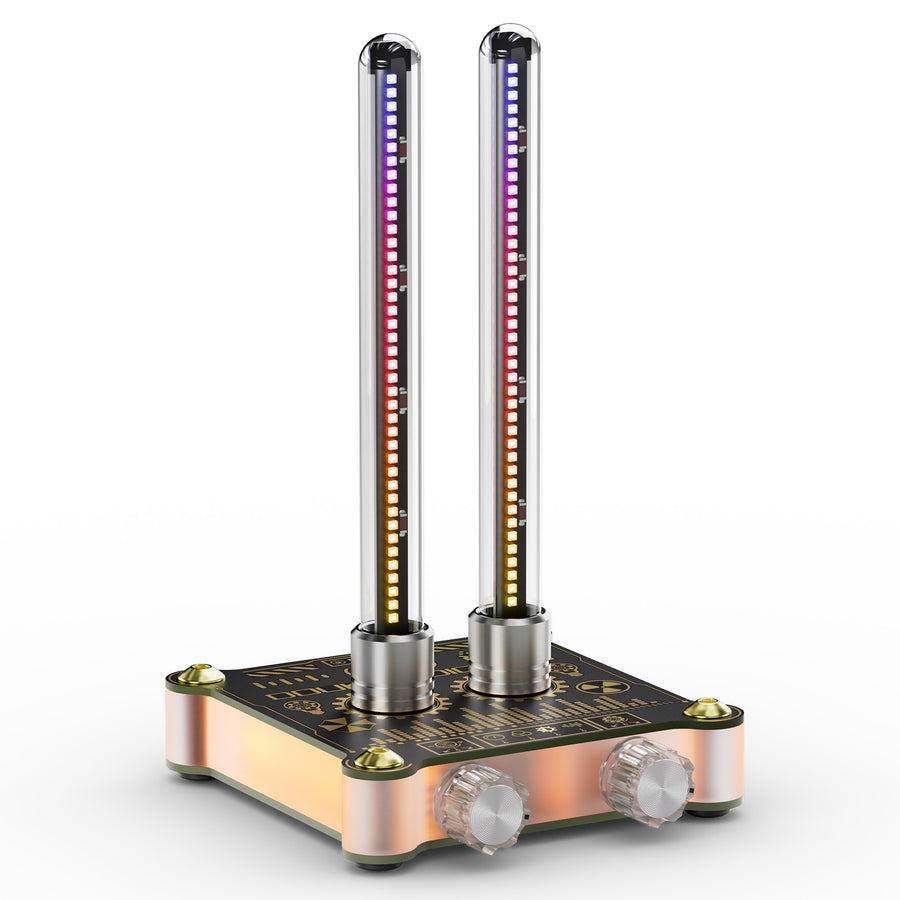
Douk Audio VU9MINI Level Meter
An RGB LED level meter and spectrum display with a tube. It does nothing for the sound, and we would rather say so.
- Adds movement and glow to a rack
- Small footprint
- Works alongside any system
- Contributes nothing to audio quality
- Easy to buy instead of the component that would actually help
How we chose
There is no independent measurement data for most of this range, and we do not invent scores. What is published is the circuit type, the chipsets and the connections, and those three things tell you most of what a component will and will not do. We picked one box per job in the chain rather than five variations of the same preamp.
We also kept a component in the list that we do not recommend buying first, because it is one of the most popular things this brand sells and the reason people buy it is not the reason they should.
1. Douk Audio T12 Tube Phono Preamp
If you are buying one box from this range, this is the one that does the most. It is a tube phono stage that handles both moving magnet and moving coil cartridges, which already puts it ahead of the many phono preamps that only do MM, and it adds a line input and a headphone output so it can sit at the centre of a small system rather than at the start of a big one.
The walnut case is a real one rather than a printed wrap, which matters if it is going beside a turntable. Two honest points. Tube phono stages are inherently noisier than good solid-state designs, and you will hear that on quiet passages with a low-output cartridge. And the VU meter looks the part but is a display, not a measuring instrument.
Check availability at Douk Audio
2. Nobsound NS-10P Tube Preamp
The cheapest useful way into valve sound is not to replace your amplifier but to put a tube stage in front of it. That is what this is: a small preamp that takes your source, passes it through a valve, and hands it to whatever amplifier you already own.
It also keeps treble and bass controls, which most audiophile preamps refuse to include. That is a real convenience in a room that is too bright or too dead, and it is exactly what a purist will object to. If your amplifier already has tone controls the appeal drops considerably, and remember a preamp cannot drive speakers by itself.
Check availability at Douk Audio
3. Douk Audio F3 Class A Tube Amp
This is the point where you stop adding boxes and replace the amplifier. The F3 is a single-ended Class A tube design that takes RCA line sources directly, so a DAC, CD player or streamer goes straight in and speakers come straight out.
Single-ended Class A is the most flattering and least efficient way to build an amplifier. Expect modest power, which means speakers with decent sensitivity in a room of ordinary size rather than power-hungry floorstanders. Expect heat as well, because Class A draws near its maximum current whether the music is loud or silent. Both are the design working as intended.
Check availability at Douk Audio
4. Nobsound F2 Class A Tube Amp
Mechanically this is the same argument as the F3 with one difference that matters to a particular kind of owner: every tube is socketed, and the listing treats swapping them as the point rather than as a repair.
Tube rolling is a genuine way to tune the sound and an open-ended hobby with a running cost. The supplied valves are a known starting point, which is the right way to sell an amp like this. If you have no intention of buying more valves, the F3 does the same job without the invitation.
Check availability at Douk Audio
5. Nobsound T4C Tube Preamp
Some people want the valve stage and nothing else in the signal path. The T4C strips out the tone controls and leaves a plain tube preamp, which is the purist configuration and a smaller box on the shelf.
That is the whole pitch and it is a fair one. What you lose is the ability to fix a room problem at the preamp, so if your speakers are bright or the room is bare, the NS-10P and its tone controls will make you happier than a shorter signal path will. It still needs a power amplifier behind it.
Check availability at Douk Audio
6. Douk Audio M1 MAX Power Amp
Not everything here is a valve. The M1 MAX is a TPA3255 class-D amplifier, the modern answer to wanting real power in a small box that runs cool. Bluetooth 5.1, RCA and USB stick playback cover most sources, and the banana terminals are a proper connection rather than spring clips.
The 3.5 mm output is the detail worth noticing: it feeds a powered subwoofer or a second amplifier, so a 2.1 system is possible without another box in between. What you do not get is any of the tube character the rest of this list is about, which makes this the right choice for someone who wants volume and inputs rather than warmth. Check whether the power adapter is included in the option you select.
Check availability at Douk Audio
7. Douk Audio DAC-Q11
Whatever amplifier you choose, the source matters. The Q11 is a desktop DAC built around ESS9038Q2M and AK4493 chips with USB, coaxial and optical inputs, DSD256 support, and both RCA and 3.5 mm outputs, so it slots in front of any amplifier here.
Two practical notes from the listing, the kind that ruin a first evening if you do not know them. The remote ships without batteries, so have two AAA cells ready. And on Windows 7 the driver must be installed before USB is recognised at all; on other systems you only need it for DSD playback.
Check availability at Douk Audio
8. Douk Audio VU9MINI Level Meter
We are including this because it is popular, not because it helps. The VU9MINI is an RGB level meter and spectrum display with a tube in it. It responds to the music and it looks good on a rack, and that is the entire function.
It is worth being blunt: if you are choosing between this and any component above, the components will change what you hear and this will not. Buy it when the system is already where you want it and you would like it to look busier. Buy it first and you have spent money on a light show.
Check availability at Douk Audio
For a wider look at the brand, including where it publishes real specifications and where it does not, read our Douk Audio review.
Preamp, integrated or power amp
This is the question that decides which box you need, and the one most people get wrong. A preamp selects the source and sets the volume; it cannot drive speakers. A power amp drives speakers but has no volume control worth using. An integrated amplifier does both, which is why the F3 and F2 can run a system on their own and the NS-10P and T4C cannot.
So: if you already own an amplifier and want to change its character, buy a preamp. If you have a DAC or a turntable and a pair of passive speakers and nothing in between, buy an integrated amp. If you want power and streaming more than warmth, the M1 MAX is the sensible answer and the valves are not.
What a valve actually changes
A valve stage adds a particular pattern of low-order harmonic distortion, which most listeners hear as warmth, body and a slightly softened treble. That is a real effect and a legitimate thing to want. It is not the same as accuracy, and it does not fix a bad recording, a bad room or bad speakers.
The two places it helps most are a thin-sounding digital source and a system that is fatiguing over long stretches. The place it helps least is a system that already sounds warm, where another valve stage just makes things muddy. If the room is your problem, treat the room first.
Common questions
Is Douk Audio the same as Nobsound?
The two names appear across the same catalogue and the same product families, and several items here are branded one way or the other with no obvious difference in design language. Treat them as the same source rather than as competing brands.
Do the tubes need replacing?
Eventually, yes. Valves are consumables and they degrade over years rather than failing suddenly. That is only a real cost on the amplifiers; a preamp valve lasts a long time in normal use. On the F2 the sockets make replacement trivial, which is the same feature that makes tube rolling possible.
Will a tube amp drive any speakers?
No, and this is the most common disappointment with small Class A tube amps. Low-sensitivity speakers in a large room will sound thin and run out of headroom. Check your speakers sensitivity figure before buying, and if it is low the class-D M1 MAX will make you far happier than a valve amp will.
Do I need a separate DAC?
Only if your source is digital and you are not happy with its built-in conversion. A turntable needs a phono stage, not a DAC. A laptop or a streamer benefits from one, and the Q11 is the obvious pairing here because it offers USB, coaxial and optical rather than forcing one connection.
The short version
Turntable owner: the T12, because it covers the phono stage, a line input and headphones in one box. Already own an amplifier: the NS-10P for tone controls, the T4C if you want the shortest path. Starting from speakers and nothing else: the F3 if they are efficient, the M1 MAX if they are not. And leave the level meter until everything else is where you want it.